
A day out in Bexhill-on-Sea: the De la Warr Pavilion, the Little British Tea Shop and Eras of Style

This post is actually long overdue. It was (gasp) MARCH when I footled off to Bexhill to spend a day with a good friend and explore the loveliness of a classic British seaside town. But it hasn’t left me, because – especially for a born Londoner who has only managed to take herself further away from water by moving to the Home Counties – there is something so very lovely about the British coast, the jumbled mix of hipster-chic and genuinely crumbling, the proliferation of junk shops and charity outlets and the immediate sense of letting out a big breath you didn’t know you were holding the moment you leave the city. Bexhill isn’t one of the classic treasures (usually in Wales or Cornwall) that you see dotted around tourist websites, all vying for a Portmeirion-esque chocolate boxness that is very, very pretty but somehow unconvincing as a living town. Bexhill is not a town of summer homes. Even in the cold, damp English springtime it was alive and well, keeping calm and carrying on.
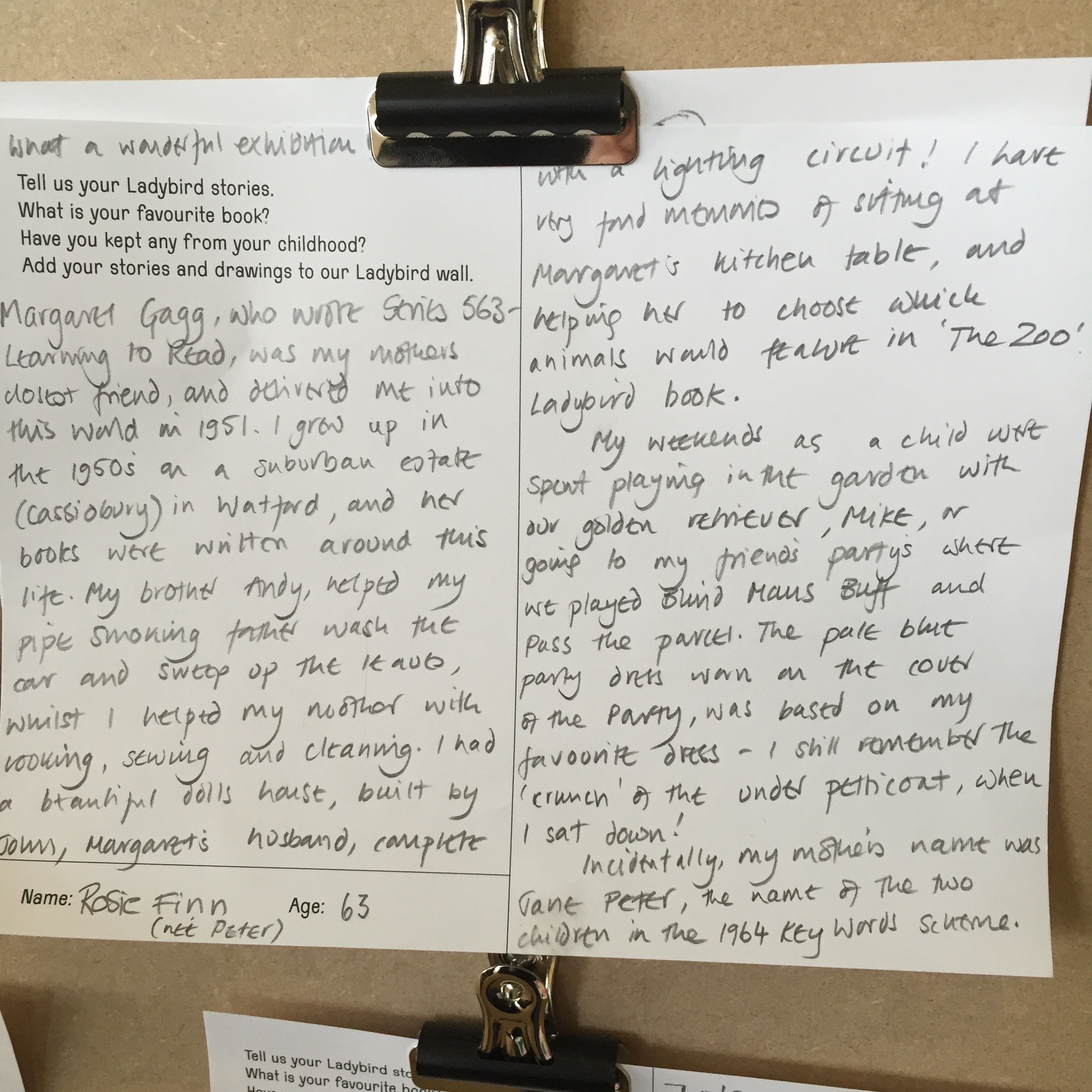
Memories of Ladybird - a truly excellent story!

Memories of Ladybird – a truly excellent story!

Our ostensible reason for meeting there – K’s parents live in Bexhill but she’s actually based in St Leonard’s – was to visit the Ladybird by Design exhibition at the De la Warr Pavilion, which was absolutely wonderful, and – though it has completed its run in Bexhill –  is due to arrive in London in July. I’d recommend a visit to the DLWP any day, whatever the exhibits – it’s a lovely space, beautifully situated. Go in, have a coffee, browse the little shop crammed tastefully with quirky prints, arty bags and cute knick-knacks. There are lots of planned family activities too; for the Ladybird exhibition there was an entire wall covered with memories and experiences of Ladybird books from visitors aged 5-95. My favourite (pictured) was a wonderful note from a woman who had, as a child, become the basis for some of the classic illustrations!

Having spent a couple of hours digging around the wonderfully curated galleries and picking up a few treats at the gift shop (an amazing late 50s living room print now hangs over my retro dressing table), we considered what we could do with the rest of our day. That led us to the Little British Tea Shop, which was practically guaranteed to appeal to me on every single score. Vintage decor and mismatched crockery? Check. Bountiful savoury options (including a savoury only tea)? Check. A proper, lengthy, loose leaf tea menu with everything from builder’s to oolong? CHECK. We sat in the kitschest and cutest of window seats and shared a crumpet smeared with salty butter and a delicious cuppa and it was glorious. I was wearing a 1960s fuchsia Lane Bryant suit skirt from my vintage collection, but bitterly regretted not having a 40s number and pin curls  in (I haven’t mastered Victory rolls yet). The service is friendly and warm and practically out of a film. And the prices are distinctly un-London at around £14.50 for afternoon tea for two.

Much of the rest of the day was spent wandering around the shops; I picked up a lovely fabric shoulder bag for our holiday to Florida, and a birthday treat for myself of a shrink plastic watercolour octopus brooch. There is what I can only refer to as an embarrassment of charity shops – then again, the intersecting local high streets in Bucks where I live have nine of them within a mile radius – and independent shops crammed with a mixture of local arts and crafts and general souvenir tat. A bit like walking into Not on the High Street (on the high street)…

Jaf-argh!

Jaf-argh!

That was when K suggested we pop to the antiques warehouse up past the police station; it was a short walk out of town, but entirely worth every minute. I want to go back with a truck and someone else’s credit card. Eras of Style is a mammoth two-story treasure trove packed to the gills with vintage furniture, records, toys… you name it. It’s a little light on clothing, but crammed with practically everything else. I fell in love with at least three separate tables (so. much. G-Plan.) and I adored the more random bits and bobs like the 60s fairground attraction car and some crazy bits of Disney memorabilia like Jafar here, hanging out in the coffee shop. The cafe is itself worth a visit, with nice tea, multiple cake options – I spotted gluten-free ones, too – and apparently now a specialism in bagels (I am SO going back).

Sea air, wonderful places to have tea, art and vintage style. And the wonderful thing is that this kind of footprint is repeated readily across Britain, and should be loved and treasured for what it is. I do worry that one too many hipsters like me and the places risk being gentrified; then again, a lot of these towns have suffered rising unemployment and could do with an investment of cash and love (preferably from people with an interest in staying in, rather than exploiting and running from, the area). I often wish I could travel further, wider and more often (how ungrateful that sounds after a trip to Florida!) but I also forget that there are little jewels on my doorstep – a drive or cheap train trip away. I’m aware that, especially from a distance, I’ve romanticised things a bit, but I do want to make it a habit to explore more of what’s right in front of me, and make the most of the beauty of home.

What’s your favourite hidden (or not so hidden) British treasure? Where should I visit next?

Film review: Tomorrowland: A World Beyond European Premiere

Me in my genuine 1940s finery with my genuine, erm, 2015 Haunted Mansion souvenir.

Me in my genuine 1940s premiere finery with my genuine, erm, 2015 Haunted Mansion souvenir.

For a film about the future, Tomorrowland: A World Beyond sure feels like stepping into the past. In this joyful retro-futuristic romp, The Incredibles director Brad Bird and LOST co-creator Damon Lindelof have created a relentlessly upbeat, Spielberg-reminiscent family adventure with its eyes on creating a great, big, beautiful tomorrow.

It’s 1964, and young Frank Walker is enjoying the sights and sounds of the World’s Fair, including Walt Disney’s It’s a Small World and Carousel of Progress. Everyone is looking ahead to a world of gadgets and gizmos aplenty; Frank himself is toting a new invention to enter into an innovation contest.

Fast forward 50 years, and Casey Newton (Britt Robertson), eternal optimist and tech nerd, is battling the closure of the NASA platform where her dad works and the negative attitudes of her peers and teachers, all forecasting doom and dystopia. It’s not looking good – until a strange vintage pin turns up in her possession…

Hugh Laurie making people laugh? Never.

Hugh Laurie making people laugh? Never.

Tomorrowland (to use its simpler US title), rests on the premise that at some point post-1970 our outlook on the future went from chasing dreams to ducking nightmares. And looking at some of most popular and successful franchises around today – although, yes, dystopia in cinema is nothing new exactly – it’s hard to disagree. Somewhere along the line, our vision became more universally dim; less Jetsons, more genocide. And the disaster is invariably man-made. No meteror extinguishes our old-fashioned thinking; we’re dinosaurs on a collision course with our own greed – or worse, apathy. Tomorrowland explores what the world could be like if we rediscovered that spark of enthusiasm – and what that could mean for humanity now. But to have nostalgia for an imagined future, you have to go back to the place that future was envisaged from, and in doing so Bird has also tapped into the childhoods of his core audience; I felt more than anything like I was watching some of the classics of my own upbringing – but for the first time and without the dated haircuts. It was Flight of the Navigator, War Games… maybe even ET, only new and shiny.

Okay, I squeed a little.

Okay, I squeed a little.

In many ways, it’s a shame to give too many details away about Tomorrowland. To me it felt primarily like an old-school family adventure movie – although my daughter, not yet five, is not the key audience, I wouldn’t actually have any problem with her watching it – but also like a film made by Disney fans for Disney fans (but enjoyed by everyone else). Certainly a ride on It’s a Small World will never feel exactly the same… Crucially, though, Tomorrowland doesn’t just revisit the past for the sake of it and then wallow in nostalgic baby-boomery; it does attempt to move the discussion along beyond rediscovery, into action.

Clooney! The guy on the right = joy.

Clooney! The guy on the right = joy.

Just over four weeks ago, I was actually sitting in Walt Disney’s Carousel of Progress – and it was a really weird experience. For one, it was one of the few classic attractions I couldn’t remember from childhood; I’d completely blanked it out (or maybe we hadn’t visited? Seems unlikely, though; I remember every version of the Spaceship Earth narration since 1984 – we were that kind of family). Despite frequent updates until the early 90s, it hasn’t aged as spectacularly well as one might hope; progress by this definition largely meant technology – not people. All innovations are presented – as well they might be in view of the domestic preoccupations of 1964 – in terms of household convenience. Women are generally sewing or losing weight or gossiping on the phone, right up until the most modern, forward-thinking scene. It’s all a bit old-fashioned in a generally uncomfortable way. In Tomorrowland, the very essence of futuristic thinking is rooted in humanity, and progress is from the earth to the stars, not from the kitchen to the living room. Besides which, humanity is embodied primarily not in Frank – in spite of Clooney’s global star power – but in the body of a young female character who is not sassy or ditzy or seeking male approval or especially representative of anything other than being an intelligent teenage girl.

Do I look worried because Alex Zane is about to tap-dance on my husband's head?

Do I look worried because Alex Zane is about to tap-dance on my husband’s head?

Better yet – and here, I shall be deliberately vague – key relationships in the film revolve around another female character, the mysterious Athena (Raffey Cassidy). Impressively she is both the lynchpin of which the emotional core of the film and its coolest, most logical mind; it is Walker’s adult male that is the most unhinged and uncontrolled. When is the last time we’ve seen that kind of dynamic presented to young girls? I remember watching what is still one of my favourite films, Jurassic Park, and being utterly frustrated that seven-year-old Lex of the book, who had good reason to be scared due to her young age, had been turned into a snivelling teenager on screen, reassured about “veggiesauruses”. In Casey and Athena we have a couple of bright, shining examples of how a female character can be a character first and female second.

Few films are perfect, and Tomorrowland has its flaws – though I’d argue that most are a direct consequence of its strengths. For one, it is so invested in character and delivering its message that plot can feel a bit rushed; fully three quarters of the film is devoted to setting up what turns out to be a pretty fast pay-off. Still, I didn’t actually notice that until later, when Ramona asked me about the story (she’s something of a Joe Friday about these things). Unsurprisingly for a movie based on a themed land from one man’s dream, there’s a strong emphasis on individual, special visionaries needed to inspire the rest of humanity that I’m not entirely sure I agree with, but it did force me to think about it. Interestingly, the villain here – Hugh Laurie’s David Nix – is not actually outright evil for the most part; to be a bad guy here is to have had the optimism kicked out of you (bad news for Eeyore, I guess). When introducing the film, Bird had difficulty defining the genre into which it fits, because there isn’t just one; while that can be jarring at times, when the film takes an unexpected turn, it’s also refreshing.

Smug people are smug.

Smug people are smug.

In the end, I found myself unwilling to pull at Tomorrowland‘s threads too hard because I enjoyed the whole fabric so much; it’s such a cosy blanket of positivity and hope that I couldn’t bear the thought of trying to unravel it. Also, I really, really want one of those badges.

Disclosure: To make the entire experience altogether more amazing, I was privileged enough to be able to see it at the European premiere, where I edged past Clooney and Laurie on the blue carpet (sadly nowhere near Bird, of whom I am entirely in awe) to the strains of There’s a Great, Big, Beautiful Tomorrow whilst wearing my favourite vintage dress and a Haunted Mansion scarf because apparently I CAN DO THAT NOW. I am very grateful to the lovely team at @Disney_UK who invited me along and made my week. However, I can assure you the thoughts above are entirely my own (and indeed, who else would want to claim them?).

Update: I’ve had MOAR THOUGHTS about Tomorrowland, and specifically the feminism and insight therein But there are spoilers. So tread carefully.

Ten Tips for Surviving Walt Disney World with Young Children

I’ve slightly irritated myself before I’ve even started this post by putting ‘surviving’ in the headline. To be honest, I’ve done it to pander to the kinds of ways I see people talking about this (ergo, perhaps, searching for it). Let me reassure you, there is no survival involved, although you might occasionally get a bit shirty with one another. It is, genuinely, meant to be fun. Sure, there’ll be at least one moment where you’ll threaten to sell your kids to Mickey for a Dole Whip and five minutes’ peace, but come on. You’re in Walt Disney World. You are not suffering. That happens when you get home.

So, that said, there are certainly ways to make the process smoother and ensure that more of the family gets to tick off the things on the wish list without too many rows. Continue reading →

Non-spoilery thoughts about Avengers: Age of Ultron

I think of all the films that I’ve been excited about so far this year – and there have, ahem, been a few –  the one that I’d invested with the most lip-biting enthusiasm was this one. And here it is, and us British types got to see it A WEEK BEFORE the US (not over how long it took to get Big Hero 6 yet)… and I still haven’t actually written anything about it.

There are reasons. The first is that, as with The Avengers / Avengers Assemble (pick your favoured regional variant), the first viewing was more about getting my head around what the hell was going on; I’ll need to go again to really make sense of things, I think. The second is that practically all the things I want to talk about come with Veronica-sized spoiler warnings. I guess I’m safe enough letting those out of the bag now… Though I won’t.

Mainly, I came out of the cinema feeling like there had been some thrilling moments, some funny moments, some genuinely very touching moments and only a couple of really irritating moments (superhero territory: no matter how good the cast, crew, script etc, there’s going to be at least one clanging great sexist moment or something like it to really get up your nose; also, if Tony Stark is in the film it will involve him because on paper and on screen he is a truly awful person). I really liked that despite SO MUCH GOING ON, SO LOUDLY there was time and space for it to be surprisingly intimate. This was needed, since a mechanical villain is never going to have the emotional draw of a human(ish) bad guy whose motivations can be more complex, more personal and, perhaps, more forgiveable. Well, until he unleashed space-hell’s firey Godzilla-bildschnipe on New York, anyway. And there was the small matter of all those people he killed before that… wait, what was I saying?

Intimate, yes. Sometimes having your hand forced is a joy; being able to reinvent Wanda and Pietro’s background, removing Scarlet Witch and Quicksilver from specific associations with X-Men and Magneto, meant that that part of the story – and the reasons for the siblings’ dubious allegiances – could feel oddly real and plausible. For a film with an Internet robot and a flying city, anyway.

It’s funny, because people who know me IRL will know I can bore people stone cold sober with natter about these films (one poor soul got my full Shakespearean thesis on Thor by text) but it’s awfully hard to be remotely coherent when I try to make my writing sound more like a review and less like some really meandering observational routine from the graveyard shift at the comedy club. Obviously not trying that hard on this occasion, to be fair.

Anyway, sod it. It’s my blog, not a film magazine. I can write whatever I like. So I’ll end with a short and slightly disappointing story:

After the film, we went for a really nice meal in a Turkish restaurant we’d never tried before (no, we didn’t have schwarma). The waitress heard us talking about it and asked me if I could tell her who the voice of Ultron is since her flatmates are all crazy about this film. “James Spader,” I said, with the warmth that only having been alive to be in love with James Spader between 1986-1994 can achieve. “Who?” she replied. And I was just a little gutted.

That has nothing to do with the film per se, but that feeling of love and possessiveness being mildly punctured by someone else’s complete lack of immersion in the landscape? Sort of how it feels to talk about this stuff with people who don’t do superhero movies. So it’s felt pleasantly cathartic to write a little about it here where I have no idea if you care or not, but I’ve got to assume you were interested enough to get past the headline.

Right. Time to book take two, I think…

Great British Chefs #GBCCookSchool with Adam Gray

Adam shows off a tray of bread-wrapped mackerel

Adam Gray shows off a tray of bread-wrapped mackerel

I’ve talked before about the general wonderfulness that is Great British Chefs, and I was again honoured and delighted to join them for one of their fabulous events. This time it was for a cook school – not dissimilar to when Pinterest kindly invited me along to learn from Tom Aikens – at the aptly named Cookery School in Little Portland Street, London.

This time the chef was Skylon’s own Adam Gray; some years back my then-boyfriend (now husband) took me to what was then Rhodes 24 – where Chef Gray was busy earning Michelin stars. It was one of my first grown up fine dining experiences and I still remember elements of that meal very fondly, so it was great to now be learning tips and tricks from a master of the trade who had already contributed to warm and fuzzy memories.

We kicked off with Adam and his sous chef Damon making a fish dish that essentially required making a spring roll out of very thinly rolled slices of bread wrapped around fillets of mackerel flavoured with a dash of English mustard. He took us from filleting the whole fish to plating up beautifully with rhubarb chutney and sea purslane. There’s an alternative, BLT-inspired version of this on the GBC website.

Totes even and perfectly well-rolled, obvs. Ahem.

Totes even and perfectly well-rolled, obvs. Ahem.

Next came the opportunity to get our hands on some beautiful ingredients and mix Ticklemore goats cheese with cream cheese to form a sort of sausage; this was double-dredged in panko breadcrumbs and fried; with the gorgeous, simple tomato salad that made up the rest of the dish it was absolutely delightful. Plus I can now say a Michelin-starred chef has made suggestive jokes while I attempt to get hands-on with a roll of cheese. #lifegoals.

IMG_6090

Dessert before…

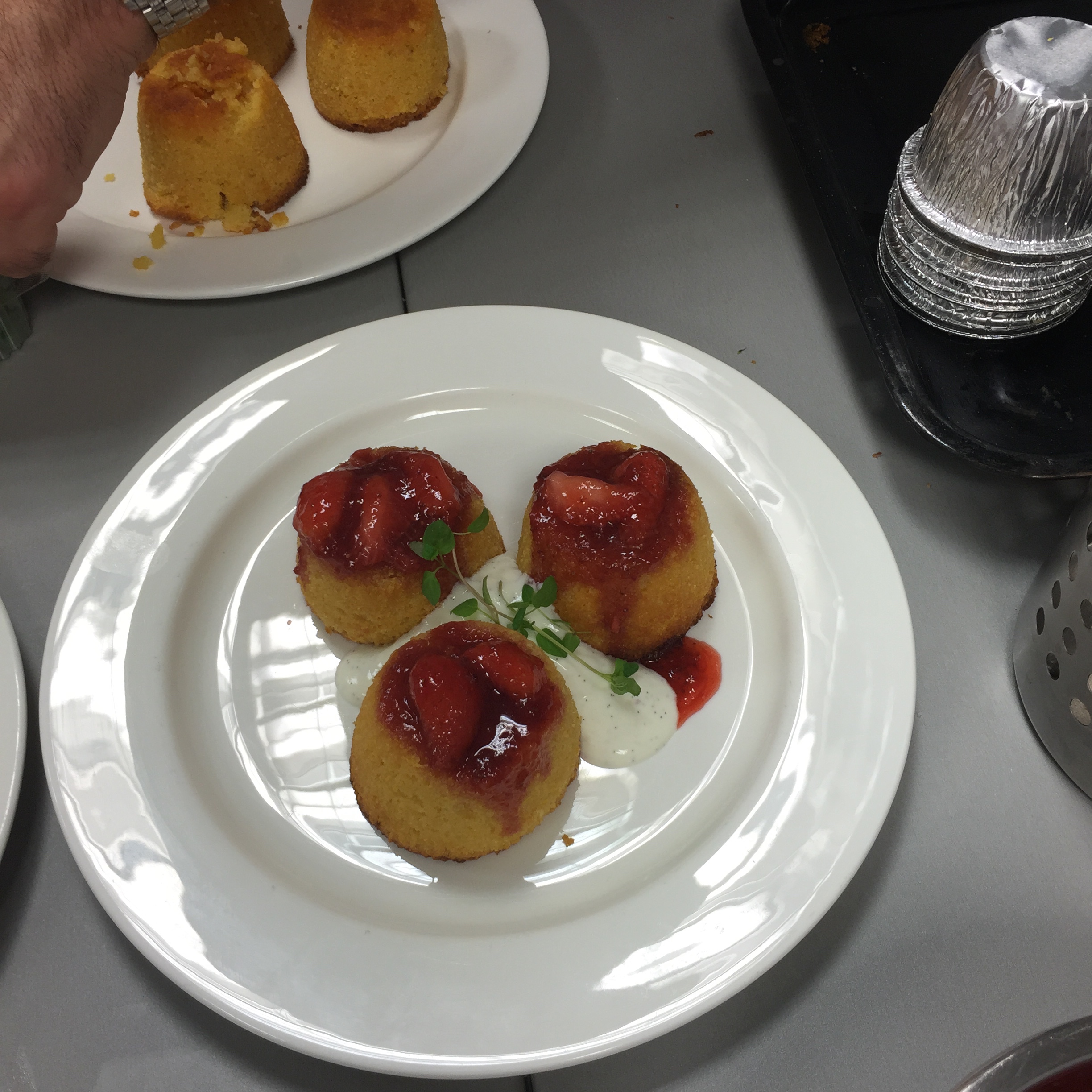
Dessert was a fluffy flourless lemon, almond and polenta cake topped with a warmed strawberry jam sauce and served with vanilla-scented natural yogurt. Sugar-free or not, I did take a bite and it was beautifully light yet rich; I might just work out how to do a lower sugar version. There were so many we couldn’t actually finish them and I ended up bringing some home for the family who were very appreciative.

Learning from Adam was really a great privilege; as well as demonstrating dishes and checking on everyone’s progress, he held a little mackerel filleting masterclass and was very generous with his time and his knowledge. He’s very passionate about British ingredients – he only uses locally produced rapeseed oil, for example, and was specific about the British brands, such as Tiptree strawberry jam, he supported when using a ready-made product. He’s visited the sources and investigated the factories. Best of all, he’s realistic about what can be achieved at home, and recognises the role of budget in the average household; mackerel is a fairly cheap fish, and rapeseed oil is much more affordable than some olive oils (though, being Greek, you’ll pry my olive oil from my cold, dead hands, obvs).

The sticky aftermath.

The sticky aftermath.

The Cookery School is a lovely venue; for my pal Christina, it was essentially her home for the week as she’d been on a baking course for three days and plied me with amazing cheese straws and quiche while supplying macarons and sponge cake to the rest of the crew. It’s well-stocked and spotless and founder Rosalind is incredibly, rightly, proud of what she’s achieved.

Best of all, the people who come along to GBC events are always interesting. We’re a very mixed bag, all connected to food in different ways (other than, you know, eating it, that is). Everyone’s always so ready to get stuck in, help out and produce something beautiful; I leave every event with five new people to stalk online, which can never be a bad thing.

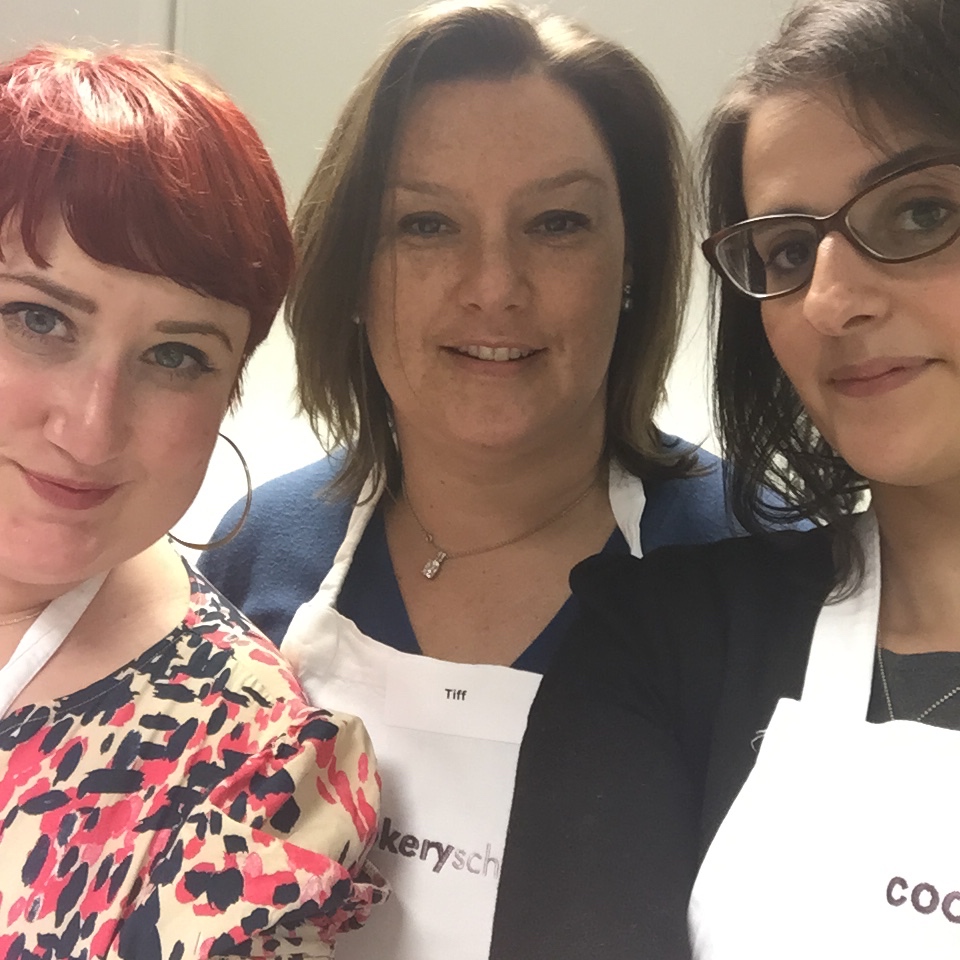
Christina, Tiff and Alex. Never knowingly underfed.

Christina, Tiff and Alex. Never knowingly underfed.

If any of the recipes above sound as delicious to you as they should, you can find the cake under Adam Gray’s profile on the Great British Chefs website, plus a number of his other recipes, including a few other gluten-free options. It is all much more manageable than it might look (looks, I think, are half the problem; I’ll never manage presentation like that!) and the other lovely friend who accompanied me, Tiff, has already made the mackerel dish at home. My thanks again to Adam and the GBC team for another very enjoyable event, and for giving me the opportunity to again learn something new.

Edit: GBC has produced a guide including all the recipes which is right here! Handy.

Disclosure: If it’s not obvious, Great British Chefs invited me to the event.

Florida 2015: ALL THE FOOD (featuring Le Cellier, Be Our Guest, Via Napoli & The Leaky Cauldron, among others)

And, as if by strange and sad magic, we’re back. Two glorious weeks in unseasonably baking weather – which wilted but did not wither this fragile British blossom – and it’s back down to (spaceship) Earth with a bump.

I dare say there will be a few things I will be keen to blog about over the next few weeks, but being of Mediterranean origin I’m going the traditional Greek route of telling you about everything I ate since we last met. Food was always going to be a major part of the trip, from classic US diner breakfasts (yes, Brits are obsessed with the likes of Cracker Barrel, Perkins and Denny’s because they might be ubiquitous cheapie chains to you, my American brethren, but to us they’re  ZOMG biscuits and proper pancakes) to a date night in Epcot, because why would a date night involving me be anywhere else?

So, here is a brief(ish) rundown of the highlights, with just a few of my favourite things. Continue reading →

A brief personal history of Walt Disney World, with pictures

No-one who knows me IRL can fail to have heard about my family’s upcoming trip to Walt Disney World. It’s going to include quite a few members of my extended family, all packing our noisy selves into a villa barely seven miles from the Epcot parking lot.

I. AM. SO. EXCITED.

Now, I could write a whole lot of actually useful stuff about using My Disney Experience (excellent customer service when something weird – not Disney’s fault – went wrong with the tickets), booking FP+, making our Advance Dining Reservations including a date night at Le Cellier… but, you know, the world is already heaving with places to find that information. I’m totally happy to answer questions and share tips, but there are people who devote their entire lives to WDW holiday planning (not least the Disney Parks Moms Panel) – more people than you can shake a stick at, frankly. And instead, I just want to share my excitement through photos.

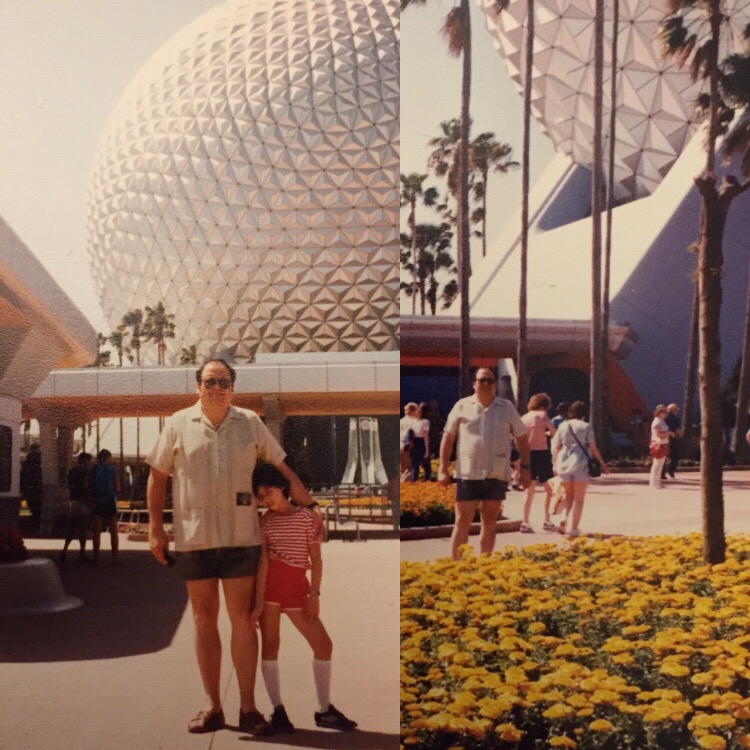
Don’t get me wrong, I know things have changed. Obviously things have changed. I mean, my Dad labelled one of the photos below as “E.P.C.O.T. Center” (yes, with the unnecessary dots and yes, he can still tell you what it stands for). There are attractions that are never coming back (we don’t have to name The One; come to think of it, maybe we all have a different One). There are attractions that are changed beyond recognition, sometimes for the better, sometimes not. The place that I fell in love with when I was four is not the same place that my daughter, aged four, will now fall in love with. There’s a part of me that’s a little sad about that, but it’s a mistake to ever try to recreate your experience in your child; you are not the same people. It is not the same time. And, as for yourself – well, you can never really go back. I’ve made my peace with that.

But I’m also aware – and, honestly, grateful – that I will carry with me the rose-tinted specs of 1984 and see things through that lens. The new memories I create will be drawn on the top of the ones that are already inked on me, a hundred hidden Mickeys stamped all over, invisible but indelible, each layer smudged, blurred but never wiped out over time.

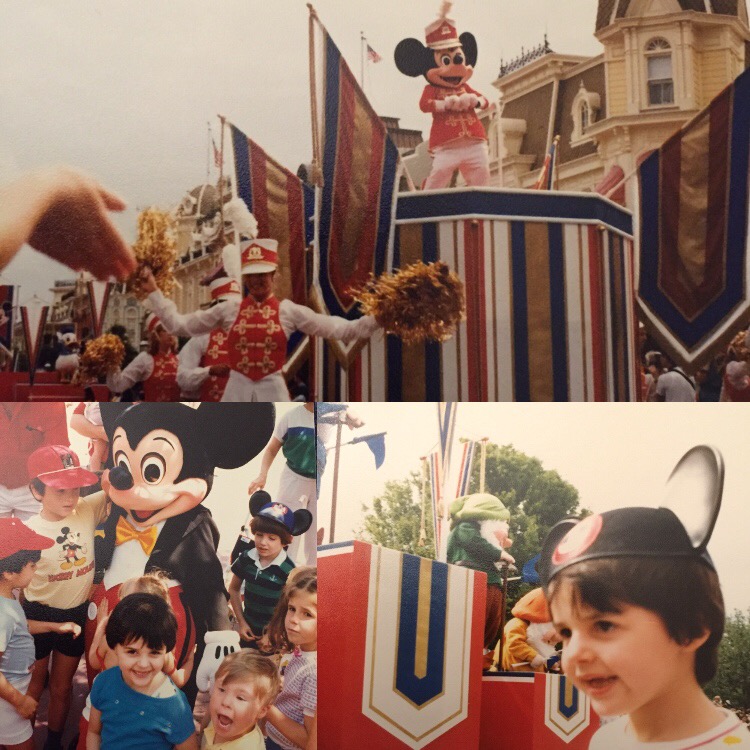
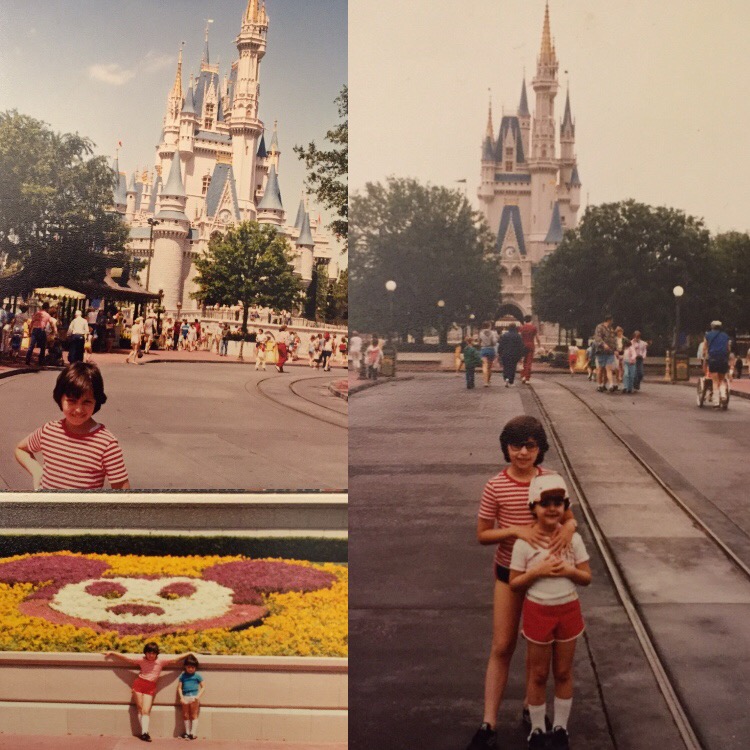
This week, I found these photos from my first visit. They are the set which went with this one.  They make me very, very happy. I cannot wait to have the uniquely wonderful experience of seeing it all unfold through R’s eyes; I got a hint of it at Disneyland Paris, but this is it – the Mother Ship!

And no, I will not be wearing short shorts.

IMG_5179

IMG_5180

IMG_5181

IQS: Teaching yourself to like dark chocolate (aka my favourite chocolate to nibble on)

One of the things that a lot of people talk about when you give up sugar is dark chocolate. And it’s often hugely off-putting to people who prefer milk – which is probably most people. Especially younger people with more excitable taste buds who can pick up every hint of bitterness in dark, cocoa-rich chocolate. But it is worth gently leading yourself down the path from milk to dark (if you like white chocolate I can’t help you; it’s also not really chocolate), for all sorts of reasons. These include:

  • Lower sugar content. While there are other things added to chocolate, you can get an at-a-glance idea of how much sugar is in it by how much cocoa there isn’t. 70% cocoa? Roughly 30% sugar.
  • More of all the stuff that people bang on about that’s good for you. (I don’t pay too much attention to this – I eat it cos I like it.)
  • It’s considerably harder to overdose – it’s richer, more bitter, more complex and your palate can only take so much.

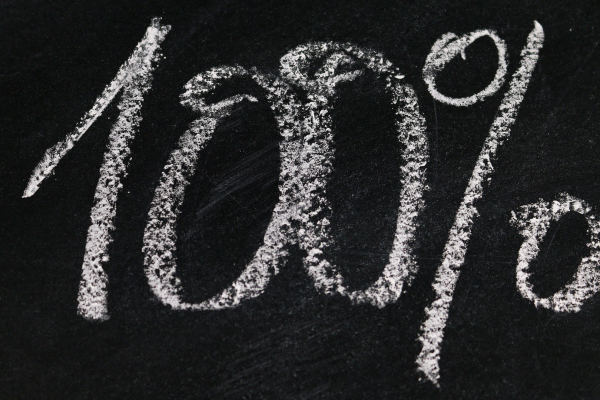
I’ve embraced dark chocolate enthusiastically enough that I now have a handful of favourites in the 70%-100% category (yes, 100%). If you are starting from a very sweet-and-milky point, then there are a couple of more interesting options that could start expanding your horizons, such as Green & Black’s 37% milk which dials up the cocoa intensity a bit (compared to the Creamy Milk which is 32%). But if your main experience of dark chocolate is the odd cookie chip or nibble of Bourneville and you’d like to move further down that path, there are some far more interesting options…

70%+

Stage one: embracing the dark. Quite a lot of ‘extra dark’ chocolate bars are still only at about 65%, but things don’t really get interesting until the number starts with a seven. Here are my favourites at this level:

Tesco Finest 72% Swiss Dark Chocolate – unexpectedly creamy; this almost tastes like a darker milk chocolate. And it’s usually much cheaper than the alternatives.

Green & Blacks 70% Dark Chocolate – lovely, rich and dense but still quite creamy.

80%+

Stage two: dialling up the intensity. As a general rule, as chocolate gets darker, it gets a little harder and less creamy.

Lovechock Pure/Nibs Raw Chocolate – a really unusual one this, since the coconut blossom nectar has an oddly perfumed taste. But it’s really moreish, and the cocoa nib crunch is very satisfying. (Min. 81% cocoa solids)

Tesco Finest 85% Swiss Dark Chocolate – just a touch darker than the 72% but still very creamy, and definitely one of the most forgiving options at this level of cocoa content.

Green & Black’s 85% Dark Chocolate – quite a lot darker, more bitter and richer than its 70% counterpart. One of my favourites.

Divine 85% Dark Chocolate – a fraction more caramel sweetness than the Green & Blacks, but very similar otherwise.

90%+

Stage three: I was once accused of “ruining chocolate” by people who simply weren’t ready for it (even though my 4yo has eaten and liked both 90% and 100% chocolate, perhaps because of the novelty of mummy encouraging her to have another piece just to make sure). So be prepared for some adjustment. Hotel Chocolat even recommends taking a little nibble of 100% chocolate to ‘accustom the palate’ before eating a full piece.

Hotel Chocolat Coastal Ecuador Hacienda Iara 90% – gorgeously intense but not outrageously bitter, and still retains a touch of creaminess and a mild hint of fruit. Also comes in a 100% variety that I really like, though 100% is hard work for anyone.

Lindt Excellence Dark Supreme Noir 90% – typically creamy in the way of Lindt chocolate, with a lovely crisp bitter edge.

All of the above are particularly nice combined with a handful of nuts. My husband’s favourite snack is a couple of brazil nuts, a square of chocolate and a few raisins (I omit the last, for sugar reasons).

Am I missing a particularly delicious option? Is there a brand I should try? I’ve tried a couple of Valrhona options I wasn’t in love with (too chalky-bitter), and I was surprised and pleased by Ghirardelli’s darker options, but the above are generally top of my list (and mostly much more easily available).

Disclosure: My very sad disclosure is that NO-ONE SENDS ME CHOCOLATE and I bought and tried all these myself in the service of eating chocolate, rather than reviewing it. I’m open to being sent chocolate. I will be honest, but honest with chocolate, which is better than being honest without it.

Adventures in vintage when you’re size 12+

IMG_5152At the beginning of last year, I had no items of vintage clothing, and I didn’t think I ever would. One of my best friends in the world is a massive vintage hound, and she came over to visit over that Christmas and New Year; still I wasn’t entirely convinced vintage was for me. Wasn’t it all a bit… difficult? And only really for thin people? (Even though my friend and I are similar sizes, we’re different shapes).

I began 2015 with a small but growing pile of vintage, from a lovely 1960s fuchsia Lane Bryant suit to a trio of classic black 50s wiggle dresses. And along the way I’ve learned a fair bit about how to shop, what to look for and why most of the things I believed about vintage were nonsense. I share these now for anyone curious about buying vintage clothing, but especially for those women who, like me, sit on the periphery of clothes sizing – neither plus nor standard, neither big nor small – but for whom vintage might turn out to be the answer to their fashion dreams…

So here are some things that I thought I “knew” about vintage clothing:

  • It smells
  • Nothing is in a washable fabric
  • It’s cut on a different body shape, so all the waists are impossibly tiny
  • It looks mumsy

IMG_5168As you might imagine, it turns out I knew absolutely nothing. I suspect the first point was sheer second-hand snobbery and can thoroughly be avoided simply by shopping from trusted sellers; the last point applies just as much to modern clothing if you pick a style that doesn’t suit. The second point simply isn’t true (I now have a number of cotton items that prove otherwise, though you will likely have to do more hand washing to preserve more delicate garments) and the third point… well, the third point bears some proper examination. Because it’s both true and nonsense.

The true part is that the assumed body shape for clothing does change over time, and anything pre-1990s is largely different from what you’d find on the high street today – other than in reproduction specialists like Collectif or Vivien of Holloway. My areas of interest – broadly speaking mid-40s to mid-60s – see plenty of variation even across 30 years, but one thing that does stand out is that where dress shapes are fitted (in 50s wiggle dresses, for example) the differences between bust, waist and hip measurements tend to be bigger than you might find now. I frequently come across dresses that are around the 40-30-40 mark (my current measurements being 39-29-39) which does assume a considerable hourglass. However, assuming that means that the right shape for you doesn’t exist would be a mistake; just taking a look through some of the key styles within a single decade should indicate that it’s more a question of finding your style than assuming ‘vintage doesn’t fit’. Also, while I tend to be cautious about radically changing the size or shape of a garment and prefer to set it free for a woman who does fit it perfectly, small, sensitive alterations to let out a waist or tuck in a hip – particularly if they’re done in a way that can be reversed – are perfectly possible.

The other point to raise it that yes, people tended towards smaller sizes. These days I’m a size 12-14 in most stores, but in vintage and repro I could be anything from a 14 to an 18. On the whole, I would assume you’ll need to go up at least one dress size in numbers, because sizes were classified differently and bodies have, taking the whole population into account, got a bit bigger. But – and this is, if you’ll forgive the pun, a sizeable but – that’s largely irrelevant, because you never shop for vintage by dress size.

Here’s the thing: before you set foot in a single vintage store or browse a single online swap-and-sell group, you need to get familiar with your measurements. At minimum you need to know your bust size (over bra), your waist (literally the smallest part / natural waist) and your hips. And then when you look at individual pieces, you need to allow for breathing space, depending on the fabric. For example, a foxy 60s lurex dress could probably be bang on measurements, but a tightly tailored number in a non-stretch fabric like taffeta probably needs up to 2″ breathing space or you won’t be able to sit down or eat. But do also ask questions; one of my wool suits has a nipped in 30″ waist, but 1.5″ of fabric excess where the button is placed – so had it felt too tight, I could have given myself a better fit in ten minutes with a needle and thread. I’m no seamstress, but even I can move a button. Also, some fabrics are very forgiving, and a good seller will both go the extra mile in giving you detailed measurements and carefully describe the stretch and texture of the fabric.

Tip: Many vintage sellers give measurements by lying the item flat out and measuring across. So if you’re a 32″ waist, you want to look out for 16″ measurements, or at least 15.5″ with a bit of give.

So, going back to the world of those of us who have some scars from navigating tiny high street sizes, does that mean that as someone with a waist size of 30″ or up, you’re screwed? I thought so, and I couldn’t have been more wrong. You will often find anything with a waist of 29″ or higher referred to as ‘volup’ – so yes, plus size generally starts at around a modern size 12-14. But there is plenty of it, particularly for women in modern sizes 12-18, who will be able to find beautiful pieces with 44″ or 46″ busts, 31″-35″ waists and more. It turns out that, just as now, though the thinner women might have been the ones in photographs, there were plenty of women of all shapes and sizes who left behind some truly beautiful items for a vintage-hunter to pounce on.

So, some more tips and a bit of a summary for getting started:

  • Take your measurements.
  • Watch out for customs; many amazing vintage stores are in the US, and you will need to assume you’ll pay a customs and handling charge which is calculated based on the whole cost, including P&P, so make sure it’s worth it!
  • Seek out friends who can recommend you to private groups – my aforementioned vintage-loving pal made me a member of a couple on Facebook and they’re great places to get lower prices and friendly, direct service.
  • Ask, ask, ask. You’ve every right to ask for extra measurements and details of any flaws (and how significant they might be), stains or smells before you commit to a purchase. Many items are in perfect condition but some are sold ‘as is’ and that’s fine as long as you know what you’re getting and how you’re going to fix / treat / wear it to account for that. Note: smells will come out of many fabrics, but rayon crepe is a serious challenge, so think twice before committing to that…
  • Haunt Etsy (a couple of my faves below but I’m also now building up a purchase list of UK based sellers and a wishlist for each of ‘my’ decades).
  • Check out UK based specialists like Rokit.
  • Don’t assume this means no repro or modern fashions or that you’ll be shunned for not going “true vintage” – dabblers are welcome and mixing and matching pieces is great. However, you might be eaten alive if you radically alter pieces or use the word “upcycling”; people in vintage communities are very, very passionate about the preservation of fashion history.

Some fab Etsy stores:

Concetta’s Closet – I’ve only actually bought once from Dana because her massively high quality pieces mean they are generally out of my budget (with shipping from the US and customs factored in), though they are unquestionably fairly priced; it’s not her fault I don’t earn enough to indulge my habit! She offers really inspiring, beautiful looks, plus she’s a lovely woman who always has time to answer questions or interact on Facebook. And she does at least two big sales a year!

Fab Gabs Vintage – similarly high quality, with regular sales and some stunning pieces; I’ve not yet splurged on a piece from Julie, but hope to one day not too far away. Her specialism is the 1940s and some of the pieces she finds – and the astonishingly good condition they’re in – make me want to cry.

Dipping my toe in vintage waters has done nothing but improve my appearance, confidence and approach to dressing. It really has put a spring in my step in a way that – as someone who has a complex relationship with her body – I didn’t think I could really experience. So I highly recommend that you leave misconceptions at the door and get searching or rummaging; there’s a real rush to finding that perfect item.

Though you will now spend the rest of your life cursing the high street for not selling everything by measurement.

Details for all the clothes in the photos:

Picture 1, l-r:

Actually nothing vintage in the first pic (though the dress was second hand Wallis from a relative) but all vintage-inspired shapes and ideas mixed together | Red Polka Dot 1960s Dress (Concetta’s Closet), Jo Bluebird Cardigan Black (Collectif), Martha Plain White Belt (Collectif) | Black 1950s Cotton Dress (FB Group), Red 2″ Cinch Belt (Vivien of Holloway)

Picture 2, l-r:

1960s Gold Lurex Dress (FB Group – and yes, it needs more era-appropriate undergarments!) | Mustard Retro Wiggle Dress (Di Brooks OuterLimitz sample obtained through a group – still available but only in other colours) | Balloon Shirt (Zara), 1960s Suit Skirt (Rokit – also have the jacket), Red Leather 1970s Belt (Absolute Vintage)

No disclosure needed as this is just my stuff, paid for by me, and things I like.

IQS: What I actually eat – and how to have a sugar-free birthday

Genuinely, I never expected to write this much about sugar – or lack of it. But it seems to now be a Thing That People Know About Me that I don’t, for the most part, eat sugar; although it’ll be a year in June, there’s an on-going sense of curiosity from others and (I guess related to increasing news coverage) questions about how it all works, and why. Across my office, at least three other colleagues have started the process of ditching the stuff – though I’m pretty sure Sherri had more to do with that than I did.

In fact, Sherri and I were having a conversation about this the other day, and the question we agreed we both hear which prompted this post – and that I didn’t mention in my last – is “but what do you eat instead?”. ‘Instead’ is a curious addition, isn’t it? I think it’s probably the first thing I thought when I first started considering quitting sugar, and it’s so telling. Telling that we are so used to eating so much of it, that it’s not a case of getting rid of something unnecessary but of replacing something essential.

I think there are two elements to the ‘instead’, too. It’s ‘instead of cake etc’, yes, definitely. Fully half of each sugar-free cookbook I’ve ever so much as glanced through is packed with alternatives to classic desserts and sweet snacks. I think the people writing them mostly know you’d be better off not replacing them at all, but take the pragmatic view that in a world filled with biscuits, better to have something barely sweetened with a little rice malt syrup and coconut than nothing at all. And there’s probably something in that (though I’d still recommend keeping the habit of eating sweet things to a minimum). And the other part is ‘instead of breakfast cereal etc’.

Breakfast is, I think the hardest meal to imagine in a post-sugar world. Toast and jam. Cereal. Granola. Honey (in, near or on practically anything). Fruit, yogurt and fruit yogurt. But it’s actually one of the most delicious meals you can have after quitting. I’m pretty much obsessed with breakfast, as anyone who follows me on Instagram will know, and I regularly have brinner (frankly, if I had access to facilities that allowed me to make toast and poach eggs at work I’d probably have it for every meal). But once I started thinking about sharing what kinds of things I have for breakfast, just in case that’s helpful, I thought I might as well do a sort of menu for each day of the week, with a few suggestions for each meal. If you’re right at the beginning of a sugar quitting process, I hope it will come in useful. Then I also have some tips to share about having a sugar-free birthday.

Note: I am low-fructose and like to make stuff from scratch, but I’m not a JERF obsessive. I use some processed stuff and spend less money in the week before payday. I work long hours and enjoy a kitchen shortcut. Also, I have a four-and-a-half-year-old to get out of the front door every morning, and it’s only thanks to the fact that I have a husband who is far more of a morning person than I am that I manage to eat at all.

Breakfast

IMG_5150

Weekdays:

  • Quick nut butter porridge (above) – 30g Ready Brek, 150ml almond milk heated for 2mins in the microwave and 1/2 tsp chia seeds, stirred together. A dollop of peanut, almond or cashew butter on top, plus some strawberries or raspberries.
  • Avocado toast – exactly as it sounds. Half an avocado mashed onto two slices.
  • Fancy avocado toast (below)– the above, but with goats’ cheese and raspberries on top, popped under the grill for a couple of minutes.
  • Nut butter crumpets (above) – Usually with a handful of raspberries, a sprinkling of pomegranate seeds or a sliced strawberry on top.

Screen Shot 2015-03-23 at 22.17.36

Screen Shot 2015-03-23 at 22.05.16

Weekend treats:

  • Poached eggs and veggies (above) – the above was actually a birthday breakfast from my lovely husband, including fennel, courgettes and mushrooms sauteed in olive oil and crumpets with smoked salmon and poached eggs. We use silicon poachers, hence the perfect egg-boob-shape.
  • Veggie omelette – whatever your favourites are, two eggs and a 20g block of cheese, fried gently and finished off under the grill.
  • Pancakes (above) – yes, really. I use Nigella’s recipes for American pancakes (minus the totally unnecessary spoonful of sugar) or ricotta hotcakes. I also use GF self-raising flour, because it keeps the fluffiness and prevents accidentally chewy pancakes. I top with a small squirt of rice malt syrup, a smear of nut butter and fresh berries; my husband and daughter usually add a little maple syrup too.

Lunch

  • Buying lunch – it’s generally best to try not to buy lunch, for all sorts of reasons, not least of which is expense. But if I do have to I tend to go to Pret or the Japan Centre; Pret has recently started listing the sugar content of everything, which is ace, and the Japan Centre has started doing tonkotsu ramen which is fatty and meaty and noodley joy. (You might find my Eating Out on IQS post helpful here….)
  • Stir-fry, stir-fry and a side of stir-fry – I’m a bit obsessed with throwing everything that’s about to go soggy into a wok full of coconut oil, chilli, garlic and ginger. A splash of tamari, and the basis of any meal is done. I could probably get shares in Amoy Straight-to-Wok udon noodles. I can’t really think of a better way to get your 5+-a-day in than stir frying, and it’s dead easy to pop in the microwave at work. This is also the perfect side-dish for my most common lunch which is…
  • Leftovers – well, obviously. Roast chicken, baked salmon, slow-cooker stews etc.

Dinner

  • Chicken soup – about once every other week I make a roast chicken. If they’re on offer, I make two together, in the oven with a bit of freshly squeezed lemon juice and some whole, peeled garlic cloves (plus some rosemary if we happen to have any). Afterwards the juices and the carcass go into a saucepan with a couple of kettles of boiling water and I simmer the lot for 3-4 hours before straining it. There’s always loads more stock than I can use in a couple of days, so I freeze the rest, as well as some freezer bags of shredded chicken if there’s enough left over. This is about the only domestic goddess-like thing that I do, ever, and it’s totally worth it. Because I’m obsessed with chicken soup in all its forms. A pack of ready noodles (see? I told you I could have shares) and some random bits of veg and the job is done.
  • Everything slow-cooker – a load of (usually less-sugary) root veg, some protein or other and some sort of flavouring. Could be tinned tomatoes, could be coconut milk and curry paste, could be stock. Could be chicken, fish or the cheaper cuts of red meat. Could include potatoes for bulk, could be designed to be eaten with cous cous or rice.

You’ll have noticed I tend to batch cook and make extra helpings. I look for large pieces of fish or meat that will last for several days. We also get through a prodigious quantity of eggs as a household, since they’re a quick, cheap, adaptable and easy source of fat and protein that are delicious at any time of day.

I also don’t really go in for sweet substitutes on the whole – you can go far on cheese, some very dark chocolate and, every couple of weeks, a stack of pancakes – but I do rather rate this salty, chewy, nutty bark from the IQS recipe list. Also, I had a surfeit of squishy looking pears that my daughter hadn’t finished and whipped up this pear and almond upside-down cake which was moist and moreish.

Screen Shot 2015-03-23 at 22.11.15

And now… to birthdays. I recently celebrated mine, and it was very lovely indeed. One of the things that made it really wonderful was having friends and colleagues at work who were incredibly kind and thoughtful. On the day itself, instead of surprising me with a cake, I was brought three immense blocks of cheese – with candles! – and a heap of crackers. It ended up being both treat and lunch, and nearly made me cry as it was such a nice gesture.

IMG_5106

A few days later, my gorgeous friend Christina did make me a cake – which she was prepared to try to make with glucose only until I told her that it was her kind gesture and she should do it as she pleased.  Said cake was absolutely 100% worth the deviation from my low-sugar life. Partly because the generosity of a friend always tastes amazing (especially a friend who is well on her way to being a baking professional) but also because if you give up sugar but stop appreciating when someone makes you a delicious orange, polenta and pistachio cake, then you have given up too much.

The (additional, metaphorical) icing on that cake was that because I knew a gorgeous slice of home-made affection was coming my way, I didn’t feel the need to symbolically over-indulge on our amazing night out at Bob Bob Ricard, which I’ll write about soon.

So, I guess paradoxically, my best tip for having a sugar-free birthday is to accept that some sugar might happen. It doesn’t have to. If the snacks are on you, then a savoury treat disappears just as fast as a cake in an office (possibly faster, due to the novelty). If you don’t want it, then you don’t have to have it. But if you do, it’s not a reason to berate yourself or the opening to go off-track. It’s been almost a year, so for me it’s becoming more and more like second nature to avoid derailing myself; it might well be harder if you’re still breaking the habit. I’m not saying you should feel obliged to eat sugar just because other people expect you to – and if my amazing birthday cheeseboard is proof of anything, it’s that you can set different expectations by being honest with others about yourself – but if you want to  eat something sugary (and I did want to) then so be it. Give yourself permission, and you’ll find it actually gets easier to just have what you want: no more and no less.

I’m always open to a tip or two myself, so if you have any great low-sugar meals or birthday ideas, let’s hear ’em.