Bea’s Vintage Tea Rooms, Bath

photo 3Back in mid-February, I was lucky enough to have a few days off to go and do Fun Things, like spend an extended period of time with a good friend I usually only get a few hours out and about with. As I had tickets to a signing with one of my favourite authors which also happened to be within striking distance of an old friend who is also a supremely talented author (and to whom, as teens, it turns out I recommended the first author’s books), we squeezed in a fab two night stay in Bath.

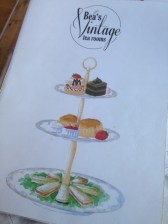
I’ll likely blog some other thoughts about why Bath is a must visit another time, but one of the highlights for both of us – teatime obsessives the pair – was fitting in a visit to Bea’s Vintage Tea Rooms. My friend K found the place online, and we were immediately keen, what with it being a lovely theme and by far one of the most reasonably priced teas we’d seen.

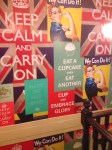
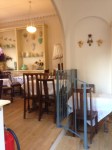
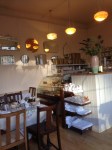
We ambled over around 4pm on a Tuesday afternoon, ducking in just as the weather was looking a bit suspicious, and being seated at one of the window tables for two. “Vintage” at Bea’s is wartime – WWII to be specific – and the decor is heavy on the tchotchkes and bric-a-brac, but with particularly themed areas, such as a small arrangement of utility fashion, furniture and crockery placed near the air raid shelter themed loos downstairs. The stairwell is papered with posters; Keep Calm does make an appearance, but feels welcome in this setting, if no other (alright, maybe not the cheesy cupcake one) and the tea sets are charmingly mismatched.

The staff are incredibly helpful and friendly, and we quickly ordered. I couldn’t resist trying the oolong tea – I’m a bit obsessed as my Tumblr suggests – and K had the traditional English Breakfast. All teas are loose leaf and, if the enormous gold canisters behind the counter are any indication, come from JING. I’ve bought gorgeous silver needle from JING before, and tea-loving friends often recommend it, so this, I felt was a good sign. My tea arrived with a little hourglass for accurate brewing.

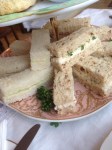
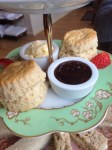
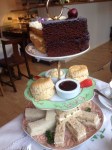
The standard afternoon tea includes a round of finger sandwiches (salmon, egg and cucumber if I remember rightly – two of each), a scone with cream and jam and two generous slabs of freshly homemade cake in two flavours. The assortment changes daily, and we got chocolate cherry and lemon drizzle. There is always one option available with no gluten based ingredients, though I don’t know if the kitchen can be classed gluten-free, and there are some savoury options that can be modified or swapped out, but if you need a totally GF menu it’s best to call at least a day in advance and they can make appropriate arrangements – though they don’t generally take reservations except for private parties of 10-20 guests.

The sandwiches were made up at the counter after we ordered, so were fresh, soft and buttery; the scones were lovely and light. The chocolate cake was lovely and crumbly, but the lemon was the absolute winner for me – a gorgeous balance of sweet and tart with a dusting of cute sugar shapes and a particularly good texture.

There is a function room downstairs for parties, and a trip to the loo – while disquieting for anyone verging on the claustrophobic – is worthwhile if for no other reason than to poke (figuratively) around the little displays.

Afternoon tea is £9.95 for one or £19.95 for two – not including the price of the tea, if I remember rightly – but to stop in for a cup of tea and a cake will cost from around £6 per person if that’s all you fancy. The menu is also heaving with delicious sounding breakfast and lunch dishes, which I will definitely try on any future occasion that I’m lucky enough to be in the area.

And though I did wear a tea themed cardigan and a slick of 40s pillarbox red lipstick, next time I might even fully dress for the occasion just for the fun of it!

Note: This was an entirely personal trip, paid for by us, and is not a sponsored or requested review. I just think you should go there, because I liked it.

Riverford Christmas Fair 2013, or, the story of Mr Carrot & the Scary Bear

The main hall, with Guy Watson demo in the background

The main hall, with Guy Watson demo in the background

As I think I’ve mentioned before just a few times (ahem), I’m a happy Riverford customer, and have been a happy veg box recipient since we moved in to our house over a year ago.

I’ve been enjoying the company’s more confident and consistent move into social media this year, and Facebook was how I found out about the London-based Christmas fair. I nabbed a couple of tickets (£6 each for us, Pickleface was free and there was a fundraising element for Shelter from the Storm, too) and last weekend we took the circuitous route out to Camden.

The whole event was extremely, joyfully, appropriately Riverford. Even the venue – Cecil Sharp House, home to the English Folk Dance and Song Society – felt the part. Activities included the big man himself, Guy Watson (who is a very smiley chap, and very easy to chat to) and Kirsty Hale doing cookery demos which filled the hall with delicious scents; there were also the typical stalls and samples and children’s activities in the garden.

MR CARROT HAS SEEN A SCARY BEAR, MUMMY

MR CARROT HAS SEEN A SCARY BEAR, MUMMY

The vegetable puppet making / decorating went down an absolute storm with Ramona, who after creating a Mike Wazowski sprout, a mushroom with a full floret of broccoli hair and the fourteen-eyed demon broccoli, finally also created the friendly Mr. Carrot, complete with pipe cleaner tail. He apparently acted as an early warning signal to alert us to the presence of a Scary Bear in the vicinity, so I spent quite a lot of the afternoon doing Mr. Carrot voices in between snaffling tasty morsels. Here he is, with his creator. Sadly Mr. Carrot eventually lost all his facial features in a tragic accident we no longer speak about.

She also enjoyed choosing her favourite fruit or veg to have painted on her face, and opted for tomatoes. I’m slightly kicking myself that I didn’t sit for a crop of blueberries myself as Kate aka “Chickpea”, who was doing the artwork, was rather brilliant. The team playing with the kids outside were awesome – Ramona was so excited when she got to play the role of a tiger helping to pull up the World’s Heaviest Turnip (it made sense at the time) and was staggered that they actually remembered her name when it was time to say goodbye. “But how did that man know my name mummy?!” “Maybe he remembered it because your name is incredibly cool?” “Oh, yes.”

For adults, there was food. Lots of it to try, and universally delicious. Samples included some gorgeous cheeses including the astonishingly good Cropwell Bishop Stilton – I’m a bit hit and miss with blue cheese but it was smooth and just strong enough without being what I call, in my grown up way, “feety” (insert maturity / cheese pun here). Absolutely gorgeous with a cranberry and port chutney. I’ve raved about Riverford mince pies before – even though they lost out to Bettys by a whisker, they’re still extremely good. We also bought a generous roll stuffed with slices of spiced beef, which Ramona quickly dispatched, and sweet braised red cabbage, which I hoovered up. A cauliflower, chickpea and coconut milk spicy soup took the chill off, and I managed to sip down a generous sample of a lovely red.

One of our real star discoveries of the day was Montezuma chocolate, which, being a hardcore Green & Blacks fan, I’ve never tried before. The milk chocolate with lime and chilli was an absolute revelation – fruity, creamy and with that surprising burst of heat at the end. I’m including it in practically everyone’s Christmas presents this year (if I don’t eat it first) and have already got my mum hooked on it. Sadly, I tried Montezuma’s Apple Crumble milk chocolate this week and found it sadly lacking (nice chocolate, a little bit of crunch but no discernible apple flavour), but it serves me right for cheating on my lime-scented lover with a flashy biscuity mistress.

All in all a lovely, family-friendly, foodie day. I look forward to next year’s!

An alternative Christmas cake: Bettys Spiced Fruit Gugelhupf

Bettys Spiced Fruit Gugelhupf

Bettys Spiced Fruit Gugelhupf

I make absolutely no secret of my love for Bettys. Last year the Yorkshire bakery narrowly but decisively pipped Riverford to the post in a mince-pie-off that I decided to have because I needed justification for eating all the pies. Then I spent a day last month making gorgeous Christmas goodies at the Bettys Cookery School in Harrogate. Basically, for me, Bettys = Christmas.

So I was delighted when the lovely team there got in touch and offered me the chance to try one of the bakery’s 2013 Christmas goodies. I asked what they recommended, and the Spiced Fruit Gugelhupf, a new addition to the seasonal collection, arrived in the post this week.

A gugelhupf is a traditional Bundt-style ring cake which hails from southern Germany, Austria and Switzerland; though there are regional variations in what’s added to the batter, this particular offering is studded with rum-soaked fruit, peel, almond nibs and chocolate chips and finished off with a drizzle of icing and a sprinkling of pistachios. Lightly spiced, it’s something of a heavier, distinctly more Swiss German version of a panettone. As I opened it, a cloud of rum-scented, cinammon-edged warmth hit me: Christmas in a box. It also had a faint hint of something like my mum’s melomakarona, though to my knowledge there’s no honey in it – must have been the whiff of fruit.

Cutting it open, it still looks quite heavy and solid, but when you bite into it it’s actually surprisingly light, and even a little crumbly. On first glance, I wondered if it should have been more packed with ‘bits’, but actually the balance is perfect – any more and it would have been a fruit cake. The spice is added with a delicate hand, letting the fruit shine, and actually the alcohol is more scent than flavour, which I prefer. Despite coming from a similar tradition, this has neither the stodginess nor the intense sweetness of something like stollen or lebkuchen, and the icing is a pleasant dash of sugar which complements rather than overwhelming.

This is a really good alternative for those who don’t like fruit cake and want a satisfying but not cloying sweet which is still essentially Christmassy. It’s not a budget choice at £13.95, but is packed with expensive ingredients and achingly fresh – it should be eaten within two days of delivery, but it can be frozen if you’re preparing ahead.

Bettys ships internationally for most items, but due to its freshness this item is only available in the UK.

Disclaimer: I was sent a Spiced Fruit Gugelhupf by Bettys for free to sample and review. I was not otherwise paid, nor was I required to write anything except my honest opinion.

Could you cook a meal for two on a £3 budget?

There was a time when I was privileged and blinkered enough to not even know that foodbanks existed. Now they’re the topic of everyday conversation, sadly enough, and even my tiny daughter has been on a trip to the local one to make a donation with her nursery class.

At the same time, food blogs are heaving with low-cost recipe ideas; leading the charge is the marvellous Jack Monroe, with her now-infamous kale pesto. Now Buyagift, a retailer that lists lots of luxury foodie experiences, is aiming to bring out food bloggers’ creativity, shed a spotlight on the issues involved and raise funds for a fast-growing foodbank charity. The task is to create at least one course for at least two people, on a strict budget of £3 (discounting for part-used ingredients is allowed, and butter, oil, herbs and spices aren’t included, so that actually gives quite a lot of scope).

Usually I’m a bit wary of awareness-raising and charity competitions, but I have to admit this one really appealed to me. There are some lovely prizes, but my competitive element isn’t really sparked – challenge me to a game of Monopoly if you want to feel like a loser – as no matter who takes the crown The Trussell Trust wins £600. For me it’s an opportunity to be both creative and thoughtful at the same time – because I’m still privileged and blinkered enough not to have to be all the time. I’m not even going to pretend that my budget is this low, but I’m certainly familiar with a stretched budget, and I have blogged before about how I want to be more conscious of the food my family is eating. I really want to learn something from this and be less wasteful and I hope that others do it and learn something too; that, for me, is a bigger win than any competition prize.

The competition is open from the 15th of November to the 15th of December, so there’s plenty of time to plan out a recipe sticking to your budget if you want to take part. You can find out more about it here.

Bettys Cookery School: Christmas Cakes & Puddings

Me in my apron. Let's just say it's a good thing I do social media for a detergent brand.

Me in my apron. Let’s just say it’s a good thing I do social media for a detergent brand.

My sister might ruin everything, but she is also excellent at presents. Back in March, she got me a gift certificate for the amazing Bettys Cookery School (no, there isn’t an apostrophe; yes, it bugs me). Based in Harrogate, Yorkshire – also home to the first Bettys tearoom – the school offers a multitude of cooking courses for all levels of ability.

We opted for a Christmas-themed course; growing up Greek, fruit cakes and puddings weren’t really part of our frame of reference. My mum’s gorgeous but distinctly light and un-fruity chestnut cream gateau and an M&S trifle were more the order of the day. Thus, going to the most quintessentially British (alright, English) place we could think of to make quintessentially British Christmas goodies was very appealing, and likely to mean we really learned something.

The School & Courses

Some of the beautiful array made by James

Some of the beautiful array made by James

Bettys Cookery School sits alongside the craft bakery which supplies the famous tea rooms and the online shop, which posts items out across the world. This Christmas they’ve already made tens of thousands of puddings and cakes, and are set to supply around a quarter of a million mince pies far and wide – with orders from as far away as Australia (and really, you can’t get much further). The mince pies in particular are a great favourite of mine, as last year’s head-to-head with Riverford showed!

The course room is a large, well-stocked kitchen with huge granite worktops, gas hobs and electric, fan-assisted ovens.  It accommodates around 20-25 cooks, working three to a counter. There’s also a small shopping area with items from the bakery and the cookshop, and a large area with tables at which to take food breaks.

Tutors could be full-timers at the school or staff from the bakery. We had David Haynes from the former group and James Proudfoot from the latter. We also had a ‘host’, Helen, who made sure tea and coffee were plentiful, arranged all the food breaks, welcomed us in and processed any shop orders.

Courses at the school range from half-day ‘mini’ sessions for around £100 to full week-long certification courses up to £1,600. We did a full day, priced at £180, which includes breakfast, lunch and two tea breaks, an apron, a course folder with all the day’s recipes (plus extras if appropriate), whatever you need to take your creations home – in our case a ceramic pudding bowl, three glass jars and various cardboard boxes, plastic tubs and paper bags.

The only thing you need to bring is washing up gloves if you need to use them, as you’ll be clearing up after yourself.

Christmas Cakes & Puddings

On this course we made:

A Christmas pudding
A Christmas cake
3 x 300g jars of mincemeat
A mincemeat streusel tart
A sizeable tub of rum sauce

Afternoon tea break!

Afternoon tea break!

All ingredients were provided, including chilled and rested pastry for the tart; there wasn’t time to make our own that day, but the recipe was included in our folders. Ingredients were already weighed, measured and bagged up neatly on trays, and if there was any excess (we zested a lot of lemons and oranges, but didn’t juce them all), were were invited to take this away with us.

When we arrived, we were given half an hour to settle in, grab our aprons and enjoy some buttery, crisp, achingly fresh croissants from the bakery, with lightly salted butter and Bettys jam, plus as much Yorkshire tea or Taylor’s of Harrogate coffee as we could manage. We sat in groups of six around tables, and introduced ourselves to others on the course; though it’s a lovely thing to do as a pair, everyone was so friendly I wouldn’t have felt awkward alone. It was a real mix of newbies and regulars; one woman came with her mum who, whilst new to Bettys Cookery School, already had FOURTEEN Christmas cakes maturing in her cupboards at home (for the record, she still picked up a new tip or two!).

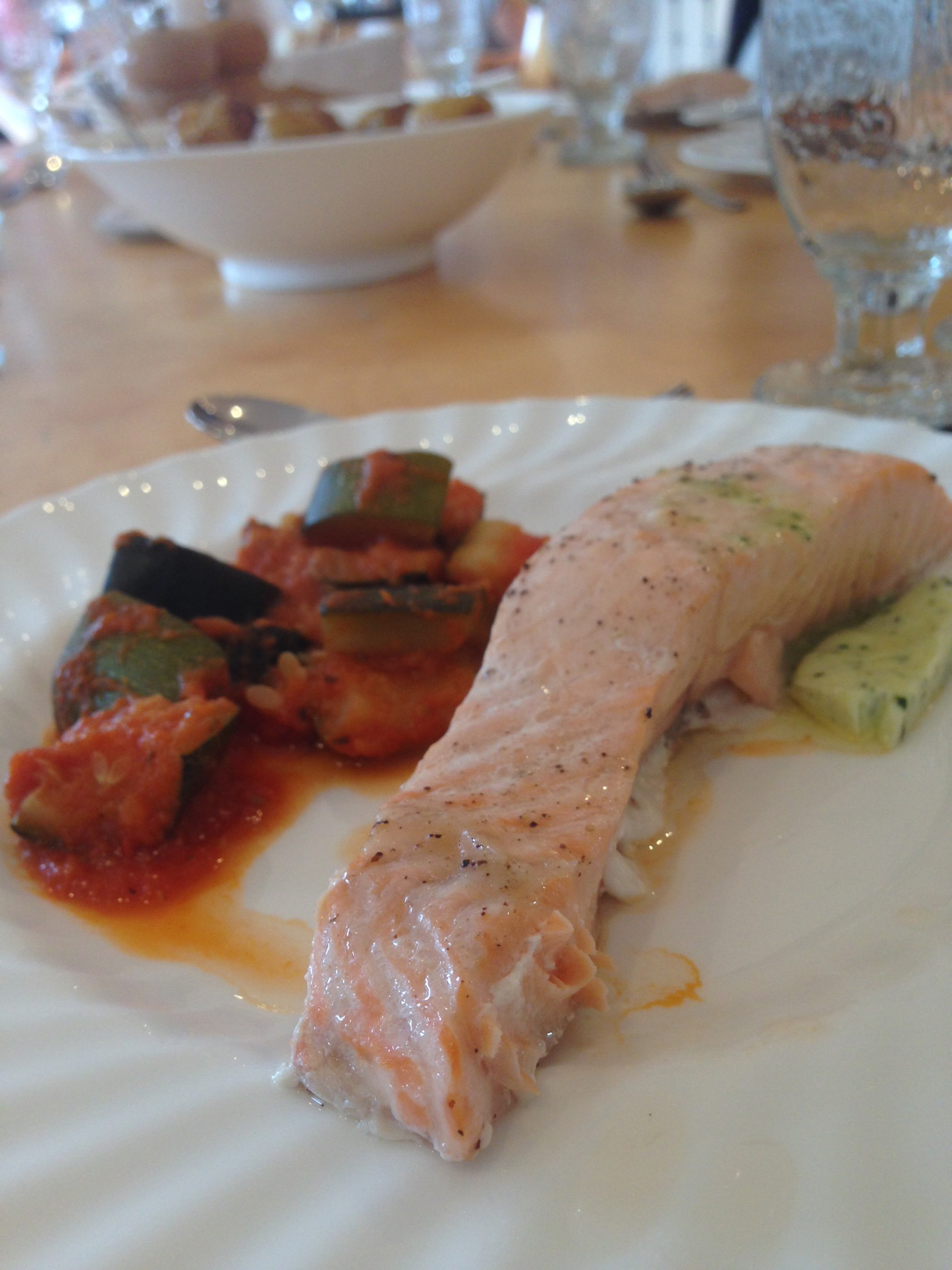
Poached salmon and veggies - just waiting to add spuds!

Poached salmon and veggies – just waiting to add spuds!

We then gathered around the demo table for the first walk-through – the pudding, and sterilising the jars. Our ovens were already set for us, and nicely to temperature, so we could get straight into hands on – or rather hands in – mixing and washing up our jars so we could pop them in. Once our puddings were neatly packed into their bowls, topped with the pre-cut baking parchment discs we were provided with and trussed up in foil on the hob, we had our first tea break, with hazlenut swirls and chocolate cookies. David and James floated around to help, and during our tea break they ensured all the puddings were turned down to a simmer.

After tea we got to work on the cake, and we seriously earned our lunch. The tutors prefer it to be made by hand so you can understand what’s happening and why; just as well, as nearly all of us managed to have some curdling towards the end of our egg addition. My hands got so buttery from stirring and scraping, I actually have a blister at the base of my little finger! James, who has turned out thousands upon thousands of cakes, took a good half hour to demonstrate the mixing, so you can imagine how long it took us! We picked up great tips, like using glycerine for moistness and making sure the cake is carefully levelled to stop fruit popping out and burning, leaving a bitter taste. We also discovered that the whole wrapping-up-in-brown-paper thing is not only unnecessary but actively detrimental, as it increases the baking time and therefore dries out the finished cake.

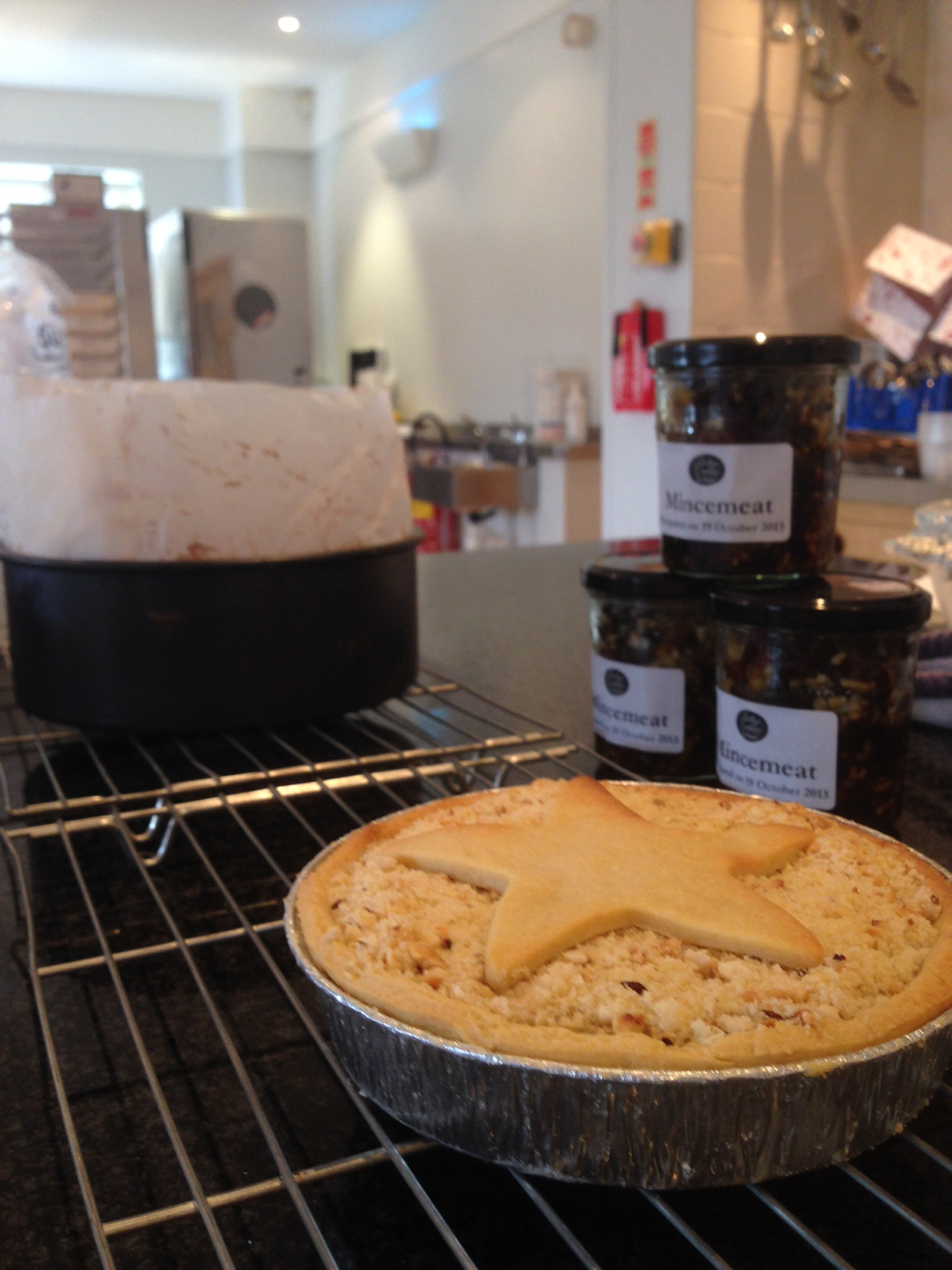
Mincemeat streusel tarts - mine is the star, my sister's the tree.

Mincemeat streusel tarts – mine is the star, my sister’s the tree.

After quickly mixing and transferring the mincemeat recipe to the jars, we washed up for a delicious lunch of poached salmon, new potatoes and ratatouille, followed by a dark chocolate bombe concealing a gooey, passionfruit caramel centre (bascially a very posh jaffa cake). We also got a lovely glass of Swiss wine in the colour of our choice.

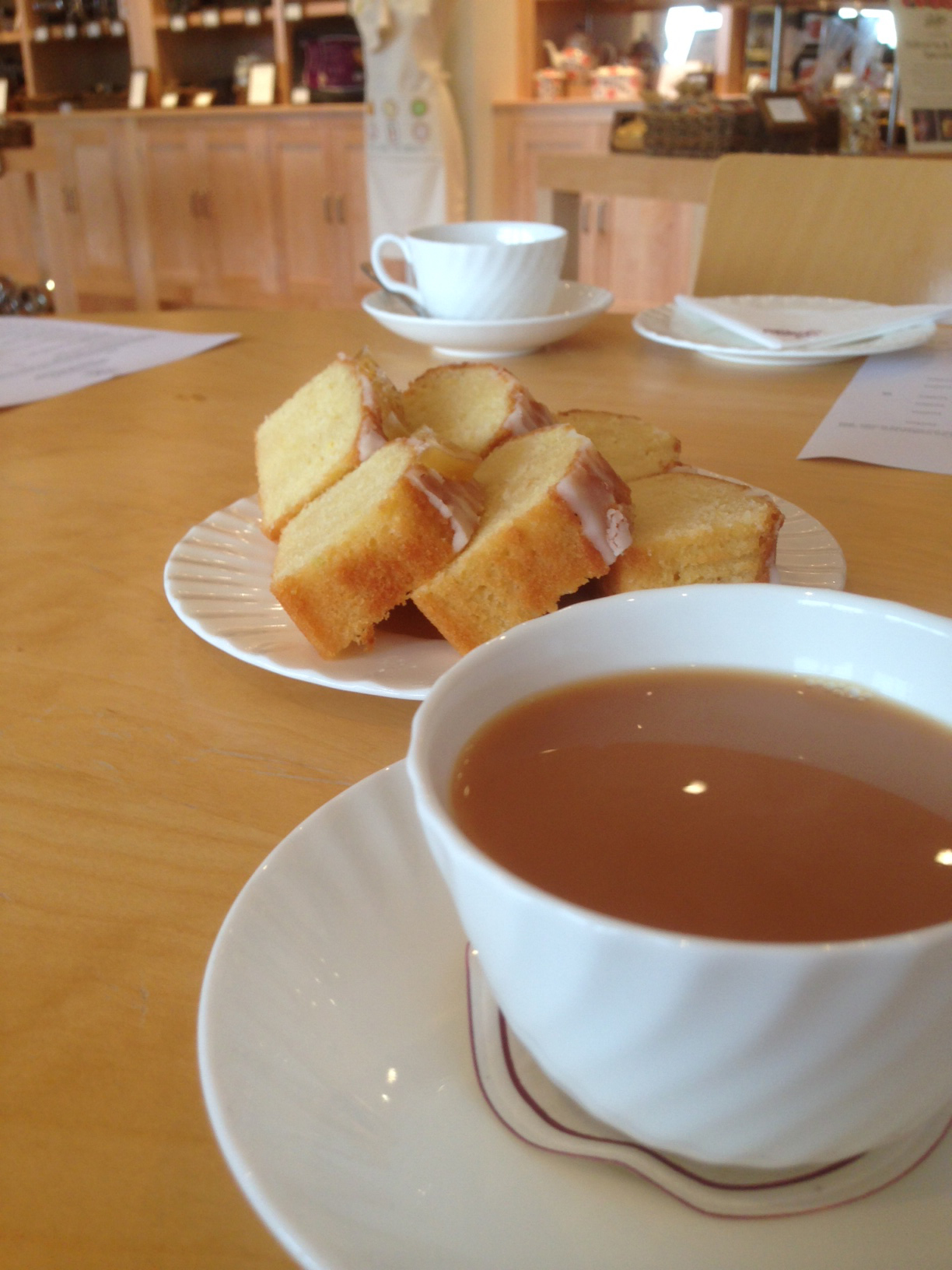
After lunch, we embarked on the streusel tart, which mostly meant rolling out pastry and making a crumble topping, and then the incredibly moreish rum sauce. I finally understand how to make a decent roux! While the tarts were baking we squeezed in another tea break with generous slabs of lemon drizzle cake, and then tasted Jame’s pudding and a Christmas cake that had been maturing in the bakery for a couple of weeks. We also learned that you should never cut a fruit cake with a flat-edged knife, as the pressure really messes up the texture and makes it appear dry; always use a serrated edge and saw gently. Seeing the two freshly cut slices in front of us and the difference in appearance was seriously surprising.

Verdict

I was really excited to go to the school, and I wasn’t disappointed. Although it was a gift, it would have been well worth paying for as it was extremely good value, even taking into account the trip up from the South East (although I do have free accommodation in Yorkshire!). There are a few courses I wouldn’t try, as with the right recipes I’d feel I’m an experienced enough baker to just experiment at home, but as I have absolutely no idea about mincemeat and fruit cakes it was pretty perfect. There are also advanced courses if you’re already quite proficient, plus things like knife skills and several savouries courses, not just baking.

My plan is to save up (or make Christmas / birthday cow eyes) for the breadmaking basics, as I think that’s something where it’s really helpful to have an experienced guide tell you what you should be looking for in terms of texture. Plus it’s a skill I can see me putting to good use at home on a regular basis.

Great British Chefs and #SMWFoodPhoto: Food photography, David Griffen & Marcus Wareing

Although I’ve never defined exactly what kind of blogger I am – parenting? Disney? Cat? – one of the things that has always been a big part of my writing is food. As a result I’ve been privileged to get to know some of the Great British Chefs team and community, and even blogged for them once or twice.

photo 3

During Social Media Week, the only thing that could rival the excitement of having been asked to speak in a panel myself was attending GBC’s free food photography workshop.

Not only would I get a chance to hear photography secrets and tips from the brilliant David Griffen – who is responsible for more than 50% of the imagery on the gorgeous GBC site – but I’d also get to go fangirl and be in the same room as a food hero, Marcus Wareing. The menu for the evening was to be provided by the team from his St. Pancras-based restaurant, The Gilbert Scott. As icing on the showstopping cake, it would be at Google’s London HQ, allowing me to tick off another square of my Social Media Bingo card (I need Twitter for the big-name hat trick).

photo 1So, what did I learn? Other than the fact that rabbit and prawn pie is not just a thing, but a very, very delicious thing and that gin and lavender cocktails are insanely gorgeous?

Well, how to take slightly better photos than that wobbly cocktail and popcorn one, for a start.

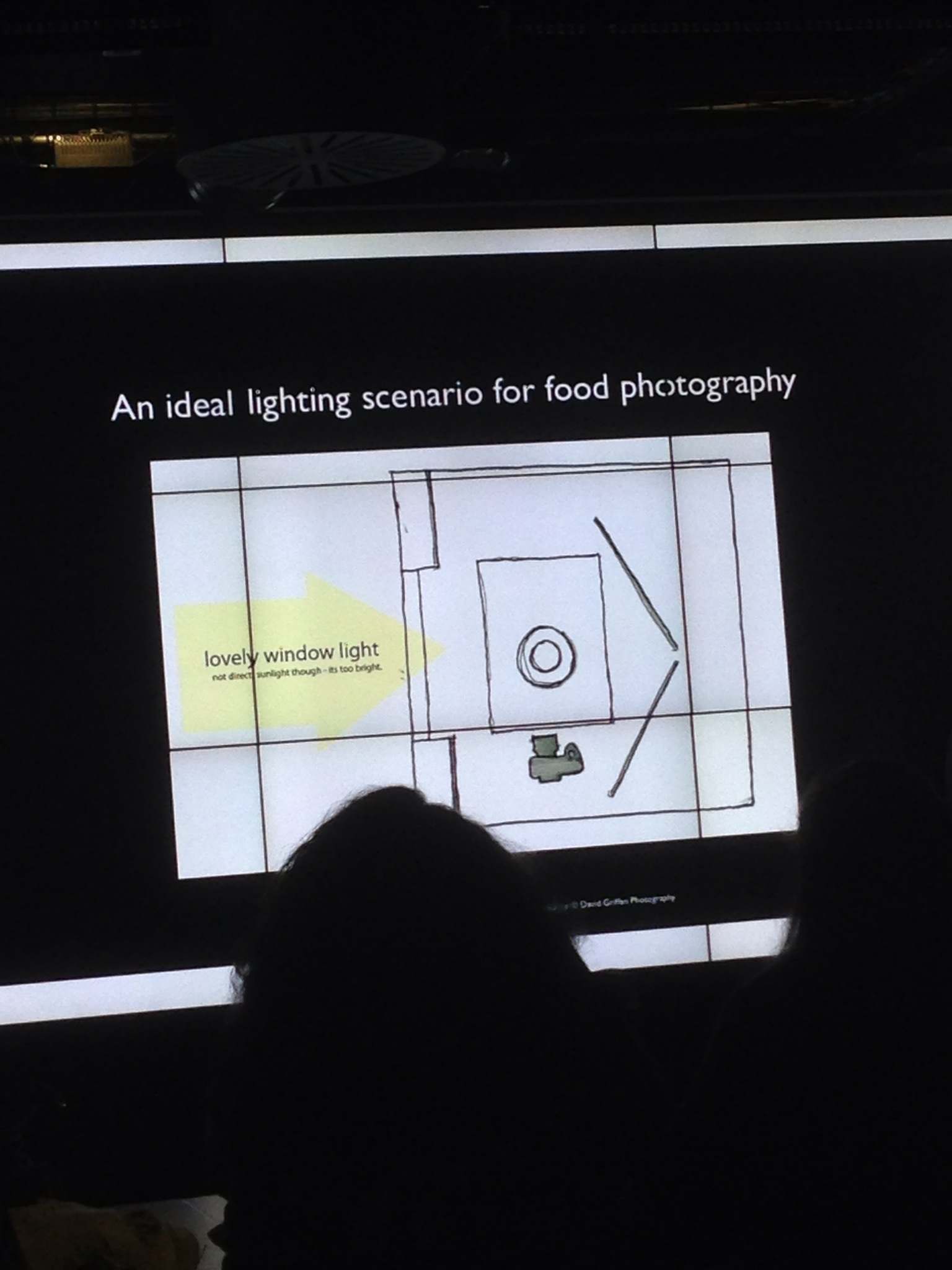
What I particularly loved about David’s presentation was that he focussed almost exclusively on photography with an iPhone or similarly app-happy smartphone. Since for the vast majority of those of us likely to whip out photographic equipment before eating this is going to be the most commonly used device, it was considerably more useful than fancy DSLR settings. It also focussed much more of the classic elements of photography, such as composition and lighting – because to be a better photographer you need an understanding of those much more than you need expensive kit.

David’s Top Tips

photo 2

Take photos where there is already good natural light. Unfortunately, for many of us this isn’t something we can control; David – quite justifiably – suggested doing your shooting at lunchtime, and simply enjoying your food at dinner time, but how often do you get to go to some great place more than once in order to do that? For many of us, we’re grabbing the opportunity to snap away for a one time only deal; but do try at least to remember the importance of the best lighting you can get.

Try some different apps. David recommend the (free) ProCamera, and it really is quite outstandingly awesome. My two favourite features are the ability to separate exposure and focus (so you can work with the best available light without compromising the composition you’ve chosen) and the rapid fire mode for action shots. The latter I’ve not yet applied to food – just to my daughter, dancing! – but I can see it working very well for cooking shots.

Try several layers of filters before you hit Instagram. I’ve recently become quite enamoured of VSCO Cam, and was pleased to see David rated it too. But his most valuable recommendation for me was Snapseed, a Google app I’d somehow missed entirely and which is absolutely brilliant for correcting brightness and white balance. His suggestion to use the Drama filter is one worth taking.

Processed with VSCOcam with f2 preset

There were many more points raised, but those were the ones that sank in, and that I’ve been trying to apply ever since. Not always successfully, I might add, but that is entirely my own fault.

Once David had imparted his hard-earned knowledge and Marcus had his say (more on this in a moment), we headed off into the canteen (left) to sample more delights and try out his tips, while the man himself darted around offering assistance generously.

The first subject to catch my eye for practice photography was this member of the TGS team, assembling the moreish oxtail sliders that were probably the most praised of the evening’s treats. On the right is one of the original photos (sadly I accidentally deleted the same one, but as it was taken within a few seconds, conditions were extremely similar). On the left, it’s been taken through Snapseed’s Drama filter, had the saturation tweaked and then been run through one of VSCO Cam’s more cinematic filters.

Processed with VSCOcam with c1 preset photo 1


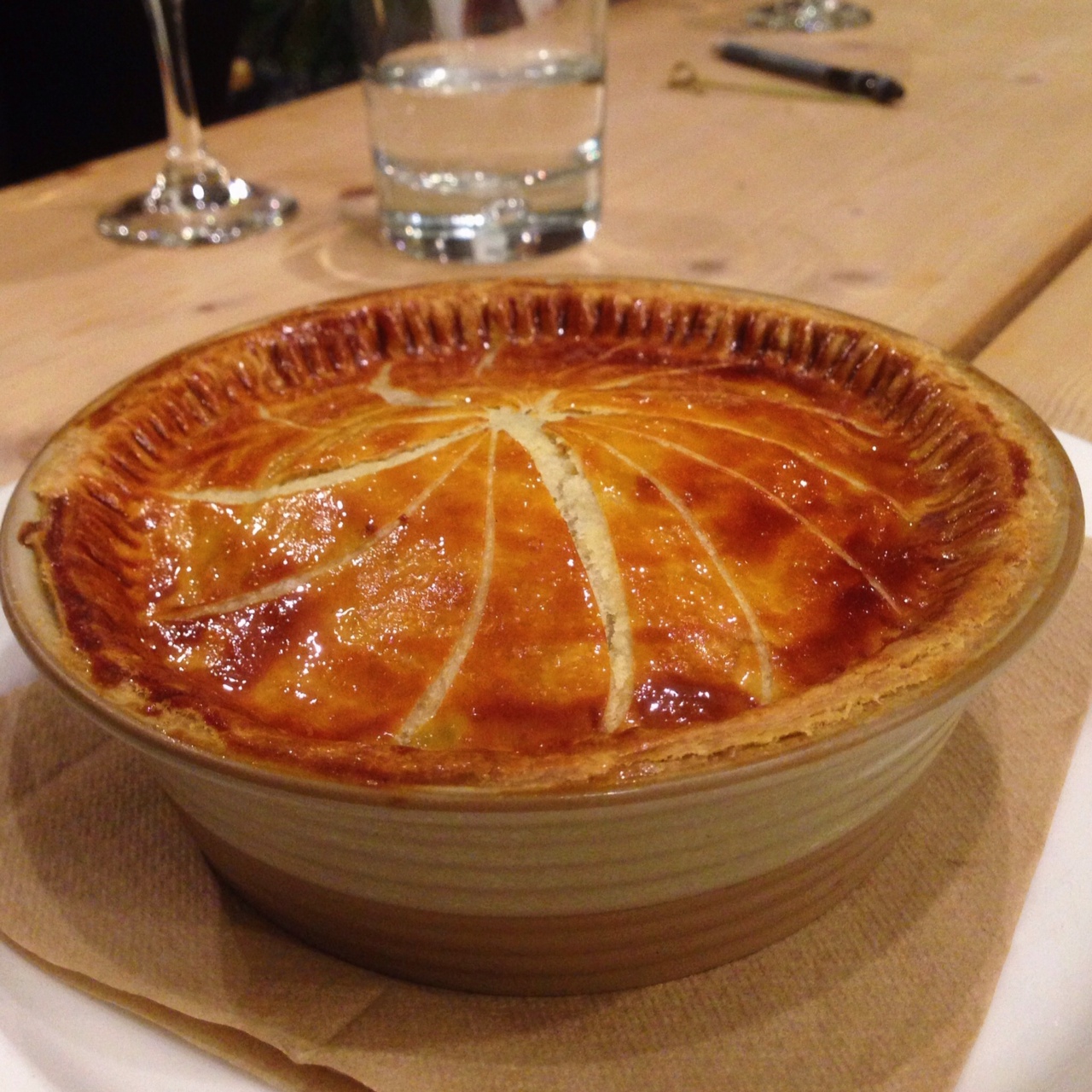
Next I set my sights on the elegant rabbit and prawn pie; the softness of the rabbit, firm bite of the prawns and flaky gorgeousness of the pastry were all nearly enough to make me put down the damned phone and eat, but I managed to get a few shots in… of which this, again tarted up with Snapseed, was probably my best.

Processed with VSCOcam

As we all plunged into a shared bowl together, I was quite taken by the look of the plundered dish afterwards, and this time managed to save the original shot, the one after a VSCO Cam filter was applied and then the final one after it had been put through Snapseed (yes, Drama again).

A beautiful Dorset crab, spiced pear and cobnut salad followed, but sadly I wasn’t happy with a single shot I took of that. I focussed my efforts then – photographic and gastronomic – on the Snow Egg dessert.

Processed with VSCOcam with f2 preset

Having wanted to try this floating island-esque confection since reading about it when the restaurant opened, I was not remotely disappointed by it’s light yet substantial deliciousness. Though I still don’t feel I did it justice, lighting-wise.

And what of Mr. Wareing? Well, he’d admitted with frankness that in anyone less renowned for speaking his mind, would have seemed disarming, that the initial rise of food blogging had taken him by surprise and had scared him. At one point, cameras had been banned in the dining rooms, a move that he now concedes was completely wrong but at the time was meant to try and preserve the atmosphere of fine dining that to him is such an essential part of the experience.

He is not, he confesses, at all interested in street food trends or fun little side projects; he is in the business, first and foremost, of flavour, but also in providing the very best experience he can and constantly overseeing his profitable restaurants. For example, he found the canteen environment quite odd for serving the food his team were providing, because to him the restaurant setting and its menu are so inextricably linked. I wouldn’t be me if I didn’t try to draw a Disney parallel in there somewhere, but honestly I think it’s apt; if Walt’s devil was in the detail, so is Marcus’s.

marcusWhat was really interesting was how much he was willing to answer and be completely honest about – and he asked questions too, so that at one point I found myself explaining about professional bloggers and blogger outreach (I’m amused to find this made it into GBC’s own account of the evening!).

I left on an absolute high, calling my husband from the street and babbling at him so inanely I’m sure he thought I hadn’t had just one cocktail. But this was the very essence of what such an event should be: fun, educational, memorable and interesting. Hats off and many thanks, as ever, to the fantastic Mecca and the GBC team.

Disneyland Paris with a Pre-Schooler: Dining at the parks and a Blue Lagoon review

If you’re interested in more of a general overview of staying at Disneyland Paris (aka DLRP), please read this post first. None of these posts were in any way suggested by, paid for or anything to do with DLRP – this is just a family holiday report.

Food was probably the issue that came up the most when it came to Disneyland Paris. Everyone had an opinion on it and, I have to admit, they mostly weren’t gushingly complimentary. Mostly the objections were to expense, and that is an issue; however, many people were also fairly critical of the quality of the more affordable offerings.

Firstly, let’s take a look at what’s on offer. As I don’t have personal experience of the Meal Plan system, I’m going to leave explanation of that in more knowledgeable hands, but here’s the very top line of what you need to know about the various available dining experiences. You can also view more details or search by budget on the DLRP website.

If you’re just interested in Blue Lagoon, skip to the bottom now for a review and pics. If you just want to  book a table, then call +33 1 60 30 40 50 to book (from 2 months before you arrive).

Counter Service

What it it? Generic burgers and fries, sodas and ice creams.

Should you do it? Personally, I don’t think so.

To be honest, I can’t disagree with the criticism of the counter service meals. The one day our planning failed and we succumbed to chicken burgers in the Studios, we regretted it. It’s very basic stuff, and Ash was feeling the after-effects of the gristly, greasiness of his burger for a while (mine seemed to be in better condition, but nothing to write home about).

You can feed a family a decent amount on €10-20 per head, but lots of people prefer to save their pennies for a more satisfying evening meal and get through the day on cheaper and – sad to say – tastier snacks. Disney hotels officially discourage people from taking food from breakfast buffets “for hygiene reasons” but a number of people do fill up in the morning and snack on “leftovers” (see bringing your own food, below). If you don’t want to do that and you’re not under time or location pressure, heading to Earl of Sandwich in the Disney Village is a great low-budget option; we ate there twice, for €10 or less per head (sandwich, drink and crisps for adults, with fruit or brownies in place of crisps for kids). My mother-in-law was so full she had to surrender her meal half way through. Reports that my husband and I fell on said remnants like wolves are massively overstated. Ahem.

Tip: Though there is usually plenty of seating – especially in the big commissary-esque entrance building of the Studios – the queues rapidly build up between 12 and 2. Also, getting a fancy drink cup costs a whopping €16 so be prepared to say no – as I had to.

Table Service

What is it? Pretty much exactly what you’d expect with lots of lovely themed options, most of which will instantly double (or more) the per-person budget unless you’ve opted for the Meal Plan – though there might be restrictions on what you can have. This does of course mean committing to a longer meal so they’re often best booked for dinner.

Should you do it? I think so, if just once. While many places look quite high end they do of course welcome children of all ages at all times. Annoyingly, kids’ menus tend to be the same guff you get at counter service places, but if your child is small enough to share that’s not necessarily a problem.

Tips: Book in advance and choose a less-crowded early sitting, especially if you have to eat at a particular time because of the kids or in order to give yourself time to watch the nighttime show; the good news is that off-season, earlier sittings are easy to nab. You can do this before you go by ringing the reservation line up to 2 months before you arrive (+33 1 60 30 40 50), when you arrive at your hotel concierge or at the restaurant in person during your stay.

Buffets

What is it? One of the most common dining options, and very popular. It pays to book ahead. Options vary according to the location, but there are certain things that crop up everywhere (eg a fish dish, a roast, copious vegetable, pasta and other meat options; lots of desserts). Prices for adults tend not to include drinks, whereas prices for children usually include one – and you can ask for a like-for-like substitution; for example, it often says orange juice, but my daughter much prefers apple – this was never a problem. As far as I’m aware, buffets are always on the Meal Plan (at least, we were always asked if we had vouchers).

Should you do it? Definitely. The quality of the food is really decent, and so varied that even my father-in-law – a self-confessed food fusspot – was in seventh heaven. Having Remy drop in and visit at the Restaurant des Stars in the Studios – while we were nomming on ratatouille, no less –  made it magical for her. Each meal for five (four adults, one three year old) set us back about €125 but we ate enough for 10. Under 3s are are free, and children’s prices are around half that of adults.

My in-laws also took our daughter to the Hunter’s Grill at our hotel, Sequoia Lodge, for a slightly more expensive option while my husband and I had a date night. They reported an even better array of choices, with twenty dessert options in bigger portions than we’d seen in the parks. You don’t have to be staying there to go for dinner; just call and book. then grab a free bus or walk over.

Tips: The Plaza in Main Street, within view of Sleeping Beauty Castle, is lovely, but gets very busy, very quickly. Go at an ‘off’ time, or book ahead. Be warned – the loo facilities are bizarrely sparse for such a big restaurant. Also, read your buffet receipt; there’s often a ‘special offer’ attached, such as a free hot drink to be claimed later that day (times and locations stated).

The Village

What is it? The Disney Village lacks some of the lakeside elegance of Downtown Disney in Florida, but the principle is much the same; providing the nightlife for the resort in the form of sports bars, it also boasts what was then the first European Earl of Sandwich, a Rainforest Cafe, King Ludwig’s Castle, a steak house and a “New York style” sandwich joint – among others.

Should you do it? In case you missed it, I’m now a confirmed Earl of Sandwich fan. Great value and, off-season, never seemed busy (perhaps because it’s tucked away at the back). If you’re going to find lower-budget options anywhere, it’s here. Rainforest Cafe is a fun environment for kids and not terrible value; we had a normal two course meal and drinks for about the same price as a buffet. Of course, that means less food for the same money, but buffets will always win on that score.

Friends have recommend King Ludwig’s, and a number of the Village restaurants seemed to have better value set menu offers than we saw in the parks.

Tips: Don’t assume nipping to the Village for lunch will be massively out of your way, even with a child. If you plan to go from one park to the other (my daughter liked to visit Fantasyland in the morning and head to Toy Story Playland in the afternoon), it’s actually quite a nice pit stop along the way.

Dinner Shows and Character Dining

These were experiences we didn’t have, mainly due to lack of time and increased expense, but also because we’d heard the food offerings were not spectacular at Chef Mickey’s, the most popular character dining spot. Kids do get much more interaction with characters than at a meet and greet, but there are so many opportunities for meet and greets, we didn’t feel we’d missed out. Also, distracted kids don’t eat properly (and while that’s not what the whole thing is about, my daughter’s tantrums do seem to hit when she’s tired and hungry, which is a real possibility at a Disney park).

No tips or advice on this one as I haven’t experienced it first hand!

Bringing your own food

Although Disneyland’s official FAQs state you shouldn’t bring outside food into the parks in fact, no-one cares from what I could see – and sites like DLRP Magic say that the food ban is a myth. Staff are unlikely to overlook a full scale Yogi Bear routine, though there are designated picnic areas before you enter the parks; still, a couple of sandwich bags of snacks and treats could well pass unmentioned. We took a few cereal bars in with us each day, and maybe some fruit, and that got us through times when energy was flagging.

No, it’s not my fault if they decide to quote the rule book at you.

General tips

Many of these are mentioned individually above, but to summarise:

  • Take a small water bottle and refill it at the water fountains every day. Along with loos, fountains tend to be found at the entrances to parks and separate themed areas (lands). This will save you a substantial amount in bottled water.
  • Booking is easy, and advisable. Do so either locally in person / at your hotel or up to two months in advance using the booking number (+33 1 60 30 40 50).
  • Consider finding ways to ‘make do’ through the day so you can splurge on a bigger meal.
  • Take snacks. Even if you buy meals throughout the day, kids function so much better with little boosts to their blood sugar and, frankly, so will you.
  • If worrying about meals is going to spoil your trip, look into the Meal Plans, which mean it’s all paid before you go and you can save up to 15% on the menu price; there will be some restrictions, but you’ll have it all mapped out.
  • Alternatively, work out which options appeal and factor this in to your budget when you’re saving.
  • Disney tends to be extremely good at accounting for dietary restrictions. There is a guide to allergen-free meals available as a PDF here. Additionally, as with Florida, if you book in advance and contact the restaurants beforehand to give them advance warning, they’ll let you know what they can accommodate. Generally, at least 24 hours notice is appreciated.

Blue Lagoon

The minute I heard about Blue Lagoon, I knew that was where I wanted our date night to be. We were in the privileged position of having grandparents willing and able to take our daughter for the evening, so we made an early booking – 6:30 – to have a leisurely meal before Disney Dreams! started at 9pm. This turned out to be good planning, as the full three-course meal took a good two hours, with service being friendly, helpful but not particularly speedy (a good thing for us, as we were having a Romantic Moment, but something to consider if you’re coming with kids).

photo 2

Blue Lagoon’s setting is its major selling point, nestled as it is within the Pirates of the Caribbean ride, so that you can watch the boats go by as you eat – in the photo, the lagoon is just behind the families in the background. The seating alongside the rail giving you the best view of drifting tourists tends to be for four diners plus, so actually it’s a good way to keep the kids occupied, waving at the goofily-grinning boatloads. The darkened, romantic atmosphere might otherwise not be such a draw for them. (It’s also what’s responsible for the quality of the photos – sorry).

There are a number of set menus available, ranging from €30-odd to €50-odd. We found that our choices actually fell within the most expensive of these, so went for it and added a half-bottle of red and a large bottle of water.

The menu (an example can be found here, though we had slightly different options and prices were higher) is largely surf and / or turf. There is a strong and deliberate nod to Caribbean – or as DLRP calls it, ‘exotic’ – cuisine, with ingredients like cassava and a healthy smattering of fruity salsas and spices thrown in any given dish. As a result, this is not a location for picky eaters or those who prefer simple dishes. My starter of swordfish, octopus salad and a an avocado mousse was generous, and though the octopus salad tasted a bit canned, the rest was excellent. Ashley’s included a hunk of super-soft black pudding, prawns, more avocado and little fried bites of deliciousness. We also gorged far too much on bread rolls (the standard mini baguette found at all breakfast buffets) and butter alongside it, but this is a pretty indulgent place, so perhaps we can be forgiven.

photo 1

photo 2

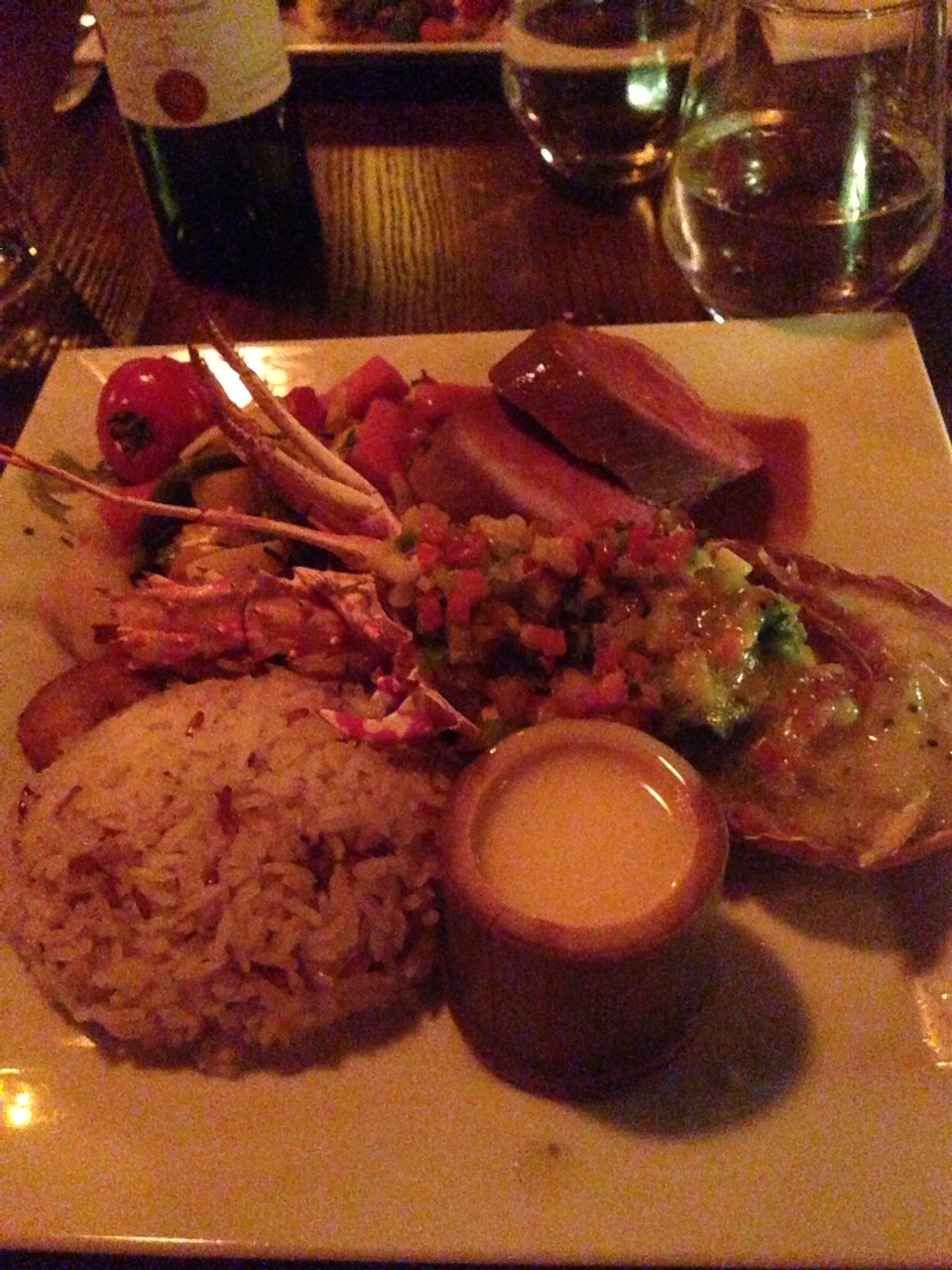
I opted for a ‘surf and turf’ main of veal medallions and half a lobster tail with coconut rice and ginger butter. There was also a fruity-spicy salsa which was a real winner alongside the lobster flesh and tender veal. The infused butter was absolutely gorgeous, and brought the whole thing together beautifully. Ash’s steak was nicely cooked to order, and nicely complemented with cassava and mixed vegetables.

photo 3

photo 4

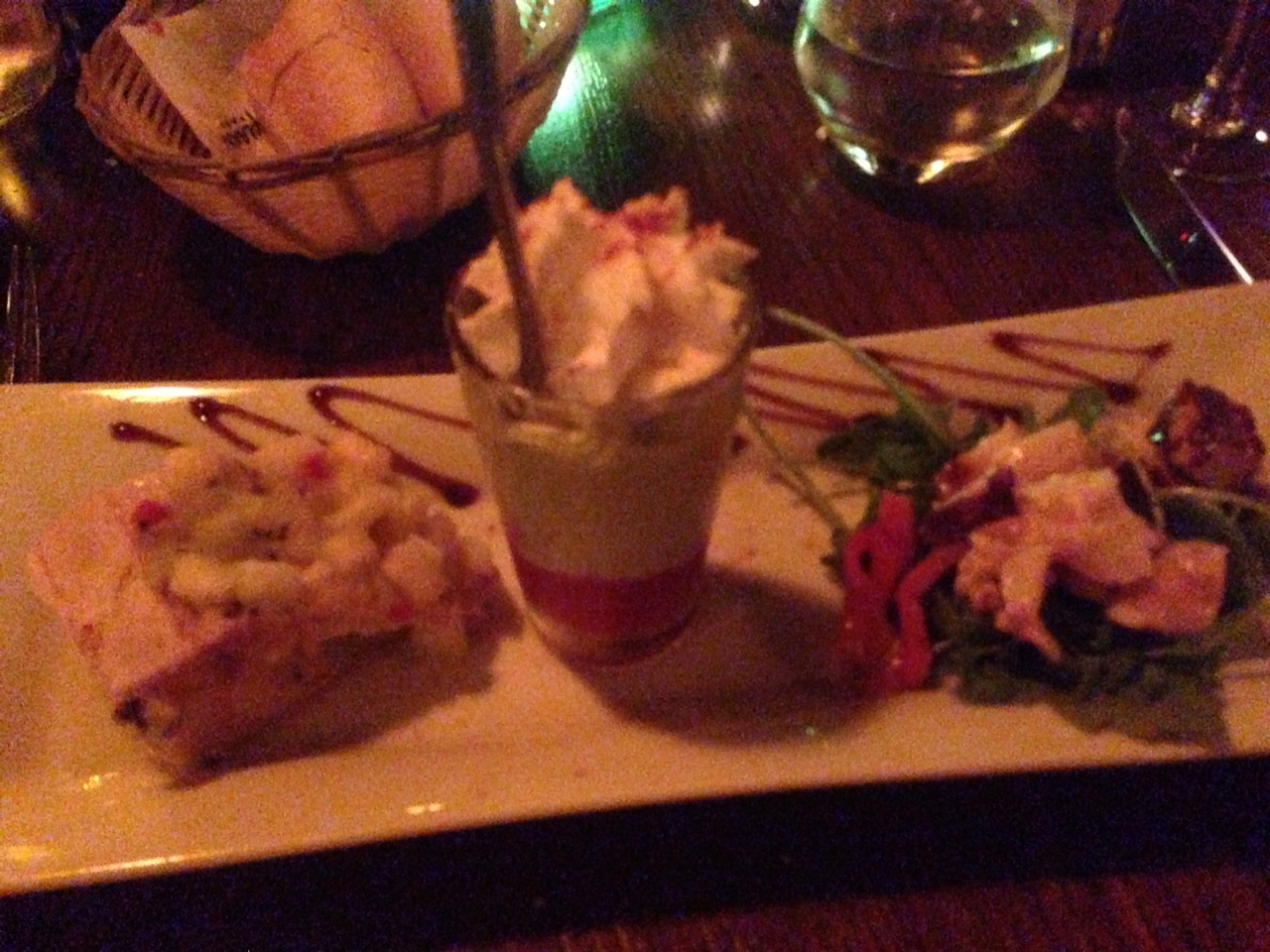
I was truly too full to enjoy dessert as much as I should have, though for me it was also the slight weak point; while the rum baba was fluffy, generous and delightfully soaked, the kiwi-based fruit salad and huge amounts of cream with it were actually slightly too much and I felt a little sick by the end. I still finished every single bite, though… Ash’s more restrained chocolate fondant was gooey and simply lovely.

photo 5

photo 5

The final bill came to €130 (before service), but as we were asked about vouchers it appears Blue Lagoon is on the Meal Plan system, and might be better value under that plan (there are various grades of plan and menu restrictions, so you should check this before booking / buying).

If it’s not clear from the above, I would absolutely recommend Blue Lagoon, particularly if you are able to escape for some alone time; however, if you prefer to be with the kids (or haven’t got an alternative option), they are extremely welcome. There is a kids’ menu for a reasonable price, but if you have an adventurous child perhaps you could go for a starter instead, and share mains with them.

Bon appetit!

Cooking with rhubarb and small children

Since my headline is anything but, I’d like to make it absolutely clear I didn’t cook Ramona. The idea is occasionally tempting.

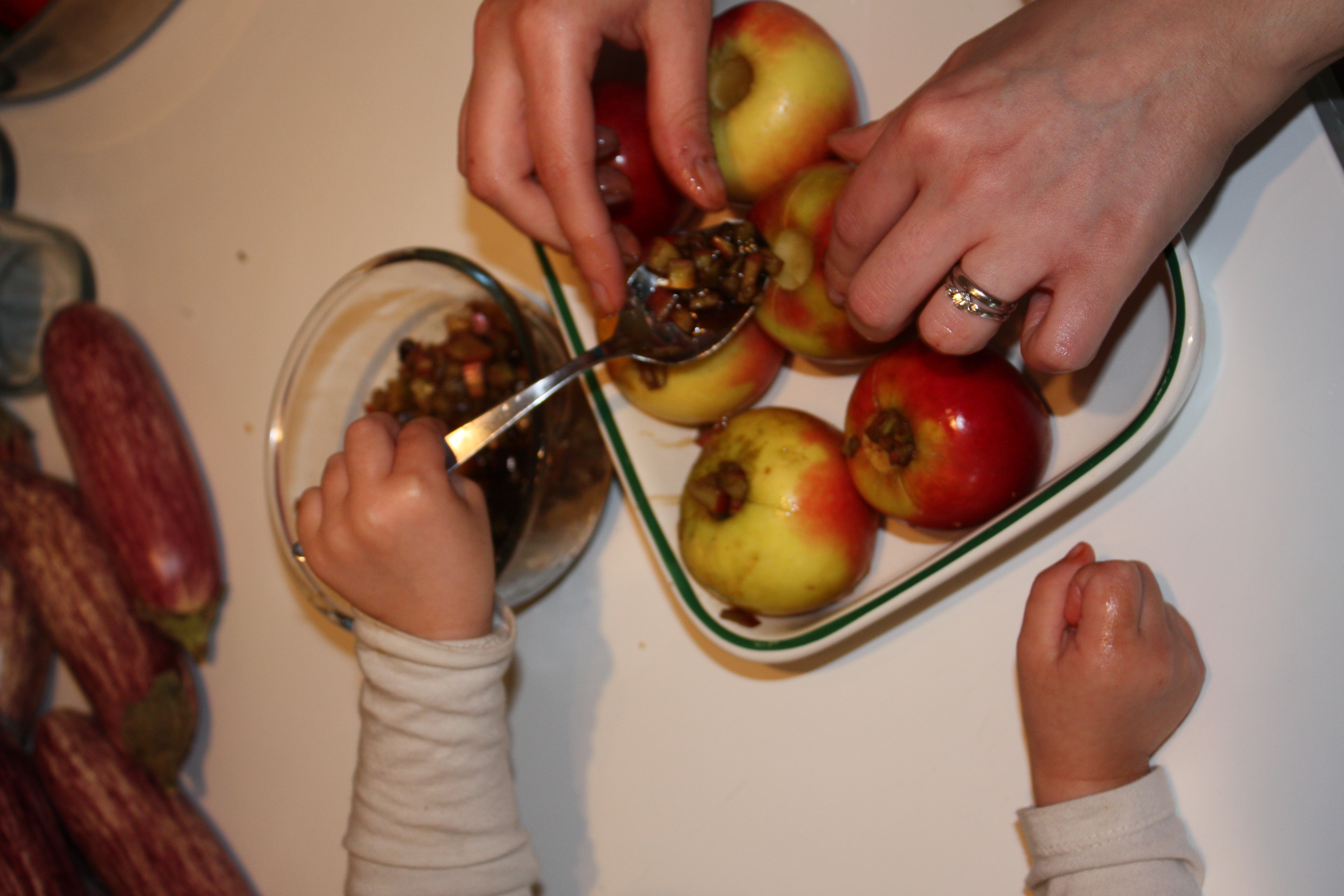
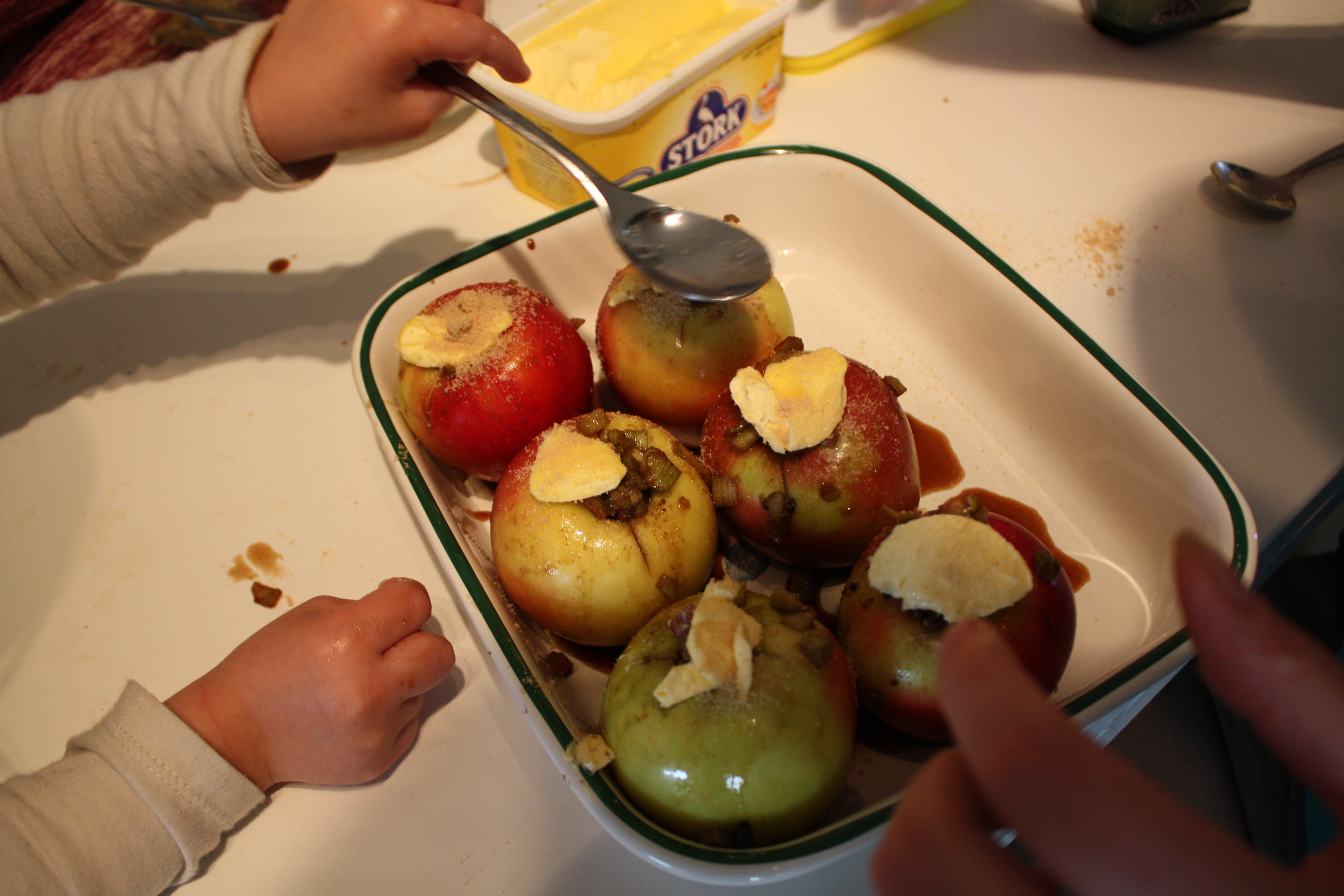
So, for the full explanation of our adventures in growing rhubarb, and a great recipe for stuffing apples with rhubarb, see Great British Chefs. Because, yes, I’ve been lucky enough to get another post featured and I am One. Happy. Woman. With any luck – and if I can pull my finger out – this will be a slightly more regular occurrence. I’m feeling sufficiently buoyed by my unusually positive experience with an almost-three-year-old in the kitchen that I might let down my guard further and attempt something a bit more complicated.

It might also involve rhubarb, because I’m getting a little wee bit obsessed with it. Every time a tiny shoot of it gets large enough to munch on, I rip it up, slice it fairly thinly and simmer it in a small puddle of melted butter with a sprinkling of sugar so that it becomes a soft, eye-wateringly tart and delicious compote for porridge or yogurt – and even, one morning, a toast topping. Sadly, I can’t much get Ramona involved in this process – knives! hobs! hot butter! – though I did use the magic of Sam I Am to get her to try the resulting gloop after she announced without tasting it that she didn’t like it. She then stole the remainder in my bowl and snaffled it happily.

As an aside: she’s actually not at all a fussy eater – her key list of dislikes at the moment amounts to peanut butter and bell peppers, and even then she’d eat the latter if they were cooked and concealed. Not exactly things she can’t live without, anyway; we get no-sugar-added peanut butter, but it still has plenty of unnecessary salt.

My challenge now is how to eat more rhubarb without eating more sugar. I already eat far too much and am looking to make some reductions; nothing terrifying, just making sure most of the sugar I eat comes from vegetables and fruit, rather than being added, and that I reduce the amount of baked goods I eat in general, including bread.

So how is unsweetened rhubarb to be eaten, short of wincing and gulping until my battered taste buds learn to cope (that’s an option)? In a fit of attempted common-sense thinking, I loaded up the fruit bowl with apples, on the basis that perhaps mixing the ‘barb with sweeter fruit would increase the fructose content overall and balance out the tartness. Perhaps a few berries in there as well?

And what about potentially including it in savoury food? Or is that too Masterchef? All suggestions welcome.

When we moved in, back in September, there was still loads of rhubarb growing, so I’m hoping we’re going to get the Doctor Who of rapidly regenerating crops here. There are at least four crowns of it growing away, and one even survived my ill-conceived (and, it must be said, ill-intentioned) butchery in those days before I actually tried eating it and discovered its awesomeness. It’s possible Green Eggs and Ham has struck a chord with more than one Goldstein.

And to finish this vague ramble about what I reckon could be the most divisive vegetable since Brussels sprouts, some photos I didn’t use for GBC. Outtakes, if you will. No, I can’t explain the random heap of aubergines in the background, and yes, I would normally use actual butter but we’d run out.

IMG_6307

IMG_6326

IMG_6327


Food Blogging: The Pesach and Greek Easter Edition

Usually around this time of year, the Roumbas / Goldstein household becomes pretty grumpy. Our self-imposed desire to take part in the two key events of our respective religious traditions is not done with all that much grace or tolerance, which is a shame, because we could be learning valuable lessons in restraint and gratitude. Although actually, Greek Lenten food – mainly vegan, with some seafood-related exceptions – and Jewish Passover treats are absolutely delicious and it all feels a little bit like cheating.

2013 is an unusual exception, as – since the Last Supper was a Seder – Eastern Orthodox Easter generally falls at the same time as Pesach; weirdly, it’ll fall in May this year, but at least my mother-in-law isn’t left wondering what the hell to feed someone at a Seder who isn’t eating any meat, fish or eggs, since I only do the Lenten fast for Holy Week, not the whole 40 days (though I say every year that one year I will do it).

Still, in the spirit of both our traditions, here are a couple of recipes (one’s more of an assembly), one for Pesach, one Greecester-suitable. Enjoy.

Plava

PlavaGluten, wheat and dairy free.

(contains nuts and egg)

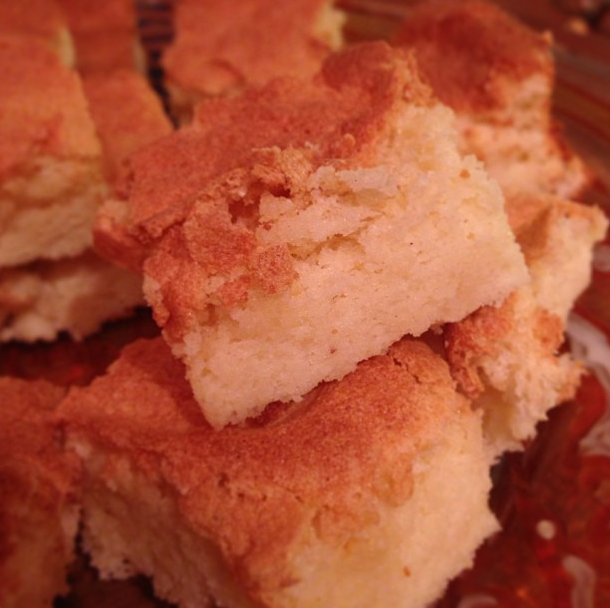
Make a great, fluffy sponge without any raising agents? I wouldn’t have thought it possible. But plava’s light, springy texture is derived from separating and whisking eggs – it’s almost a cakey, lemony omelette.

Traditionally you’d use potato flour and matzah meal (which is not wheat free) but I didn’t have any of either and I think ground almonds make for a slightly denser, more delicious cake.

I adapted this from this recipe by Frances Spiegel.

6 eggs, separated
200g caster sugar (some plava recipes call for icing sugar, but I used normal caster sugar)
Juice and zest of 1 lemon
135g ground almonds

Key things to note:

  • Don’t grease the tin – it might stick a little, but if you’re patient with cooling (or line with paper) all will be fine.
  • Use a metal spoon when folding in beaten egg white so as not to knock the air out.
  • As ground almonds tend to burn easily, you could cover this in foil before it goes in, removing the foil when there are fewer than 10 minutes to go (don’t open the oven door any earlier!). I did it the other way around – adding foil after half an hour – because I forgot about their tendency to brown alarmingly, and managed not to collapse the cake, but I wouldn’t risk it usually.

1. Preheat to 180 degrees / 160 with fan.
2. Beat the egg yolks and sugar together thoroughly until pale and light.
3. Stir in lemon juice and rind.
4. Stir in almonds.
5. In a clean, dry bowl with scrupulously clean and dry beaters  / hand whisk, beat the egg whites until stiff peaks form.
6. Fold in with a metal spoon, carefully and quickly as possible so as not to knock out too much air.
7. Pour into a tin (don’t knock it on the surface to make it even, just spread gently), and bake for around 45 minutes – this is a check regularly after 30 minutes job.

Dairy Free Greecester Breakfast Smoothie

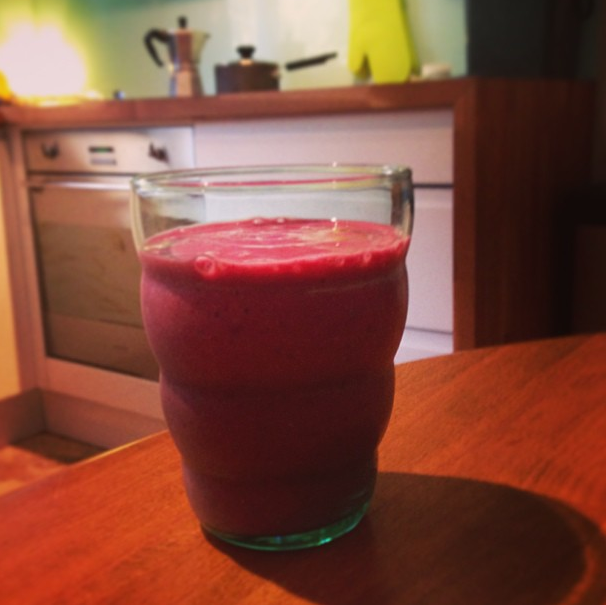
Dairy free smoothieI’ve been experimenting with almond milk recently because much though I love cows’ milk it doesn’t always love me. Also, I’m a sucker for trying stuff I see on supermarket shelves. I really fancied a smoothie recently but I know they’re packed full of juices, and I thought if I was going to go on a glucose binge it might as well be the whole fruit. So I made the following, which would be absolutely fine for a Greek fast (perhaps not quite in the spirit of simplicity, but certainly in line with having a light meal).

Since there’s no cows’ milk or yogurt, it is lower in fat and calories than a traditional smoothie, though there’s no escaping the fruit sugar. At least you get the fibre of the oats and whole fruit to balance it out!

180ml almond milk
1 medium banana
25-30g porridge oats
A generous handful of frozen berries
A dash of vanilla extract (I use a 1/4 tsp of paste – gorgeous)

1. Throw in a blender and pulse until smooth. Drink.
Ideally, you’d leave the oats to soak in the milk from the night before, as then they swell and soften, thickening the smoothie and also blending smoother with fewer little oat bits to stick in your teeth.  They don’t really bother me that much, but it can be a little grainy otherwise.

Using frozen berries means they’re always to hand in the freezer, regardless of season, but it also makes the smoothie ice cold, which is particularly nice if you’ve bought long life almond milk and it hasn’t been in the fridge.

It is apparently very easy to make one’s own almond milk – almonds soaked in water overnight, blitzed in a blender with fresh water then strained – but working out the costs it’s probably cheaper to buy it and I can’t help feeling life’s too short for cheesecloth. But if you want to go the full Pinterest Earth mother hog, don’t let me stop you. And then you could make almond butter as well, which is something I do want to try next.

New Year’s Food Resolutions

Looking back, it feels like most of what I’ve written about in the last year has been food. There are many reasons for that: for one, now that I write a monthly piece for Bea, as well as occasional pieces for BitchBuzz and The F Word, I feel like I get all my parent-blogging done elsewhere (and yes, I really should link back more often). And frankly, even that is being overtaken by food! For another, I have my own kitchen again and have really enjoyed experimenting; plus I got to blog for Great British Chefs and I’m a horrendous food TV addict.

A family friend recently sent me a link to Will Self’s radio item and article, The British Vomitorium, which enthusiastically lays into everything that I’ve become when it comes to food. While he makes some horrifyingly good observations towards the end about a state where some people in this country – this rich, developed country – are struggling to find any food to eat at all, I find the whole a little over-egged. (Sorry). In any case, I think the answer is not to stop appreciating or playing with food, but actually to pay more attention – and better – to all our food: to access to it, to the freshness of it, to the manipulation of ingredients that confuse and abuse our senses. Sure, roll your eyes at molecular gastronomy by all means – something of the ‘modern art’ of cooking, anyway, bound to enthrall, confuse and repulse in equal measure – and revolt at ludicrously indulgent and embarrassingly expensive, exclusive creations. But, at the risk of sounding like an apostle of the church of St. Jamie, a little bit of attention in the right place is far from being a distraction from social issues; in fact, it shines a spotlight on them.

That said, I have some food resolutions for the New Year. I’ve decided to avoid the nebulous, and try and give myself some small, specific goals. I feel like I owe the food I eat a little bit more respect, somehow, and these aim to remind me of this as well as increasing the household’s general health and keeping us within budget.

1. Meat-Free Days (or Weeks?)

The meat-free Monday is nothing new, and I do want to try and make our staple food vegetarian for at least one day a week – preferably a few days. There are several reasons, including budget (I think I’m finally at the point where I’d rather splurge on one really nice piece of something I don’t get to eat very often at all, like venison, than spend loads on endless bleedin’ chickens) and digestion (ever noticed how long it takes to get over a roast?). This might mean plumping for a bigger veg box, but I think that would still be cheaper than getting lots of meat. Anyway, I still have quite a bit in the freezer to use up.

2. Something Fishy

I’m actually not a fish bore by nature; frankly, I think cod is entirely underwhelming, though I am really fond of salmon and mackerel. Plus I’m obsessed with seafood. But for our non-veggie days, I’d really like to explore some less common types. I’d love to say it’s because I’m a Hugh Footely-Pootely fish warrior, or whatever, but – while waste makes me cross and I’m obviously not against sustainability – my main motivation is just keeping things interesting.

3. Gardener’s World

I have a back garden now. It has a vegetable patch already in place. It would be silly not to get it sorted and grow some of our own staples so we don’t have to buy them. Top of my list are rosemary, coriander and garlic, and I’d like to have a go at courgettes and maybe potatoes as well. Ooh, and have a stab at strawberries. I am no gardener, so I’m going to have to do a lot of research here, and try not to screw things up – idiot-proof resource recommendations welcome.

And that’s it. There are many, many more I could add, but I’d like to keep to those three so that I have a hope in hell of sticking to them. Hell, I might even blog about doing so, if you’re really lucky.

Finally, I want to mention some food-related charities for those interested in spreading the food goodwill beyond their own kitchens; I’ve focussed on the UK here for simplicity’s sake, but, sadly, I’m sure you can search and find many for any country in the world.

The first, Magic Breakfast, is a personal favourite. The team works in partnership with the food industry to ensure that children in schools where 50% or more of the pupils are eligible for free school meals get access to a fresh, filling breakfast every day. Something as simple as a bagel and orange juice can make all the difference between a hungry, distracted and tired child, and one that is ready to learn.

FareShare works in the UK to tackle and relieve food poverty and reduce food waste.

The Trussell Trust is a Christian charity which splits it focus between projects in Bulgaria and setting up UK food banks. Demand for their assistance has doubled in this country in the last year, and continues to rise.

FoodCycle takes surplus food and adds volunteers and free kitchen space to create nutritious meals for people in food poverty.