

BFI London Film Festival 2016: Their Finest (review)

I have never read the source material on which Their Finest is based, Lissa Evans’ 2009 novel Their Finest Hour and a Half. However, I’m going to make a leap and blame the disappointing third act of this adaptation on the fact that it is an adaptation. A cataclysmic event that one cannot reveal for fear of spoilers could be a devastating twist leading to a richly emotional coda on paper; on screen it happens at precisely the wrong moment, melodramatic rather than moving, and a it’s a crying shame because until that moment there was a great deal of promise.

For a start this is a staunchly feminist offering by design, not just because it’s a heavily female-led production. The Second World War offered opportunities to women to step into male-dominated industries in the absence of their menfolk; we think of these largely as mechanical, physical: factories and food production, Rosie doing her riveting. But in 1940 the propaganda machine was also in full flow, and this tale focuses on Catrin Cole, whose facility with the written word leads her into the world of patriotic film production – first on awkward shorts and later on an ambitious, big budget production to win the hearts and minds of the general public and keep them behind the war effort. It’s a film about films, often wry and funny, using a talented and treasured cast to round out the thinner aspects of the characterisation.

Gemma Arterton brings gutsy warmth to Catrin, an approachably genuine mix of hesitance and growing independence. Rachael Stirling’s acerbic and openly lesbian producer and Helen McCrory’s canny agent manage to sidestep excessive stereotyping and steal the show from the sidelines, and it is female characters and female stories that largely drive the action. Sam Claflin is perhaps a little wasted in the mildly unconvincing arc of initially churlish screenwriter Tom Buckley, who spots Catrin’s potential and – occasionally grudgingly – supports her efforts while becoming a complicated potential romantic interest. His curtness is balanced by Bill Nighy’s deliciously hammy declining star with a Norma Desmond ego – a more genteel rehashing  of Love, Actually‘s Billy Mack, but no less watchable for it – who is given an unnecessary but moving subplot involving an ancient bromance with a dog-obsessed struggling agent.

Their Finest has more than that small whiff of Richard Curtis about it; a wartime setting offers ample opportunities for gallows humour alongside genuine tragedy. Director Lone Scherfig (Riot Club) keeps it light as often as possible, and were it not for the sadly uneven final act, this could be added to the list of rousing British romcoms – something I think we do almost excessively well. The development of the potential love triangle should be the emotional core of the film, and given the full space it needed to breathe it could have been a rollicking one. Sadly as things stand, the big bang rather forces the film to go out on a whimper.

Luckily there are still reasons to watch –  the insights into film production of the time, some light relief around a hopelessly wooden war hero pressganged into a patriotic performance to woo American audiences. It’s galling but also satisfying to hear small references to feminist struggles still being overcome (“of course we can’t pay you as much as the chaps…”). And speaking of chaps, the supporting cast is a small galaxy of national treasures – Richard E. Grant, Eddie Marsan, Henry Goodman and even an amusing cameo from Jeremy Irons quoting Henry V; it’s almost distracting in its embarrassment of riches.

Uneven pace and flaws aside, I’m glad Their Finest was made; thematically it’s a story worth telling. I would have liked to love it, but I’ve filed it away for Sunday afternoon TV viewing with one of those cups of tea every other character kept mentioning. I can’t mend its problems, but I can certainly make do.

Disclosure: privately bought ticket for the London Film Festival as a BFI Member. No PR / freebies involved.

BFI London Film Festival 2016: Paterson (review…ish)

How do you make a film compelling

Without conflict, drama or action“?

When a man goes to work every day

And loves his girlfriend

And she loves him?

When a notebook full of gentle poems

Stashed in a pocket as he drives the bus

Is all that he needs to be

Himself?

When the surroundings are suburban

Washed out, simple

Just about real?

When cereal is eaten from a water glass

(No plums in the icebox)

And every morning starts the same

More or less?

When simple symbols repeat themselves

Regularly for two hours

(Circles, twins, circles, twins)?

When he sees things in black and white

(Him and the world, together but separate)

And she makes everything black and white

But sees everything as grey

As possible

(Cupcake queen, country singer)?

When an event of enormous personal significance

Is a broken bus

A toy

A chance conversation

Some paper?

You cast Adam Driver

On whose face the tiniest twitch

The most subtle reaction

Is everything you need to know

And who is capable of being blank

Without being empty.

And to make doubly sure

That everyone is paying attention

You add a bulldog with just enough personality

(Personality goes a long way)

And a wobbly postbox.

paterson.jpg

BFI London Film Festival 2016: La La Land (review)

La_La_Land_(film).pngYou could be forgiven for assuming that Damien Chazelle has a particular focus on making films about music. In fact, what his blistering debut Whiplash and La La Land actually have more closely in common is that they’re both about commitment and conviction. Which is mildly ironic, as there’s not a lot of that in evidence in the latter.
Is La La Land a musical or an homage to musicals with occasional musical numbers? Is it about following your dream, or about how dreams change? Is it a love story, or about two individuals making their own way? I’ve never felt more divided in opinion about a film before, and I trace this back to the divided soul of the film itself, and perhaps moreover down to the divided nature of its auteur: I love the work of Damien Chazelle the director, but when he takes his turn as a writer I struggle.

In fact, I had a similar problem with Whiplash, wherein I could only accept its polished, perfectly timed brilliance once I’d parked my opinion of its premise (that abuse is food for genius). In La La Land, jazz pianist Seb (Ryan Gosling) is a mildly more palatable talent, as he struggles to fulfil his dream of opening a club dedicated to what he believes is a dying form of music. On his journey, he blasts into the life of aspiring actress and writer Mia Dolan (Emma Stone), and their parallel dreams are at the heart of the rest of the story – as is the question of their ability to fulfil them.

At one point, it looks like Seb might be taking the story in an interesting direction; Chazelle circles back again to a previous theme in unpicking whether relationships are bad for creativity, and vice versa, when he introduces Keith (John Legend), who tempts Seb off the path and pays lip service to the idea that media don’t die so much as evolve. Mia attempts to steer things back on course, but at this point it’s hard to know whether that is or isn’t the right thing to do – the evolution of Seb’s dream seems to bring him more pleasure than the original plan ever did – although when Mia also suffers a setback to her plans Seb resolutely bullies her back into action. Is changing a dream an admission of defeat? Is it ‘growing up’? Is that maturity or losing one’s childlike joy? It’s impossible to tell in a tale that doesn’t so much leave things open-ended as, at times, directly contradict itself.

It’s also impossible not to raise one of La La Land‘s other great contradictions. Set in LA – intended, quite clearly, as a love letter to the city of stars – it boasts a massively, realistically diverse supporting cast, and some attention has clearly been paid to recognising the distinctly black roots of jazz as a musical movement. And yet the next step – to make one or both of the protagonists people of colour – wasn’t taken. Only Keith stands out as a memorable supporting character, and yet he still has the whiff of plot device.

I also felt a mild queasy twinge at the differences in character between Seb – brash, rude, insistently bullying Mia into liking jazz by insisting on ‘educating’ her – and Mia – two quicksteps away from ‘feisty’ but saved by Emma Stone’s beautifully judged performance rather than the words on the page. Gosling tries his best to breathe life into a charming mansplainer (if that’s not a contradiction in terms) and mostly succeeds in at least keeping him just attractive enough a prospect to Mia – even if his singing is shaky. Stone, whose breathy soprano is considerably sweeter, evokes a beguiling combination of fragility and determination, with a warmth that reflects that hers is the character who forms better interpersonal relationships. Despite the fact that Seb has a sister and fellow musicians nearby whereas she only has scatty housemates and dour coffee shop colleagues, he deliberately isolates himself and it is only meeting Mia that seems to draw out reluctant flashes of his humanity. I occasionally got the uncomfortable feeling that Mia’s warmth was characterised as a weakness – that it might be what gets in the way of her goals. Later, female professional success is also represented in terms of family stability; in an overly lengthy coda that fantasises about multiple outcomes, there are none that don’t include two becoming three.

But I said before that, just as the film lacks the conviction to nail its message, its characters and even its format down, I also couldn’t say with determination that I didn’t like it. The full-on wide angle approach is beautiful and used consistently and well. Every visual detail down to costume design is lovingly, colourfully rendered. I’m damned if I’m not still humming one of the songs days later. As a vision, La La Land is stunning, and it is this I think that makes me still excited to see what its director does next. If I could immerse myself in an exhibition like this, I’d fail to emerge for days; on film, it’s just the story that gets in the way.

Disclosure: privately bought ticket for the London Film Festival as a BFI Member. No PR / freebies involved.

On Ghostbusters 2016 and objectivity

My husband and I saw Ghostbusters separately. We each saw it alone, which is perhaps the best way to know whether you really enjoyed something; you’re not reacting to it with anyone, so it’s all on you.

I loved it. He thought it was fine. We, like everyone else in the world, both fell hard for Holtzmann; we diverged on Hemsworth. I was pleasantly surprised by his straight delivery and almost deadpan gaze; my husband found him a bit lifeless. We agree that the first half hour takes too long to get to the point. I would say that too much space is given to Wiig and McCarthy to do their thing as individuals when the strength of the film is the union of all four characters, and in particular the rock solid contributions of Jones and McKinnon. He reckons that they are both simply not that funny in the first half of the film – individually and together. We were both glad that, even if Patty is still relegated to being the only non-academic of the group and a bit ‘urban’ (which could have been a massive cringe as the only notable POC in the film), she’s actually far more rounded than the trailer suggested, and massively well self-educated to boot.  But still: overall I loved it, pre-ordered it on Blu-ray (yes, some people still do that) and can’t wait to see it again, and he thought it was a bit better than okay but… yeah, whatever.

Here is where I wonder if it’s actually impossible to separate political joy and filmmaking objectivity. Do we even need to? My husband’s position is arguably more ‘objective’ than mine in that he is, by definition, less invested in the film being good. He has never had to go out at night worrying if tonight is going to involve (another) assault or death; on a recent re-watch of the original Ghostbusters he himself pointed out how revoltingly predatory Bill Murray’s Venkman is but I think he could see it rather than feel it. As a child I watched that version many, many times every summer – that and Mannequin were the only vaguely suitable films in English that my grandma’s local video shop in Athens carried – and yet I never loved it. At the time it was groundbreaking in many ways and the premise remains an excellent one, but I did not warm to it the way I did Back To The Future, The Goonies and Pretty in Pink. Even Mannequin, frankly. That’s fine, I didn’t have to. I can accept that it wasn’t, in the end, made for me.

But this Ghostbusters, at this time, was. And I accept the gift wholeheartedly. I feel an intense and lasting joy at the lack of casual rape jokes, at the tongue-in-cheek references to fanboy trolling, at the deliberately practical and unsexy costumes, at Holtzmann’s triumphant battle scene, at female friendship that doesn’t centre on relationships, at flawed women being flawed. And it doesn’t matter to me whether future generations objectively think that joke was as funny as it could have been, etc. I lost patience with this Ghostbusters only when it delivered heavy-handed fan service to the original (Aykroyd’s lamely game cameo was really just awful, and Murray’s awkwardly unnecessary; Hudson’s was actually quite sweet and natural but made the sad lack of Ramis even more keenly felt). When it was its own, kickass thing, behaving as if comic female action leads are just the most natural thing in the world, it was exactly what I always knew could happen if we just let it.

To be honest, the best case scenario is that women in the future find this film a bit of an embarrassing relic that their mums like. That there are so many original, brilliant feature films that don’t need to rely on an existing formats to make their point that this seems a bit old fashioned and unnecessary. I do not need it to last. I do not need it to be ‘objectively’ brilliant to do exactly what it was has done (even if I think it does actually stand up just fine most of the time, thanks). If the greatest value this film ever has is as a gender political statement, then that is more than enough for me.

And if my husband has to stand there in his wrongness, be wrong and get used to it, then I dare say we can both live with that too.

Review: Alice Through the Looking Glass with Edible Cinema

IMG_0807

It’s no secret that I adore the Alice in Wonderland aesthetic. As with so many tea fans and cat lovers – not to mention flamingo obsessives – I’m drawn to the twee and the fantastic, the essential Britishness. I went to the British Library exhibit earlier this year, and I’ve already assigned the animated take on the Cheshire Cat as my favourite Disney character of all time (we have both Disney and Tenniel Christmas ornaments to prove it). Mary Blair’s concept work on Alice is basically the artwork I’d produce if I had any sort of talent, let alone one as prodigious as Blair’s.

In spite of all of this, it took me an age to get around to watching 2010’s Alice in Wonderland. In part, this is because of my complex relationship with the films of Tim Burton. Having loved every second of the Edward Scissorhands era, I became increasingly disillusioned with his more recent work, culminating in a substantial dislike of Big Fish  – the point, for me, at which his work stopped being beautiful creative driven by the story but self-consciously quirky stories retrofitted into a glorious visual. In the end, I was pleasantly surprised by his Alice – from the liberties it gleefully took with the source material to the canny casting of the other-worldly Mia Wasikowska. And when I heard that Alice Through the Looking Glass was going to be handed over to another director, I was heartened – if The Nightmare Before Christmas teaches us anything it’s that sometimes Burton can be credited with finer work as producer, rather than director.

And then… then I was invited to watch it as part of an Edible Cinema screening. Hell yes, my friends.

I’ve been dying to try Edible Cinema for ages – food AND films? What’s not to love? – and I cannot imagine a better pairing for this pleasingly inventive idea than an Alice film. If you’re unfamiliar with the setup, you get given a box full of numbered ‘serves’ and then are prompted unobtrusively during the film to eat or drink them at relevant points. Each serve is designed to perfectly accompany the scene it’s consumed with – like ice-cold mouthfuls of crunchy sherbet as the characters tramp through the snow… but I’m getting ahead of myself.

Alice Through the Looking Glass again parks the source material at the door, simply taking the characters of Lewis Carroll’s world and playing merry hell with them. And really, maybe it’s the preferable route to take sometimes, particularly with such widely adapted and massively influential texts; without worrying about the impact of some perceived canon or other, you can simply enjoy the action for what it is. Set some years after Alice’s return from ‘Underland’, she’s now a fearless sea captain – steering her late father’s ship to safety and leaving pirates stranded in the shallows. This Alice is a fully paid up feminist, and it’s a delight to see. On her return to land, her shady wannabe-ex attempts to pop her back into the drawer he thinks she belongs in – instead Alice follows an old friend through a looking glass and ends up back in the familiar topsy-turvy world, only to be plunged immediately into a race against Time (literally, in the form of Sacha Baron Cohen) to save her friend the Hatter from a swift decline prompted by nostalgic melancholy.

If I’m honest, the plot doesn’t always make that much sense, but the rollicking, frantic pace is such that it doesn’t much matter. The moral – that you can’t change the past, but you can learn from it – is ladled on a tad thickly but it helps that it’s a pretty solid moral. Wasikowska’s straight guy turn is thoughtful, and there’s a cameo for all her old pals, from Absolem (the late, great Alan Rickman’s final work, and heartbreaking for it) to the White Queen (Anne Hathaway still keeping up the well-meant but misguided mannerisms that made the character rather irritating the first time around). Andrew Scott pops up pleasingly as a sort of Bedlam Moriarty, eyes gleaming and syringe held high. And of course Helena Bonham Carter is back on scene-stealing duty as Iracebeth, the Red Queen, but it’s Baron Cohen who walks away with the film. His sublime portrayal of what director James Bobin – he, appropriately enough, of The Muppets – called the ‘confident idiot’ is beautifully balanced: he flips on and off the manic gleam in his eye to be at one moment the frustrating villain of the piece and at the next a surprisingly moving figure.

IMG_0810

Accompanying the rapid twists and turns of the plot were some brilliantly creative moments from Edible Cinema. Be warned – you will be sugar high and a little tipsy by the time you emerge from any EC screening (and there are allergen-friendly menus available if you get in touch in time). I parked my sugar-quitting at the door to try a gooey, marshmallow fluff-based confection as Alice landed in a heap of flowers, a crystalline sugar butterfly when she met the transformed former caterpillar (accompanied by a shot of gin so strong I coughed like a furtive  smoker behind the bikesheds) and a rich bite of ginger and thyme spice cake as matters came to their Time-ly resolution at the end. My absolute favourite – both for flavour and the matching sensation it evoked – was the aforementioned crunchy sugar snow (and more gin). I missed one number cue which meant that two treats got shovelled in rather quickly one after another but it didn’t really affect the overall charm of the experience. Were I to give any feedback it would be that more savouries would really help cut through the intense sweetness of the menu, as some very welcome sharp and spicy popcorn did, but I imagine it’s very different with other films. And there’s no doubt that I would definitely try it again.

Glorious setting aside, I will admit that – with its madcap pace, convoluted plot and sudden resolution – Alice Through the Looking Glass is not a masterpiece, but it is a perfectly watchable romp with a universally appealing moral and a satisfyingly intentional take on creating a feminist heroine. Older children will enjoy the bonkers humour and rousing pitch, while adults can be quietly charmed by the sumptuous visuals and quality cast. Of course I didn’t take my 5yo to this particular screening (hic!); while I think she would have been fine with the nature of the content, she would likely have struggled with following the plot so in general I’d recommend it for 7+. If you don’t manage to catch it in cinemas, I definitely recommend getting creative with snacks for the home release – I can confirm it adds a whole new dimension.

Alice Through the Looking Glass is on UK general release.

Disclosure: The screening and Edible Cinema experience were courtesy of the Disney UK team. All opinions my own.


Film review: Captain America: Civil War (no spoilers)


When you take a step back, it’s clear that the Captain America franchise is what holds the MCU together. Not because of key plot points or character overlap, although those are important, but because it provides the beating heart of the whole: the moral compass and the conflicted human core. In Civil War, the Russos have built on a strong foundation to produce what is unquestionably one of the finer examples of a superhero ensemble movie that we’ve seen yet.

One of the ways in which they do this is in not shying away from telling a story: thoroughly, engagingly – above all, emotionally. Joe Johnston set the scene: The First Avenger stretched the origin story out in a way that no other MCU film has – contrast this with Tony whose suit building is done in the first 35 minutes with such alacrity that it feels like a pre-credit sequence, the emotional arc flattened by the force of his impulsive personality.  For Cap, almost half the story takes place before the (physical) hero has been created. The thrills deliver when they come, but their goal is to show the building of a man – the polar opposite of Stark, holding the attention with simple, quiet determination – not a machine. So the Russos ran with it once they had their turn at the helm: The Winter Soldier has the pace of a Cold War thriller, but is at heart an exploration of friendship and trust. In Civil War we’re treated to the evolution of that: a rich examination of the nature of family.

In the aftermath of the events of Age of Ulton and following a catastrophic intervention in Nigeria, the question of quis custodiet ipsos custodes raises its head: should the Avengers be controlled by the United Nations and deployed by committee – political weapons, if you will? Horrified by the human cost of his Ultron experiment, Tony Stark believes so; Steve Rogers, battle-scarred Boy Scout, disagrees. When one James Buchanan “Bucky” Barnes resurfaces accused of a shocking atrocity, confrontation becomes inevitable and the rest of the team are forced to choose a side.

The emotional heft here is undeniable, but punctured with outrageously fluid set pieces – including a Greengrass calibre car chase – and a solid sense of humour, it works beautifully. With the freedom to choose how much to involve anyone beyond the main protagonists, rather than the obligation to balance them, Civil War feels very much like the film Ultron could, perhaps should, have been – and Christopher Markus and Stephen McFeely’s script has at least a handful of Whedonesque moments to prove it.

Still, the focus is remarkably broad; alongside the ideological battles between Steve (an eternally straight-faced Evans bringing his usual quiet likeability)  and Tony (the best we’ve seen from RDJ in the role yet), is generous screen time for Black Panther in advance of his upcoming solo outing. Despite their shared litheness, steely Chadwick Boseman contrasts beautifully against a high-energy first appearance from Tom Holland that should make us all thoroughly excited for the upcoming Sony Spider-Man reboot. A pleasantly quirky fan-pleasing chemistry is explored between Vision and Scarlett Witch, though both feel a fraction underused, and if we’re not entirely sold on Natasha Romanov’s new-found maternal instincts, her long-honed propensity to play both sides renders her the most intriguingly unpredictable “enhanced individual” in the line-up. Though the seeds of the conflict are sewn long before his appearance on the scene to stir up trouble, the endlessly watchable Daniel Bruhl isn’t wasted as Zemo either, in a carefully judged and admirably restrained villainous turn.  Finally, somehow, there’s enough latitude given to make the appearances of Ant-Man, Hawkeye and War Machine worthwhile while still at least attempting to make clear that this is not an Avengers movie (honest guv).

We engage when Stark and Rogers square up against each other because we care about them – and in the choices that those around them make (Hawkeye and Black Widow hurling punches while discussing whether they’re still friends is both absurdly funny and poignant). With yet another Bruce Wayne to familiarise ourselves with and a Clark Kent who barely considers changing his world view, Batman v Superman, leached of all tension, never stood a chance by comparison. Admittedly, Civil War might have benefited from a tighter approach to the action sequences – there’s a danger some of the more dramatic clashes are undermined by the volume and length of the fight scenes. But it seems a worthwhile trade-off to allow the Russos a little bit of indulgence in the fireworks since they’re willing to invest the same effort in the more discursive scenes.

If Iron Man deals in flashy theatrics, Thor brings the Shakespearean space opera and Guardians of the Galaxy is an adult’s adventure story, Civil War places Cap firmly at the emotional centre, dragging everyone in its orbit in to examine their own place in the MCU – but crucially with wit and warmth rather than an excess of ponderous brooding. With more of Ant-Man‘s humour and Doctor Strange’s mysticism on the way to keep it balanced, there’s no sign of this juggernaut losing momentum. And thank goodness for that.

Captain America: Civil War is released in the UK cinemas on the 29th April. 

Disclosure: Press tickets were provided by the Disney UK team. Opinions are my own.

#TeamCap 

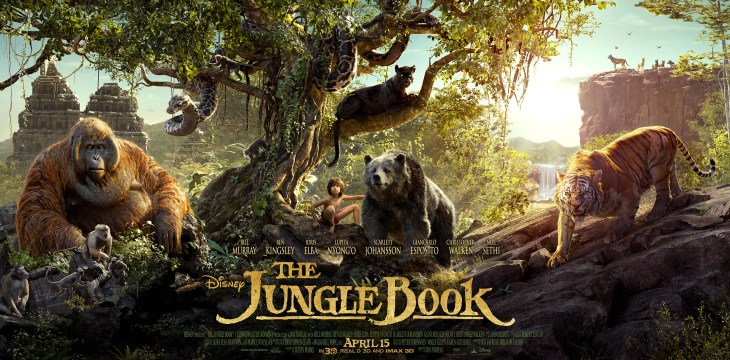
Film review: Disney’s The Jungle Book (live action)

JB_Triptych_1-Sht_Full_Online_v4_rev_lg

If I had to sum up Jon Favreau’s live action take on The Jungle Book in a single word, it would be… affectionate.

It’s perhaps an unexpected thing to say about a film that is a little darker and quite substantially more intense than the animated version of Kipling’s tale from which it takes its inspiration, but it is exactly in referencing that source that much affection is revealed. In that, and the enormous heart that runs through it which never turns saccharine.

The Jungle Book‘s stellar cast might overwhelm newcomer Neel Sethi in any other circumstances; as they’re safely ensconced in (gorgeously realised) animal characters it is perhaps the youngster’s inexperience that allows him to make such a good showing, unbowed – in that childlike way – by the amounts of green screen acting he must have done. As it is, he stands up brilliantly well to the sheer weight of talent around him. Sir Ben Kingsley’s Bagheera is particularly generous, restrained and warm, letting Sethi’s Mowgli fill the screen – even a screen as intimidating as the IMAX in which we saw it – with big-eyed naivety and youthful belligerence. Lupita Nyong’o brings the heart in spades, and even Bill Murray’s Baloo is a scene-stealer rather than walking away with the whole movie. Christopher Walken’s gargantuan King Louie is thrillingly creepy even when conducting a classic sing-song.

It is perhaps Scarlett Johansson’s Kaa that suffers most from the surfeit of talent; though her role contains a crucial bit of exposition and she’s spared the undignified exit of the cartoon concertina snake, her cameo is brief and abruptly over and her song confined to the end credits – though these are worth sticking around for. I also struggled a little with Idris Elba’s Shere Khan; never bettered when exuding quiet menace, the twisted tiger’s blistering moments of rage seemed at times a bit muted.

Still, this is splitting cat hairs. The fact is that the whole is enchanting. The immersion offered by the IMAX screen was quite something, but even on a 2D screen half the size it would clearly be a really beautiful film. Despite deft references to the animated classic – particularly in the opening and ending, and well-chosen musical links – it’s in the deviations, and the return to Kipling, that this finds its own feet and justifies Disney’s desire to explore its back catalogue in live action. Witty without being jarring or coarse, deeply emotional but not manipulative and a serious visual treat – what a winner.

The five-year-old’s verdict:

Here’s where it went slightly wrong. I actually nearly went to see this without her, as after her nervousness at some elements of Zootropolis, she and I were both uncertain. But we talked it through and thought we’d try being brave. I gave her an opt out, which was to leave with her dad if it was too much. She was actually completely fine through some early scenes of animal violence – and I should emphasise that almost everything is implied rather than seen, so the PG rating certainly holds. But the big screen eventually became too much, and she decided to opt out; while the central core of the film was then fine, the ending was intense even for me, so it’s just as well. My parental recommendation would be for 8+, particularly in 3D, perhaps a little younger in 2D. I recognise I have quite a sensitive soul on board, particularly where animals are concerned, so others of a similar age might be fine. However, I did also hear another child near us express a quavering dislike of Kaa.

The Jungle Book is on general release in the UK from April 15th.

Disclosure: We were given family tickets by the Disney UK team to a screening including some fun events like face-painting; however, all thoughts about the film are our own. 

On visiting the Regent Street Cinema to see Network

…or, more honestly, some fevered blather about Network.

Let’s dispense with the preliminaries. Last night, unable to resist temptation, I made my first visit to London’s oldest cinema – beautifully restored and reconditioned by the University of Westminster crew – to see two firm favourites in a Lumet double-bill: 12 Angry Men and Network. Better yet, I was with someone who had never seen either before. I was seething with jealousy – imagine your first time with these two on a big screen! – but also able to enjoy a vicarious thrill through her pleasingly audible gasps and wry laughter.

It’s a lovely place; all olive green velvet seats and slightly-too-loud speakers, with a delightful bar and nerd-pleasing programming of the kind I once gobbled up eagerly every weekend at the Riverside Studios in Hammersmith. And that brings us neatly back to Network.

Oh, Network. How I love Network. The only script I can think of that gives me more knee-trembling writerly joy is The Lion in Winter. Viciously satirical, horrifyingly prophetic – it sings a lament of simpler days through the voice of William Holden’s romantically ravaged news editor, Max, every bit as warped and dreadful in his own way as the glittery-eyed youth, reared on television, that he is obsessed with and disgusted by. Faye Dunaway’s huntress Diana is revelatory, fascinating – her allure is complex, her unapologetic heart worn right on the sleeves of her half-buttoned blouse. Draped across a frame achingly thin for the time and with an imperfect smile in an other-worldly face, her glassy-eyed inability to connect with anything other than ratings is chilling but somehow still attractive. And then the articulated rage, the cinematic dynamite that is Peter Finch’s drunk, suicidal, surplus-to-requirements news anchor Howard Beale, releasing the bottled anguish, the impotent fury, that dwells in all hearts and can never be extinguished.

When Beale has his come-to-Jesus moment at the hands of a capitalism-rapt network exec it’s simply one of the most gorgeous scenes committed to film. Atmospheric and elegant, menacing yet comically bizarre. Lumet is sparing with the psychedelia so the dreamlike, interrogatory shots are all the more impactful when they hit. The conceit of the documentary narrator is blissfully jarring. A few years later, Hal Ashby’s Being There will pick up the theme of the modern Messiah and do it justice too, the equally blistering satire cloaked in a gentler, more parodic comedy. But here, here there are sharply witty, audacious exchanges Aaron Sorkin would kill to reproduce. No punches are pulled or speeches left undelivered. No spittle-flecked rant from Robert Duvall’s hatchet man left unspoken, no brutal truth unrevealed.

I feel exhausted just thinking about it, but it’s a post-exertion exhaustion, self-satisfied and glowing, as if I had anything to do with the brilliance of a film made several years before I was born but more unspeakably prophetic than ever.

There. Now I have left nothing unsaid. And nothing left to say.

Film review: Zootropolis / Zootopia – predator, prey and privilege

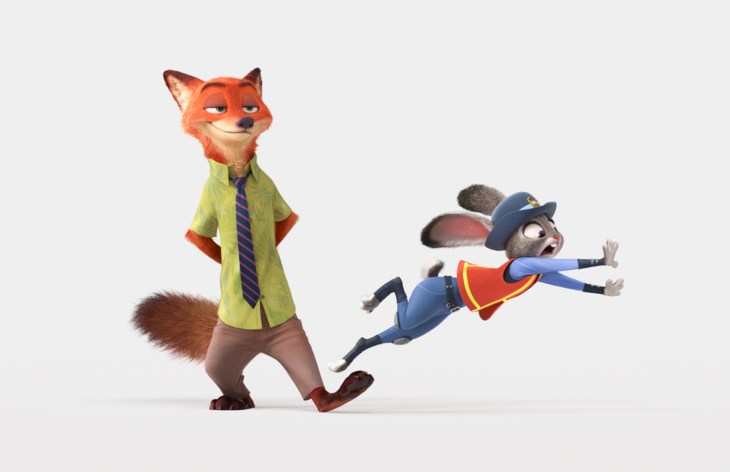
ZOOTOPIA

c 2015 Disney. All Rights Reserved.

Why didn’t anyone tell me this was Pride and Prejudice with added Breaking Bad jokes? Also, sloths. Somehow much of the build up to the release of Zootropolis passed me by, but now that it’s landed I couldn’t be happier.

Walt Disney  Studios’ latest blockbuster opened to greater success at the box office than Frozen and yet has precisely none of the hallmarks of what most people probably think of as classic Disney: it has a non-princess female lead, it isn’t a musical and there’s no love story. And yet it is unquestionably  Disney in tone, with all the characterisation, humour and heart that Disney has come to stand for, plus a dose of the more ambitiously groundbreaking attitude Disney animation has had since Pixar chief John Lasseter took the creative helm (in fact, I’d argue the Disney team has knocked out more world class game-changers than their colleagues at Pixar have in the past five years, despite popular opinion casting Pixar as the creative leaders).

Zootropolis – the UK name, though Zootopia makes more sense – shares a good deal of tone with one of my recent favourites, Tangled. Judy Hopps (Ginnifer Goodwin) is a wide-eyed, innocent yet determined bunny from the countryside, full of beans but just a touch sheltered and naive. As the first bunny police officer in heaving Zootropolis, the place where predator and prey have apparently learned to live side by side in perfect harmony, she faces stereotyping and sidelining by the cynical chief (Idris Elba) – but she grits her carrot-chomping teeth and plans to work twice as hard to show how good she is. A bewildering investigation leads her to team up with professional hustler Nick Wilde (Jason Bateman), an embittered fox determined to prove that if sly is what people expect from him, then sly is what they’ll get. In a world that’s supposed to lack species tension, Judy and Nick set out to track down a group of missing animals – and discover there’s a lot more mutual suspicion bubbling under the surface than Judy, at least, had anticipated.

Bright, funny and great for almost all ages, it’s a classic buddy movie with a timely, complex message about the nature of prejudice that deftly avoids the thundering cliche of all being the same under the skin (the point is not being the same, but being equal). There are some audaciously direct references to all sorts of ‘isms’ – Judy’s reception as the minority candidate reeks of everyday sexism and tokenism; Nick obnoxiously squeezing a sheep’s hair and commenting on its texture made my jaw drop. At various times both predator and prey are shown as being fearful and ignorant and – though I’m not a believer in ‘reverse’ prejudice, since the balance of power is usually pretty obvious – the message that fear is damaging to everyone is powerful. Pointedly, the film dares to point out the hypocrisy in thinking you’re being the perfect, outspoken ally while spouting prejudice and holding on to negative perceptions without even realising it. It shows the specific, personal cost of not practicing what you preach. And if audiences like me, who fit several privilege groups, feel a little uncomfortable, then that’s as it should be.

What makes Zootropolis hugely enjoyable as well as audacious is a good dose of humour; witty and sharp, with plenty of over-the-kids-heads jokes, it also has a number of great visual gags and in-jokes. My five-year-old was highly amused by some knock-off DVDs (Pig Hero 6, Wrangled) though she missed that they were being peddled by a Duke Weaselton – come on, Frozen fans – voiced brilliantly by Alan Tudyk (come on trivia fans). A very earnest story is rattled out through a succession of one liners and smart characterisation, and even the key emotional appeal in delivered through the useful shorthand of an all-too-familiar celebrity appeal (oddly sexy Gazelle, voiced by Shakira channelling Lady Gaga). There’s no heavy-handed worthiness, but plenty of goodwill.

I strongly suspect that Jennifer Lee, who contributed to the story, had more influence than the credits suggest in turning out a balanced narrative – between her princess-subverting Frozen, which she also co-directed,  and the outstanding Wreck-It Ralph , she’s shown over and over again that she’s willing to take stereotypes, particularly sexist ones, and turn them on their heads. That the production team flipped characters during production to make Judy the lead, rather than Nick, shows that the studio is beginning to understand what it needs to produce films that are more inclusive; that very realisation is at the core of what makes Zootropolis such an honest and engaging film.

Thoughtful, wise and pleasingly zany, I’d happily and heartily recommend Zootropolis far and wide.

The five-year-old’s verdict: Despite giggling aloud at plenty of the film – we’re still hearing about the sloth, days later – being quite a sensitive soul she was also scared by some snarling animal attack moments. For that reason she isn’t sure she’d like to see it again, though her cousins, another 5yo and a 10yo, both thought it was fantastic and really funny. I think there’s a mild warning in it for easily scared types (and it is a PG, not a U) otherwise I’d say it’s a rollicking family adventure with an important message.

Zootropolis is on general release from Good Friday, 25th March.


Disclaimer: The Disney UK team kindly provided five tickets for me and my family to view the film. All opinions are our own.

Five reasons to love Agent Carter

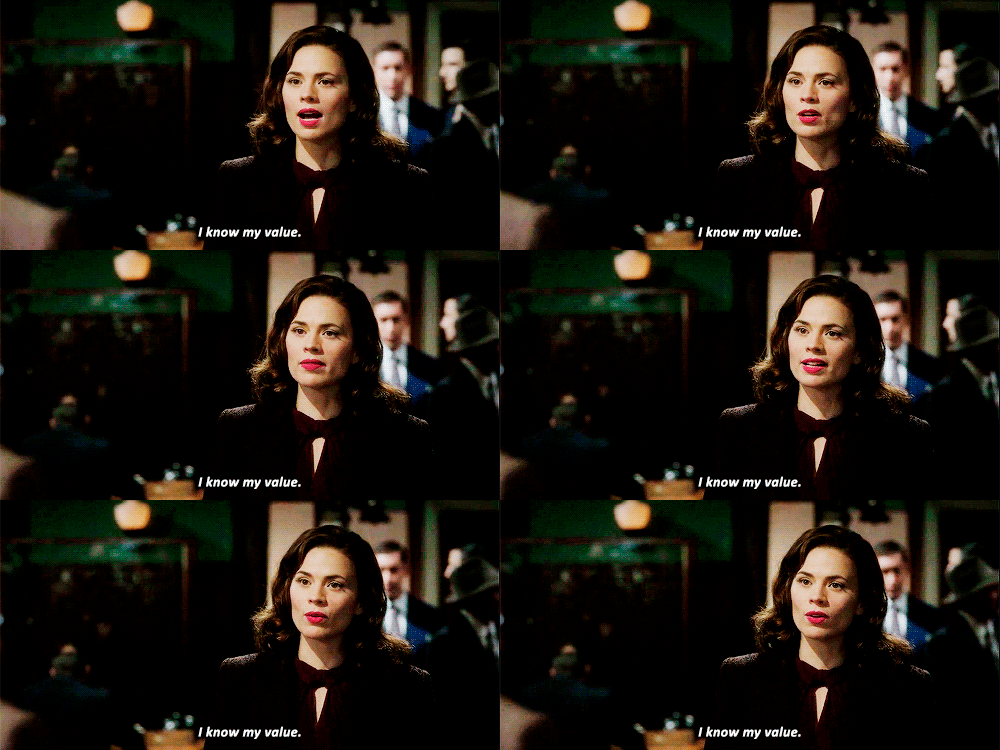
AgentCarterValue2

Oh, Peggy.

Agent Carter, as nerds will know, was never meant to be a long-running series. Originally planned as an eight-episode one-off season hiatus filler for shows like Agents of S.H.I.E.L.D.  (a rare Marvel property I haven’t been able to warm to), it developed just enough of a following for ABC to commission a second series, which is now playing out its final episodes on Fox in the UK.

While Peggy doesn’t get the kinds of ratings – or rapturous miles of column inches  -dedicated to Daredevil  and Jessica Jones on Netflix, it has attracted a hardcore of devoted fans (myself among them). With its short, sharp seasons that allow for a single story arc to be thoroughly plumbed without ever dragging, it’s a crystalline gem of a show. But I’m getting ahead of myself – five reasons, I promised, and here they are.

One – Hayley Atwell

To be honest, she could easily be five reasons on her own. But since she waltzed onto the screen with a spring in her step and a punch in her fist in Captain America: The First Avenger, who’s been able to take their eyes off Peggy? Atwell’s trick is to make Peggy an entire woman. A whole person. She has complex relationships, romantic and otherwise, she has to fight lazy sexism at work (it is the 1940s, but honestly some of these things really are still happening) and she’s sharp, capable and wryly funny. But she’s not just one of these things.  She says wonderful feminist things, but is not a cookie cutter feminist mouthpiece. She exhibits physical strength when she needs to, but doesn’t hide behind it. She has hurts and painful memories, but she rolls up her sleeves and gets the job done – acknowledging her pain but neither hiding it nor wallowing in it. Too many Strong Female Characters are only that – relentlessly, exhaustingly, tough. There’s a fullness to Peggy that harks back to the glory days of Buffy Summers, only without the post-adolescent whining. And with a glorious English accent.

To top it all, she looks fabulous. Besame Cosmetics 1946 Red Velvet, if you’re wondering.

Two – James D’Arcy

As the youthful Edwin Jarvis, D’Arcy’s bumbling English butler with a heart of gold and passionate belief in doing the right thing- even if it costs him – provides a much needed note of lightness. He’s charming but never slimy, and serves to remind Carter of the fact that just because she can do something alone, it doesn’t mean she has to. Carter’s main weakness is what is usually considered strength in male-centred narratives – her inability to ask for and reluctance to accept help. Would that there were more Jarvises in the boy stories….

Plus, he’s an Amersham boy, raised in west London and I did the opposite, so I feel kindly disposed.

Three – Diversity

This sounds quite po-faced, I know, but it’s actually a hugely refreshing thing to watch a comic book-based piece of creative and not just see a wall of strong, white men. Aside from Peggy there are a number of interesting female characters, including  two complex and indefatigable nemeses and an older, plus-size woman who is included for her intelligence and loyalty – not as a punchline. Of Carter’s colleagues, one of the most interesting is disabled (part of his character development, but not even close to dominating it), has a Latin surname and is played by an Albanian-American actor. In season two, a potential love interest for Carter is a black man. Jarvis’ newly-introduced wife is Jewish.

It’s definitely not perfect – what is? – but I applaud what seem to me deliberate attempts to at the very least balance the gender narrative, and begin to take steps towards tackling wider race and disability inclusiveness.

Four – Humour

If it’s all sounded a bit heavy-handed so far, let that be my fault; one of my very favourite things about Agent Carter is its relative lightness. It sounds weird to say this about a programme that has so far seen a cinema full of people bludgeon each other to death under the influence of a mysterious chemical, a major character badly injured by being impaled on a metal pole and man blown up with a bomb vest as he plummets out of a window to save others from the explosion. But unlike Daredevil‘s relentless gore and Jessica Jones‘ psychological warfare, Agent Carter really does feel like a Marvel comic book – violent, yes, but not gratuitously and with regular infusions of light relief, a touch of slapstick and a hint of romance.

If Daredevil feels to me like Marvel stepping into live-action territory usually dominated by DC, Agent Carter is an explosion of colour and light: modern Marvel at its best.

Five – Short seasons

I’ve bored the pants off a few friends with my theories on how series length can make or break things for me. I genuinely think the Netflix-length 13-episode arc is what’s made the two Defenders shows so far so good (imagine that single Kilgrave storyline extending to 22 episodes; no matter how excellent Jessica Jones is – and it is – and how marvellous both Krysten Ritter and David Tenant are – and they are – around episode 18 of same-old you’d be about ready to hand yourself in for a lifetime of mind control). Eight episodes is basically four films. It’s enough time to extend into some backstory, spin off a few interesting sidelines and set up some possibilities for the next season without labouring. Season 2 has extended to ten, but it still feels tightly plotted and just leaves a little more breathing space for the slightly expanded ensemble cast.

Without wishing to sound as if things were better in my day – eleventy hundred years ago – I do think both films and many seasons of television have become, of late, more self-indulgent and far too long than ever; maybe it’s for money or maybe it’s because no-one has the heart to tell Peter Jackson to stop it, but there really is something to be said for leaving the audience wanting more. When season one of Agent Carter ended, I was bereft, because there was so much more left to tell. I will be the first to say when I think it’s been overtold. But two seasons in and there is a wealth material to explore – I’m definitely entirely behind a third season (pretty please ABC?).

And now to get ready to say goodbye again. Sob.