Thoughts on being Greek while watching The Lobster

I appreciate this might sound a bit niche. Certainly it is different from my friend Caroline’s very beautiful post about being homesick while watching Brooklyn, but in sense it comes from a similar root: how we experience films while hefting the weight of the baggage we we carry into them.

When I walked out of a recent screening of The Lobstera ShowFilmFirst freebie to celebrate the home entertainment release – the first thing I said, and subsequently tweeted, was this:

You’d be forgiven for wondering what I actually meant by that, since generalisation is invariably dangerous territory and, wait, wasn’t My Big Fat Greek Wedding Greek humour? But I’m tempted to say, cop-out though it sounds, that you have to be Greek to understand. (Think about it: the family are pretty self-parodying, sharp and even cruel to each other even if the bigger picture is dressed up in bundt cakes, confetti and that Windex thing – which was totally product placement given everyone knows all Greeks are obsessed with surgical spirit.)

The thing is, The Lobster isn’t set in Greece and its themes are not uniquely Greek. The wittily savage satire on love and companionship, the ties that truly bind and the superficiality of things we have in common is absolutely universal. But the preoccupation with stripping away the peripheral, with bitterly and wryly revealing the hypocrisy and hopelessness at our cores – that seems to me very Greek; whether I’d notice it so clearly if I didn’t know Yiorgos Lanthimos was behind it is a fair question, but there it is all the same. Many years before my parents’ homeland suffered the economic collapse it will be wading stickily through for years to come, all the jokes, stories and arguments I can remember hearing as a child had certain thematic similarities, no matter which friend or relative related them: that person is pretending to be someone they’re not – we all see through them. Those politicians can’t be trusted; it’s all front. Slapstick. Puffery. Craftiness. Isn’t life just… ridiculous?

If the Brits are generally accused of rooting for an underdog and hobbling their heroes, the Greeks I know are way too cynical to create any heroes to begin with.

Don’t mistake me for suggesting this is a bad thing. Besides, as uncomfortable as it can be to sit with a foot in two different locations, as long as you have a well-padded saddle the route you navigate is pretty scenic. You get to see the best and worst of everything and dole out the stereotypes with relative impunity. To love the Brits for their weird languages and joyously weirder subcultures and the Greeks for their raised eyebrows and jocularity. To scorn both the repressiveness of the full stiff upper lip and the unbridled selfishness of the Mediterranean tantrum (while, of course, reserving your right to indulge in both).

The Lobster effortlessly plays around with brutality and misguided sweetness. With desperation and devotion. It is as relentless as it is funny, as manipulative as it is derisive of manipulation. It nods its head, it reminds you that we are all complicit and we can hardly help but being. It was an Irishman who wrote – the Irish friends I have seem to me to share a sympatico sensibility with Greeks on certain things, including guilt, faith and being naturally suspicious of authority – that “each man kills the thing he loves“. The Lobster plays in exactly these waters, in what we are capable of and what transformations we undertake to stay afloat, even if it goes against everything we think we value. And despite how pathetic its protagonists can be and the savage bleakness it reveals, I can’t help feeling the underlying message is actually oddly… reassuring. We don’t have to choose a side. We don’t have to be part of a faction. Humanity can never cleave unbendingly to one single ideology, so we never have to expect complete perfection or conformity from anyone. We are silly, silly creatures, living silly lives, but no less human for it. And if humanity has any value, it must have it at its worst as well as its best.

That’s practically philosophical, isn’t it? Well, that kind of the thing is in the blood…
2016: New year, new films

You know, I didn’t do badly with my 2015 list. Some of the things on there (*cough* Pan *cough*) dropped off, a few move into this year, other things got added as I went along, I got a few really great bonuses courtesy of the BFI London Film Festival, and there were some other great experiences – most notably being in the first public audience to see the lost-for-decades Oswald the Lucky Rabbit short Sleigh Bells on the big screen – that I didn’t get to writing about.

I’ve finally also got round to joining Letterboxd (let’s stalk each other there!), so now I have a slightly more orderly way of keeping an eye on my watchlist – and seeing just how many things I still need to mop up from the year(s) before.

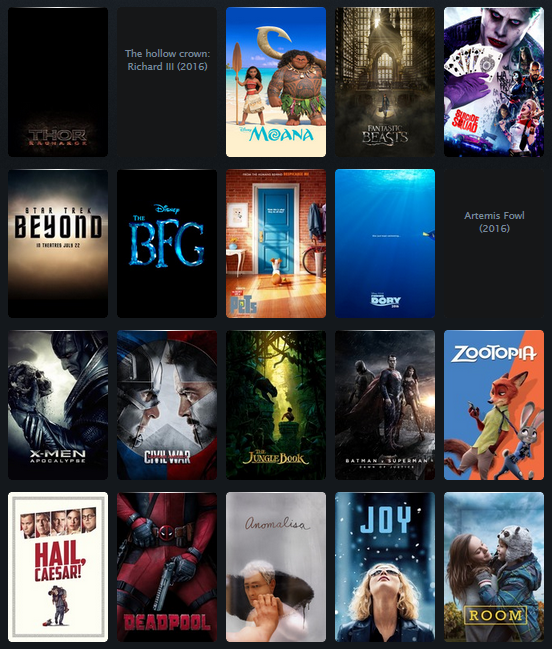
Here’s a screenshot of the most recent few I’ve added (sorted so the earliest release dates go last). What else should I be adding? You can probably tell I really enjoy ridiculous big-budget stuff, adventure, drama and animation; however, I’m very very definitely open to a much wider field than that (except horror. I just can’t. I have nightmares for weeks). My top films of 2015 included Mistress America, Mr Holmes and High-Rise, if it helps.

watchlist.PNG

(Note: I have no idea when Artemis Fowl is actually happening, but I’m pretty sure the paroxysms of unearthly joy that I unleashed when I heard one of my favourite kids’ series was getting the directorial treatment from His Royal Bloody Brilliantness Kenneth Branagh were felt on the International Space Station. So much love for the K-Bran. Just saw him on stage in Harlequinade and it was outstanding.)

I need your recommendations, friends, family and randoms of the Internet. Don’t go letting me down.

My top films of 2015

When this year started, I made a list of films I wanted to see. Some have yet to be ticked off because I haven’t got round to them yet, a couple I changed my mind about, a few more I missed in the cinema and some others got added in my head but not on the list. At least one I wasn’t sure would actually come out this year and I was right to think so, so that’ll transfer to 2016 quite happily.

But now it’s mid-December, and in the spirit of the endless reviews of the year that are already a sprinkling and will soon become a deluge, I’ve been having a think about my favourite films of this year. Despite my quiet, semi-shameful addiction to award shows, I don’t actually like to rank films – in no universe does it make sense to pit some of my favourite films against each other: superhero flick, period drama and Issues Film cheek by jowl – but I do like to celebrate them. So here, with just one winner in each category, were my favourite films of 2015.


The Life I Lead: Mistress America

As is often the case with things I really, really, really love, I struggle to write about Mistress America. I feel like I’ll either end up writing 35 unnecessary, unwanted thinkpieces that get increasingly overwrought (“NUMBER 35: ONE FOR EACH YEAR OF MY WASTED POTENTIAL”) or I’ll just end up nagging people to “just see it so you’ll understaaaaaand”. This Guardian piece goes a long way towards unpicking some of the reasons why Mistress America was such a gem of a creation; all I know is, I could have sat in that cinema and watched it from beginning to end all over again without pausing for breath or to wipe away my tears. And it features one of my favourite OMD songs in the soundtrack. When it comes down to it, it’s practically perfect in every way.


Sister Suffragette: Suffragette (with an honorable mention to Carol)

At the heart of any debate about feminism lie issues surrounding the female body’s ability to bear children; it is no accident that each of these films features a child being ripped from their birth mother due to her unstoppable desire to be fully human. But, just as it is so often a mother that nurtures a sick child, these films delivered a much-needed dose of medicine to the UK and US film industries. Anyone who cares about battling sexism on screen rejoiced at seeing these films succeed, standing on the shoulders of all the female talent that has gone – frequently unsung – before to give an enthusiastic shove in the right direction. Yes, Suffragette could have better anticipated and avoided whitewashing claims, and Carol, I thought, needed to deliver more of a gut punch. But both were still unquestionably important films, and Suffragette had an undeniably profound impact on me.


Let’s Go Fly a Kite: Tomorrowland

Poor Tomorrowland. It received a drubbing from disgruntled Disney fans (mainly, actually, nothing to do with the content of the film itself, but its marketing). Reviews were so-so. The box office receipts didn’t set the world alight (although it actually did just about turn a profit). And yet I absolutely loved it. You can accuse me of Disney bias if you like, but I promised myself I would only include one of theirs and here it is. There is so much to love about Tomorrowland I wrote two separate – lengthy – posts on it and I could easily fill a few more sides of A4. The annoying thing is that whenever there’s a blatantly feminist film or TV programme people fall over themselves to say how they dream of a day when all of these things are just normal ways of making a film, without it having to be a Thinkpiece Issue. And then Tomorrowland comes along and there’s a girl in the lead role and she’s smart (but not a Strong Female Character) and she has no love interest and she wears jeans and a t-shirt throughout and there’s another girl and she’s a goddamn ass-kicking robot and the men are all drama queens. It turns everything on its head, and it’s gloriously, deliciously, overwhelmingly optimistic, and, and, AND it references two of Walt’s own flagship attractions. I mean for God’s sake, people, what more do you want?


Step in Time: Mr Holmes

Maybe it’s because I watched it in Baker Street, but Mr Holmes was simply delightful. It’s quite the precarious tightrope walk to balance dementia, suicide, missing parents, near-death experiences and strained familial relations without ending up dropping into a quagmire of cloying, saccharine predictability. Mr Holmes, however, steers well clear, deftly avoiding the soft-focus glow that suffuses so many period dramas in favour of a more timeless story of personal regret. It’s one of the most restrained and beautiful performances I’ve ever seen from McKellen, eschewing the kind of deliberate scenery chewing we’ve become so used to in his more recent fantasy roles. A chocolate box that’s full of  decadently rich and bitter pure cocoa – as good for you as it is occasionally hard to swallow.


A Man Has Dreams: High-Rise

If I had to choose a film to stay with me, one that opens with a battered but still beautiful man catching and eating a friendly dog probably wouldn’t be high on that list. But for all my misgivings and squeamishness, High-Rise left a lasting impression. I could probably come up with some distressingly insightful self-analysis around sometimes feeling rather blank and grey and battling to keep up with my own expectations. Or I could sagely examine the blistering satire on modern living that’s as relevant now – if not more so – than it was when the source material was written. But peeling back my own public face wouldn’t be done with half as much elegance, so I’ll just say that of all the films I saw this year I’m not sure any other one surprised and unsettled and (frankly almost grudgingly) impressed me as much as this one. Now, if only I had the balls to watch more Wheatley…


And with that, I’ll leave the cinematic pontificating for, oh, a few weeks, and eagerly look forward to more time spent sitting in the dark and avoiding reality next year.


Film review: Carol

Earlier this week I was delighted to be able to go along to The Pool‘s screening of Carol, followed by a Q&A with producer Elizabeth Karlsen and journalist Helen O’Hara. Carol was my LFF ‘one that got away’ – it was replaced by Trumbo, which I enjoyed a great deal, but I still felt the sting of the missed opportunity.

I remember seeing Todd Haynes’ Far From Heaven in the cinema, and being blown away by its loveliness, by the graceful weaving of oppressive sadness between layers of beautifully arranged fabric. I didn’t have any doubts that Carol would be just as gorgeous, if not more so; Karlsen commented afterwards that she thought this was “Todd at the top of his game”, and I can see why. Haynes communicates in the language of sensation; he captures in just a few seconds the headiness and distraction of falling in love, the drifting in and out of focus. His storytelling has a consistently dreamlike quality, though the finely detailed and precise workmanship is always evident; Karlsen made a point of the incredibly prescriptive shotlisting which allowed the film to be shot in just 35 days. It’s not hard to believe that this was all meticulously, lovingly planned down to the last exquisitely styled stitch and button.

Both leads are excellent; Blanchett makes thorough and judicious use of that Galadriel-honed mysterious smile, and Mara’s other-worldliness is perfect for the angel who “fell from space”. And yet…. and yet.

As much as I wanted to love Carol, I couldn’t summon up more than an affectionate fondness. The tenderness between privileged Carol and awkward Therese is appealing and lovely, but while I understand the relationship from the latter’s perspective – Carol overwhelms her senses, and indeed ours – I don’t quite buy into the love story. It’s not clear that they even really like each other; of course, given the time, the place and the very real threat of their illegal relationship there was no way to have any public declarations andmost conversations would be heavily loaded. But the result is a little smothering – I longed to see them simply laugh together, just once. Conversely, “Aunt” Abby’s (a great Sarah Paulson) long-dead romantic relationship with Carol – now a deep and passionate friendship – was fascinating; I desperately wanted to see a film about their history.

If Carol were a food, it would be dessert. But, for all its Michelin-starred care, it wouldn’t be a complex, deconstructed trifle with a feather on top. It would be rice pudding, but the best rice pudding in the world: dreamy, thick; full of cream and vanilla fragrance, with the bittersweet edge of cinnamon. You’d scoop up bite after bite, revelling in its richness and rolling it around your mouth. You’d feel the warmth spreading from your core. You’d savour each tooth-clinging mouthful. But it would only be when you came to the end, scraping the last grains from the bowl, that you’d realise you’re dying for a different texture: a crystal sip of ice water or perhaps the alien crunch of a nut. Carol is sumptuous, and visually glorious and its success can only help drive change in an industry that badly needs to see beyond the tentpole releases and exceptional white male stories. But it also feels as slippery as silk, with a lack of anything really substantial to hold on to.

Many thanks to The Pool for the chance to see the film and enjoy the excellent Q&A afterwards.

Brilliant blog posts on HonestMum.com

Disney / Pixar’s Sanjay’s Super Team and more animated shorts at the BFI London Film Festival for kids

Some of the most bargainous tickets you'll get at LFF

Some of the most bargainous tickets you’ll get at LFF

When I decided to go for it with the London Film Festival this year, I couldn’t possibly leave out my little future film fan. Ramona actually came quite late to cinema going (she’s spooked by sudden bangs and loud noises sometimes, so it can be a bit overwhelming) though she loves it now; tempting her in through the doors by explaining that it was ‘like watching a bunch of trailers’ meant that we got to experience something a little different from the usual family films – not that there’s anything wrong with those, but opening up horizons is never a bad thing.

One of the stunning screening rooms (NFT1, I believe) that Ramona adored.

One of the stunning screening rooms (NFT1, I believe) that Ramona adored.

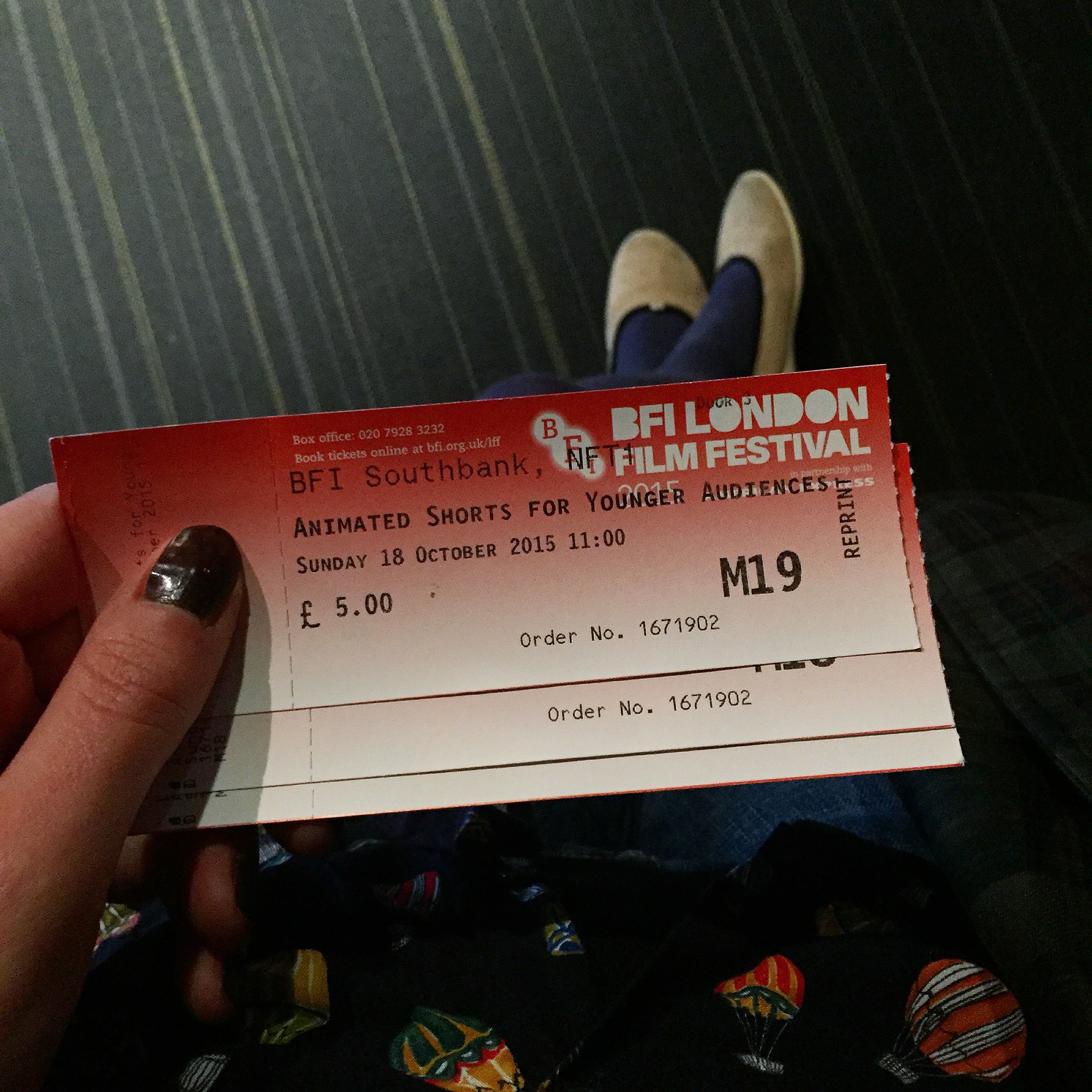
While the BFI has really developed its family offering in recent years, Ramona’s age group often leaves her out of proceedings; animation workshops etc are really only going to become of interest in a few years’ time, as she’s only five. However, on the final day of the festival was the ‘Animated Shorts for Younger Audiences’ collection; at a total price of £29 for the three of us it seemed really reasonable for a central London cinema trip during an event for which I’d already dropped a phenomenal amount to attend gala screenings (still paying that off; still worth it).

The first of many step and repeat boards, I'm sure.

The first of many step and repeat boards, I’m sure.

What was actually going to be in the programme was a bit of a mystery; it turned out to be 14 international animated shorts including a UK advance screening of the new Disney / Pixar short, Sanjay’s Super Team which is due to appear before The Good Dinosaur when that’s released next month. The collection was brilliantly varied, in terms of content, technique and storytelling, from a brilliant one-minute one-man whiteboard animation from a second year student to an intricate Latvian stop motion morality tale about littering.

It's not as cute when the adults do it. And yes, my attempt at colourful 'cartoonish' dress was in line with my other 'dressing by theme' attempts...

It’s not as cute when the adults do it. And yes, my attempt at colourful ‘cartoonish’ dress was in line with my other ‘dressing by theme‘ looks…

My personal favourites included a superbly funny Swedish animation about a pair of dice and a couple of ladybirds on an adventure (hereafter, all ladybirds shall be known as ‘Bengt’ to me). I also loved a rather bleak but beautiful Canadian take on environmentalism positioned ironically around the lyrics of Que Sera Sera (pretty sure that whisked straight over Ramona’s head but she liked the cars). She particularly enjoyed a sweet film about a bird that takes a break from its migration pattern to dance with a tortoise on a beach; I thought it was beautiful yet overlong, but it was lovely to compare notes and find we really loved different things for different reasons. I found a charming French tale of a cuddly toy soothing a baby delightful; Ramona thought the battered toy (“that grey thing”) was really scary.

We were all a bit blown away by Sanjay’s Super Team,  which really made me want to see it as a full-length film, combining the visual punch of The Incredibles with  a wide-eyed, Nemo-esque sweetness. The only issue was its positioning in the programme which felt a bit odd; dropping a famous animation heavyweight in near the end but not at the end meant that quite a lot of the kids seemed to check out after that. In fact, my beloved ladybird Bengt was on last, which was another odd choice as it was one of the longest pieces and also the only on to require subtitles. Not generally  a problem for my little reader, but she wasn’t the youngest child there by a long shot and putting the one that requires the most concentration at the end seemed to be a bit of a scheduling no-no (and in fact she wriggled and jiggled and wiggled and finally expressed boredom, which earned her some steely glances and sharp words from her mother).

There were evidently some pains taken to make it feel more like a festival; the films were introduced, there was some Q&A at the beginning, and after each set of two or three we were actually introduced to some of the filmmakers for little interviews. Unfortunately this was mostly lost on the audience; the younger children figeted and checked out and their parents couldn’t listen while trying to keep a lid on things – and I did see some leave before the end.

So do I recommend it? Yes, definitely, though I wouldn’t take the ‘younger audiences’ label to mean – as many of us obviously did – youngest audiences. Ramona loved the setting, wanting to “send a message to those BFI people to tell them how BEAUTIFUL it is in here” and really enjoyed some of the films, and she’s insistent she wants to come back to watch movies at BFI Southbank. However, she’s wavering much more over the shorts programme, because the stop-start nature meant she couldn’t properly engage with what she was seeing.  My personal recommendation would either be to play straight through, allowing time for various Q&As at the end for those families with older kids, or to have more of a quiz type format to the breaks (as she really liked it when asked questions).

Roll on next year!

Matchy matchy: vintage BFI London Film Festival looks

As I might have mentioned at the end of each of my BFI London Film Festival posts this past week: I’m an enormous nerd.

That means I have really nerdy ideas. Like, say, thematically matching what I was wearing to each of the three galas I was lucky enough to snag tickets to. But since I know I’m talking to a similarly nerdy audience – at the point at which my photos of frocks overtook my admittedly grainy photo of the actual Tom Hiddleston on Instagram I knew it wasn’t just me that thinks this shiz is important – I thought I’d share the looks together here, too.

Suffragette

Green, white and (almost) purple for Suffragette

Green, white and (almost) purple for Suffragette. I don’t know why I look worried and I hate that my hair was wet.

Well, I don’t have any turn of the last century dresses, and if I did I’d probably be too terrified to wear them (and frankly too tall and broad around the waist). But I know my women’s movement colours, and I really like green. This Collectif checked dress – a couple of seasons old, but a version is still available – offered a bit of a bluestocking twist. Together with a white scarf and a hint of purple eyeshadow, the only thing I regret was missing the opportunity to throw in some pin curls.

Trumbo

All

All “model’s” own, including the comedy pose.

This was a bit of a struggle. Until the last minute I had my Tomorrowland black 1940s sheer dress lined up, but it didn’t feel quite right. For one, the film is late enough into the 1940s that a 1950s look felt more appropriate; for another I just wanted an excuse to wear a different dress. The day before this gorgeous shirtwaister arrived from Cheshire Vintage, and I knew its moment had come. What’s not clear from the photo are the gorgeous gold threads running through the red (not actually intended as a reference to Communism at the time, but hey…).

High-Rise

Look of mild panic on the streets of London.

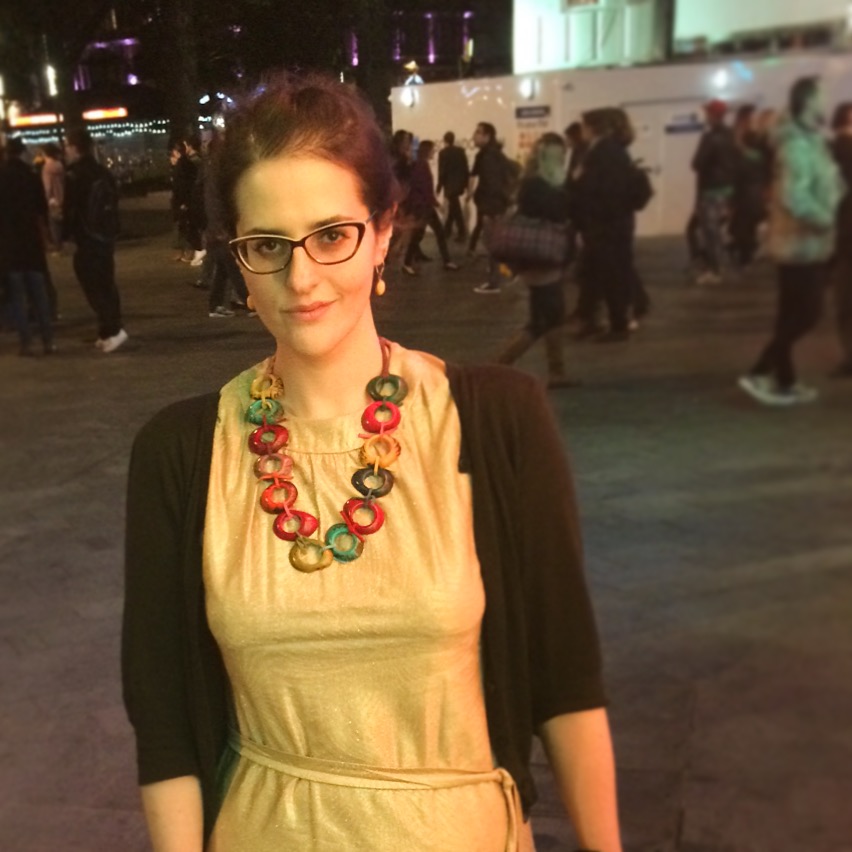
Look of mild panic on the streets of London.

I don’t really do 70s. But I will do glam. This 1960s lurex dress felt exactly right, particularly as the fabric actually has starbursts and swirls in it on close examination. Topped off with a blocky statement necklace but tamed with thick tights and a cardi, it turned out to be pretty well-judged as a summary of the film: a brash, violent message tempered by nuanced, sometimes muted performances.

I feel rather delighted to have gone three for three and seen films that were vastly different but all thoroughly enjoyable. I only have one festival experience left, right at the other end – a selection of short films for young viewers with which I’ll introduce our daughter to the festival. This year was actually my first ever attendance because I always thought of it as something I’d never get a chance to do – but with patience, a glacially slow website and a BFI membership as a Christmas present, diving in was one of the best decisions I ever made. I intend to take Ramona every year and make her every bit the nerd I am; I only look forward to the day when she might be persuaded to dress up with me.

Film review: High-Rise – Empire Gala and UK Premiere, BFI London Film Festival

Not even quite all of the massive ensemble cast of High-Rise.

Not even quite all of the massive ensemble cast of High-Rise.

“I went in with no expectations, and came out with no clue.”

My fellow attendee’s bafflement was in some ways at complete odds with my own experience – I went in with fearful expectations came out inspired and relieved – but at the same time I could relate. High-Rise is a beautifully bewildering experience, as well any combination of Ballard and Wheatley might be.

Confession: I’ve never read any Ballard (I shall, I shall, hold the nagging). I’ve also never seen any of Wheatley’s previous films. I’ve read about them, lingeringly, fascinatedly – and then backed off wondering if I have the stomach for them. My colleague Suni, when he heard what I was going to see, gleefully told me about how far out of his comfort zone Kill List  had taken him. Yet this one seemed like the one to take the plunge with. The lure of the star was there, of course, but more than that what I knew of the book seemed to suggest now was the perfect time for it to come to life on screen.

Ben Wheatley, Tom Hiddleston, Sienna Miller and Elizabeth Moss field questions after the screening.

Ben Wheatley, Tom Hiddleston, Sienna Miller and Elisabeth Moss field questions after the screening.

Dr Robert Laing (Tom Hiddleston) moves into the 25th floor of a beguiling and beautiful new high-rise block, quickly discovering the hierarchy within via the bewitching Charlotte (Sienna Miller) – herself only on the 26th floor but still apparently a door to the architect, Royal (Jeremy Irons), safely cushioned in the rarefied air of the 40th. Along with his neighbour Wilder (Luke Evans) – a mass of neurotic, barely concealed rage complete with perma-pregnant wife (Elisabeth Moss) – Laing is swept up in the social climbing until the lights literally start to go out, and the social infrastructure disintegrates as rapidly and catastrophically as the physical.

Following the canny yet childishly naive everyman through the nightmare landscape where everyone else seems to hold the puzzle pieces without ever revealing the whole picture is always an unsettling experience; with the 1970s setting, the drugs, debauchery and dog-eating, it would be easy for High-Rise to just be an exhausting mass of colours, of noise. Wheatley, however, is far, far too skilled to fall into the trap of directing an extended music video. Far from being a technicolour descent into madness, it’s the shades of grey – metaphorical and literal – in High-Rise that make it so compelling.

More Q&A - Hiddleston possibly answering questions about preparing for the role with a pathologist visit.

More Q&A – Hiddleston possibly answering questions about preparing for the role with a pathologist visit.

Hiddleston provides the almost perfectly calm centre around which the madness swirls; his rare moments of violent animation are almost immediately countered – withdrawn by an apology or an outstretched hand. Jarring against this is a spectacularly eerie performance from Evans who paints a figure both shambolically laughable and terrifyingly unhinged. In between Miller dances on the edge of disaster, switching roles as easily as she changes outfits: doting mother, louche party girl, mysterious stranger.

In many ways, High-Rise could best be described as a full-length McGuffin. As much as it doesn’t shy away from the grotesque or graphic, you’re left with the lingering suspicion that almost everything of note has happened where you – and Laing – can’t see it. Notes are written and screwed up without the contents being revealed. People are carried away and reappear some time later changed – but exactly what’s happened in the interim is unclear. When it comes to some of the most vile acts, including a particularly violent rape, almost nothing is seen – but a central suicide is lingered over in almost unbearable detail. The film’s priorities are Laing’s selfish, confused, insecure priorities – ours, in other words. There’s absolutely nothing subtle about the messages here, but – odd as it is to say in a film that includes a dream sequence with dancing cabin crew and a bludgeoning fist fight over a can of paint – there are layers of nuance in the delivery, and there can be a delicacy and beauty in the brutality.

I thought that at best I might emerge from High-Rise not traumatised. Instead I was oddly energised. In the Q&A afterwards, all the cast agreed that if they moved into the building they’d all have been out and in a hotel after the first night. But I think they might be lying to themselves just a little bit. After all, as they looked out onto the avid faces of the audience eagerly hanging onto their every word, they must have known that to us mere mortals they do, to some extent, represent the 40th floor. And the top is always the last bit to come toppling down.

No disclosure: I attended in my own capacity as a BFI Member. And because I’m an enormous nerd, I wore a vintage 1960s gold lurex dress. See thoughts on Suffragette here; Trumbo here.

See the program and get tickets for further #LFF events here.

Film Review: Trumbo – Accenture Gala & European Premiere, BFI London Film Festival

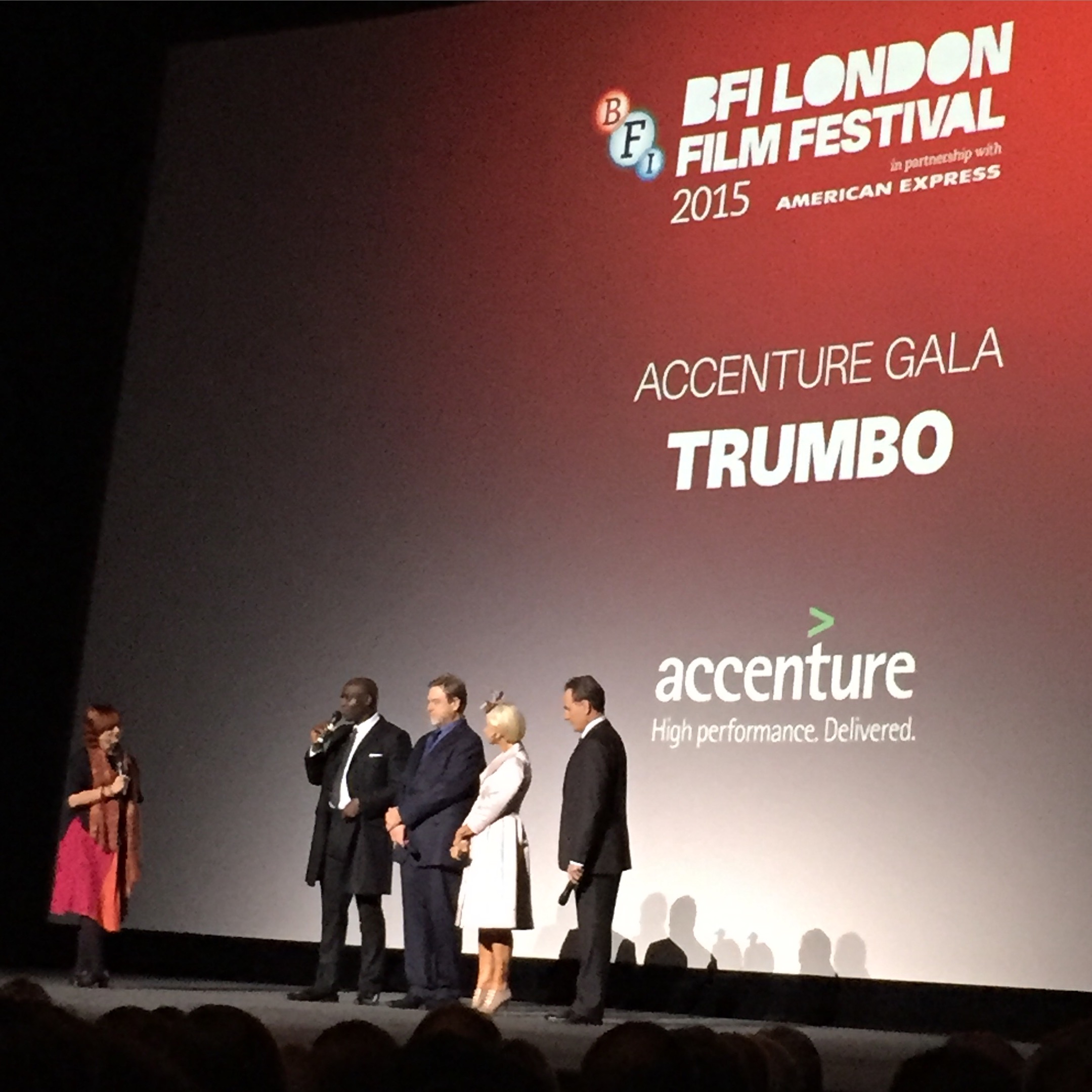
Adewale Akinnuoye-Agbaje, John Goodman, Helen Mirren and Bryan Cranston introduce the film

Adewale Akinnuoye-Agbaje, John Goodman, Helen Mirren and Bryan Cranston introduce the film

Hollywood loves movies about Hollywood. That’s the only explanation for the baffling accolades heaped on Birdman (a two hour overtelling of what could have been a tremendous short film). But in Trumbo, Hollywood might have also found a film that is worthy of the self-adulation, coming as it does with a hefty dose of occasionally blistering home truths.

Between 1947 and 1970, Dalton Trumbo was at the heart of a famously dark period in America’s politics. A rich and successful screenwriter, he might have been initially untouched by the Communist phobia and witch-hunting that began to sweep the nation, but eventually it came to Hollywood – and did its damndest to bring Trumbo and hosts of other individuals, prominent and not, in the industry to their knees.

It helps that he was a considerable character – in introducing the film, star Bryan Cranston said that to play such a flamboyant figure he told director Jay Roach he would “go out on a limb, and if you hear it start to crack, please pull me back”. But actually what’s remarkable about Cranston’s performance is how restrained it is; he leaves ample room for humour and complexity, for dark moods and wry asides, for self-importance and self-consciousness. If you’re going to write about a Hollywood screenwriting legend, you need a script that sparkles and thankfully John McNamara delivers in spades, managing to tell a very serious story with a generous dollop of wry humour – even a little slapstick for good measure.

While the luminous Diane Lane is sadly underused, Helen Mirren’s sequence of brief appearances as Hedda Hopper – each more dripping with devious malice than the last – are stand-outs. She made reference to her glorious array of hats, and indeed in a film with an overall stunning design there could be costume honours dished out just for her, but she commands the screen with a beautifully balanced performance, a glint of the unhinged in her eye and a seductive drawl in the delivery maintained even throughout some of her most shockingly vicious lines. Bolstering the female cast, Elle Fanning provides a sharp, sweet note of personal conscience and youthful idealism that balances the many scenes of bickering men wreathed in cigarette smoke. Meanwhile the ever-reliable John Goodman blasts through in bursts of heightened comic relief and Adewale Akinnuoye-Agbaje jeeringly reveals Trumbo’s previously unexamined prejudices in a brief but memorable performance.

Trumbo naturally mythologises the man at its centre, as all watchable biopics do, but it is careful to provide balance and reality, to show flaws and misfired rage. The tropes are all there – self-aggrandisement, quirky working habits, troubled relationships – but the tone is continually, self-consciously light. The seriousness of the message is never lost precisely because it’s generally not laid on too thick; the moments of pure emotional punch deliver because they’re well-padded with sparkle. This is Hollywood at its finest – entertainment on a knife edge.

Dalton Trumbo only lived to see one of his two Oscars finally listed in his name. I suspect Bryan Cranston might be polishing one of his own before too long.

Another opening, another show...

Another opening, another show… Trumbo is on general release in the UK in January 2016.

No disclosure: I attended in my own capacity as a BFI Member. And because I’m an enormous nerd, I wore a true vintage 1950s shirtwaister. See thoughts on Suffragette here; High-Rise here.

See the program and get tickets for further #LFF events here.

Film review: Suffragette, BFI London Film Festival Opening Gala

A view from the red carpet.

A view from the red carpet at the BFI London Film Festival 2015.

Deeds not words…

As famous slogans go, it’s a pretty spectacular one to base your film on. In Suffragette, Abi Morgan has put the bite in soundbite, stitching together a stomach-clenching script in which each scene has the punch of a powerful strapline and each stage is blisteringly, self-consciously, deliberately polemic.

I felt Suffragette rather than watching it. The lense of a working class woman allows director Sarah Gavron – who has been working on bringing this story to the big screen for a decade – to show a real and specific human cost to activism. Opening in the laundry in which Maud Watts (Carey Mulligan) has spent her whole life, the film takes us on a journey of loss, each one worse than the last, unflinchingly spelling out the price of freedom, finally culminating in a pointed list of what is still to be won.

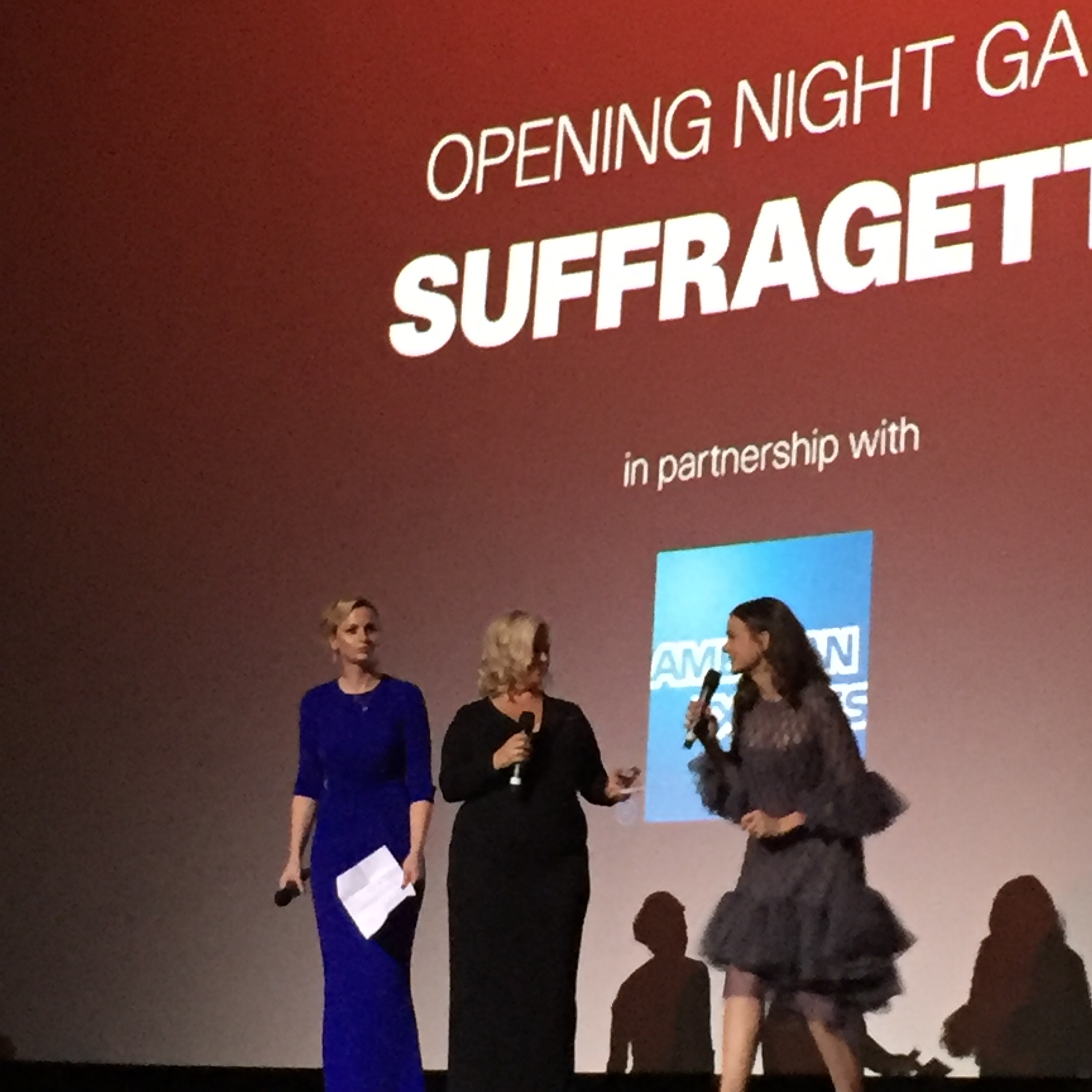
Carey Mulligan quickly drifts in to say her thanks before heading off home to her infant child.

Carey Mulligan quickly drifts in to say her thanks before heading off home to her infant child.

It’s visceral, and it’s raw. In many ways, it’s a film for people who are still wavering on the edge of feminism; for those who have been involved in the movement in any depth there are no surprises – from the brief appearance of Emmeline Pankhurst (a predictably wonderful Meryl Streep cameo) making a rabble-rousing speech to the horrifically inevitable force feeding scene. For those who are already engaged the power of the film lies both in the film’s very existence and in the sympathetic, complex and interesting performances, in which both Mulligan and Anne-Marie Duff shine, ably supported in an unusually but very effectively understated performance from Helena Bonham Carter as Edith Ellyn (an amalgam of various real-life figures).

Cast and crew including Sarah Gavron, Abi Morgan, Helena Bonham Carter, Anne-Marie Duff, Brendan Gleeson, Ben Whishaw and the queenly Meryl Streep.

Cast and crew including Sarah Gavron, Abi Morgan, Helena Bonham Carter, Anne-Marie Duff, Brendan Gleeson, Ben Whishaw and the queenly Meryl Streep.

It’s worth noting that the male cast are not abandoned to be patriarchal stereotypes but each of the key characters – dogged policeman Steed (Brendan Gleeson) and Maud’s conflicted husband Sonny (Ben Whishaw) – represent the way in which apparently ‘good’ men can support oppression through a misguided cyncism, fear or shame. They are not one-dimensional villains (though there is at least one appalling figure in the form of abusive laundry manager Mr Taylor), but conflicted and authentic individuals – a creative choice that in turn prevents the women that are the clear and present beating heart of this film from being sidelined into just mouthpieces for slogans.

Heather Stewart - in a weirdly wonderful Suffrage-inspired dress - delivers some home truths about representation in the industry.

Heather Stewart – in a weirdly wonderful Suffrage-inspired dress – delivers some home truths about representation in the industry.

I’d been so excited to see this for so long that I didn’t realise fully how strong the impact would be. Seeing it in the context of the Opening Gala of the 59th BFI London Film Festival – keeping that American Express card forever – meant emotions were running high even before the opening credits. A biting speech about the relative lack of representation for women in film from BFI Creative Director Heather Stewart set the tone – around 20% of the films showing over the next 10 days are directed by women, which also represents the balance submitted for consideration. The thing is, women already know that women love films, watch films, spend money on films and want to make films. The message to the industry has got to be that films like this succeed, make money and have an audience way beyond some perceived niche. Better yet, given what a powerful and stunningly moving film this is, we don’t have to fake it to make it. We can throw our weight behind filmmaking like this with pride.

Suffragette is on general release from Monday 15th October.

Suffragette is on general release from Monday 15th October.

So let’s do it.


No disclosure: I attended in my own capacity as a BFI Member. And because I’m an enormous nerd, I wore green and white with purple eyeshadow. Thoughts on Trumbo and High-Rise now added.

See the program and get tickets for further #LFF events here.

Film review: Inside Out (UK Gala Screening)

A couple of weeks ago, BuzzFeed did a rundown of the year’s movie hits and misses, defined mainly by box office take. Tomorrowland – which I enjoyed so much I blogged about it twice – performed modestly at the box office and therefore was classified in the ‘miss’ category. Inside Out, which toppled the mighty Jurassic World from its multi-million dollar perch and has been drowning in glowing reviews, would – by this reckoning – rule the ‘hit’ column. But here’s the curious thing: when it comes to essentials, Inside Out and Tomorrowland are astonishingly similar.

How so? Well, their strengths – proper, rounded female characters; an inspiring message; a beautifully realised fantasy world – are the same; their weaknesses – more emphasis on set up and world exploration than tight plotting – are also the same, although I must say in both cases I didn’t actually care if it was all brought to a mildly unresolved conclusion quite suddenly in the last ten minutes. The journeys are considerably more interesting – creatively speaking – than the destinations.

Of course I loved Inside Out. There was a lot to love. Pixar ingenuity and humour drip from every scene; the animation is glorious, and Pete Docter’s ability to drag on the heartstrings remains unparalleled. We were delighted to be surprised by Docter (!), Pixar stalwart John Ratzenberger (!!) and the voice of Joy, Amy Poehler (!!!) at the screening; Poehler asked the kids if they were ready to laugh and the grown ups if they were ready to cry, because when it comes to emotions there is no man better qualified to mess with the mind than the creator of Monsters, Inc. and Up! (never has an exclamation mark concealed so many bitter, salty tears).

As the film has been out for a while in the US and the teaser trailer was everywhere for a while, I’m going to skip the plot summary and cut straight to the key things I think people should know about Inside Out – all of which are, in my opinion, excellent reasons to see it.

  • IT’S A GIRL! Aside from Merida – and that was still in the princess area, albeit not the traditional sort – Pixar has been rather short of female leads thus far. Much is done to make up for this here. In fact, I can’t remember a non-princess animated film with women on screen for such a large proportion of it. It passes the Bechdel Test in its sleep. Riley’s interests centre around her (female!) friends, ice hockey, and generally being 11 years old and a bit daft. Her emotions are of mixed gender (an interesting choice – especially as adults are portrayed as single gender), but the majority are female, and it is two key female emotions (Joy and Sadness) who steer the action.
  • It continues, as is Pixar and Walt Disney Animation’s way, to make profound statements and use animation as a device rather than a distraction. The idea that as we grow up we can no longer be piloted by pure Joy, but have to accept the role of Sadness in our lives, is, by definition, bittersweet. It seems strange to me that people still assume kids made to include children are only for children – especially as the major studios are continually putting out films with an adult audience in mind – but if that might be your reason for missing Inside Out, then you’re just plain missing out.
  • There are Easter Eggs and jokes galore – I’m not even sure I caught a fraction of them (although even my daughter’s ears perked up at the snatch of Grim Grinning Ghosts!). The credit sequence is brilliant too, so don’t be too quick to bolt up from your seat.
  • The now obligatory short, Lava, beforehand, is pretty cute.

Almost-5yo child’s verdict:

Joy was my favourite, then Sadness, then Disgust. Mama, Daddy looks kind of like Fear [he does], I look a bit like Disgust [she does] and you look a bit like Sadness [ha!]. I thought it was really funny and I liked the bit with the rocket. The bit with the clown scared me a bit.

We then spent a happy afternoon filling in the sticker book we were given at the screening, and using the discussion prompts to talk about what makes us happy, sad, scared, disgusted and angry. I’m pleased to report the child has a much harder time thinking of things that make her sad and angry than thinking of things that make her happy, which suggests that her Joy is operating at optimum levels… and my Fear hasn’t got the better of me.

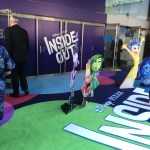
I leave you, then, with the gallery of Joy – photos from the screening, some taken by the lovely Rochelle Dancel, at which we had an absolute ball. Thanks Disney!

Disclosure: I was given tickets to the screening by Disney UK and all attendees got a little bag of goodies including snacks, themed sunglasses, mood door hangers and a sticker book. This is not a paid post and all opinions are my own.